
Vietnam E-Visa Guide
Getting into Vietnam used to mean embassy appointments, physical paperwork and a fair amount of crossing-your-fingers energy. Not anymore. The e-visa system is genuinely simple: one online application, a small fee, and a PDF you print and carry. Do it right and you’ll breeze through immigration with zero drama. Do it wrong, or worse, fall for one of the fake lookalike agency sites that charge three times the price, and it becomes a very different story. This guide walks you through exactly what you need, including a few things most people only find out at the airport.
The Quick Summary
- What You Need: A valid passport with at least six months remaining beyond your arrival date, two blank pages, a digital portrait photo, and a scan of your passport data page.
- Cost and Validity: Single-entry visas cost 607,500 VND ($25 USD). Multiple-entry visas cost 1,215,000 VND ($50 USD). Both are valid for up to 90 days.
- Processing Time: Standard processing takes three to five business days. Apply at least two weeks before you travel. There is no good reason to cut it close.
- Entry Points Matter: You must select a specific entry and exit checkpoint during your application. You cannot change these once the visa is issued. Arriving at the wrong border gate means a flat denial of entry, full stop.
Not sure if you even need one? Some nationalities can enter Vietnam visa-free for 15 to 45 days depending on their passport. Check the Vietnam visa exemptions guide before you pay for anything. There is also a separate visa on arrival option that suits some travellers better, particularly those coming from countries with specific bilateral agreements.
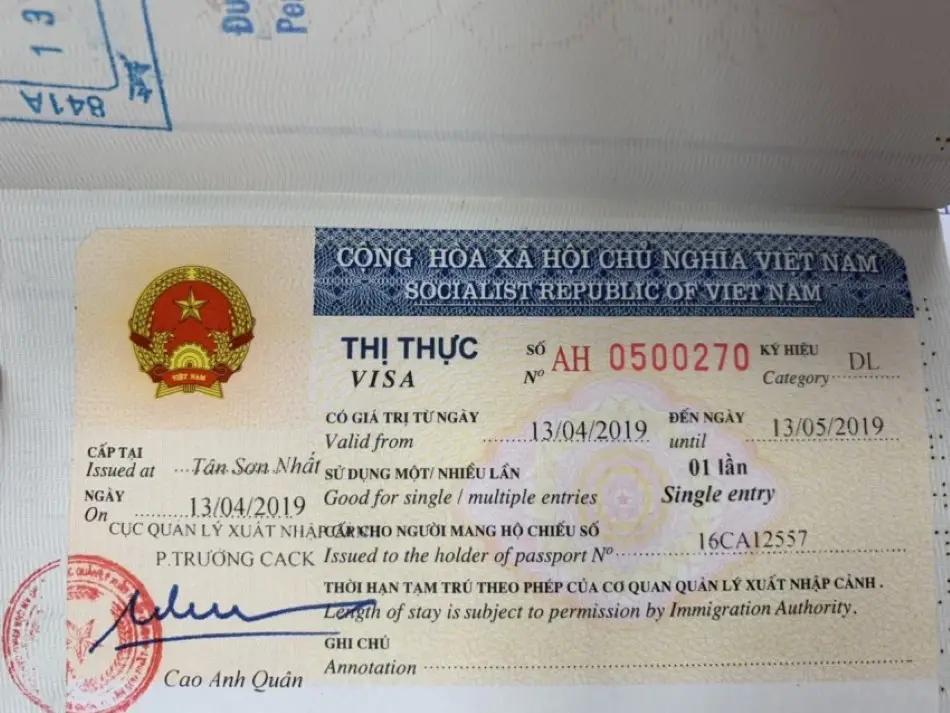
Visa Types and Costs
The e-visa is open to citizens of all countries and covers tourism, business, and transit. The fees below are set by the Vietnam Immigration Department and are non-refundable even if your application is rejected, so take care filling everything in. If you are planning to do multiple border crossings, say for a quick trip to Laos mid-trip and back, the multiple-entry option is well worth the extra $25. Have a read of our Vietnam travel costs guide for a broader sense of what your budget needs to cover.
| Visa Type | Official Cost (VND / USD) | Maximum Stay |
|---|---|---|
| Single-Entry E-Visa | 607,500 VND / $25 USD | Up to 90 days |
| Multiple-Entry E-Visa | 1,215,000 VND / $50 USD | Up to 90 days |
| Visa Exemption | Free | 15 to 45 days (by nationality) |
How to Apply: Step by Step

Step 1: Upload Your Documents
Head to the official Vietnam Immigration Department portal at evisa.gov.vn. Not a third-party agency site, not a Google ad that looks official. The real one. You will upload a passport photo (no glasses, white background, 4x6cm) and a clear scan of your passport bio data page. The system uses character recognition to pre-fill your details, but check every field by hand. Your full name must match the Machine Readable Zone at the bottom of your passport exactly, middle names included. One misplaced letter and you are reapplying.
Step 2: Choose Your Entry and Exit Points
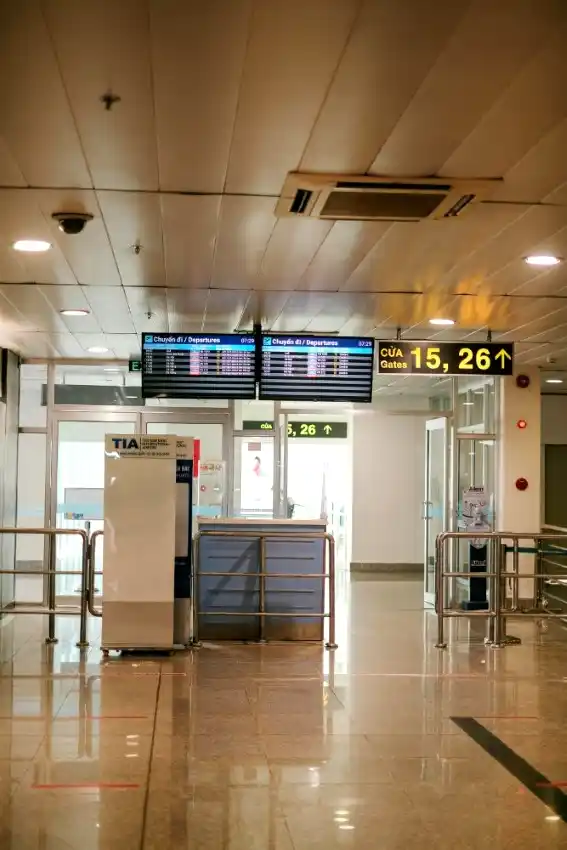
Select your specific entry and exit checkpoints from the dropdown list. Flying into Hanoi‘s Noi Bai International or Ho Chi Minh City‘s Tan Son Nhat? Choose those exact facilities. This cannot be changed once your visa is issued. Arriving at the wrong gate, even an adjacent one, results in a flat denial of entry. Our Vietnam airports guide breaks down all the main international entry points if you are unsure which one applies to your route. Take your time on this step.
Step 3: Pay, Track, and Print
Pay the non-refundable fee through the portal’s payment gateway and save your unique registration code. Use that code to track your application status over the following days, then download the approved PDF the moment it lands. Print two physical copies before you leave for the airport: one for immigration, one as a backup tucked in a separate bag. Do not rely solely on a phone screen at the border.
Getting Around After You Land
The moment you clear arrivals, a wall of taxi touts will materialise outside the terminal. Walk straight past them. Download Grab, Be, or Xanh SM before you fly and book your transfer through the app: fixed price, named driver, no surprises at the end of the ride. This applies whether you land in Da Nang, Cam Ranh, Hanoi, or Ho Chi Minh City. Our Grab vs Xanh SM comparison is worth a quick read before you choose which app to lead with.
For getting further afield, Vietnam’s train network is brilliant and seriously underused by most tourists. Book sleeper tickets in advance through 12GO to lock in the routes you want, especially on the Reunification Express between Hanoi and Ho Chi Minh City. The how to get around Vietnam guide covers every option from domestic flights to sleeper buses, and is worth bookmarking for the planning stage.
Crossing the Street: If this is your first time in Vietnam, city traffic will look genuinely alarming. The secret is simple: step off the kerb, walk slowly and steadily, and let the motorbikes flow around you. They are watching you and calculating your path. Don’t freeze, don’t dart, don’t step backwards. Move predictably and they’ll part around you like water. You will have it figured out within a day.

Compare hotel prices across Vietnam’s best
neighbourhoods and book with confidence.
Filter by budget, location, or guest score
to find the right stay for your trip.
Thinking About Staying Longer?
The 90-day multiple-entry e-visa is the foundation of most long-term stays. Digital nomads and slow travellers typically base themselves in coastal hubs like Da Nang, where the An Thuong neighbourhood has reliable fibre-optic internet and excellent beachside cafés, or head up to the cooler mountain air of Da Lat. Hanoi is another popular base: the best Hanoi neighbourhoods for nomads guide will point you to the right part of the city depending on your vibe. For a broader picture of costs and day-to-day life, the Vietnam digital nomad guide is the best place to start.
When the 90-day limit approaches, the most common reset is a short flight to Bangkok or a land border crossing at Lao Bao into Laos, followed by a fresh e-visa application for re-entry. If you are thinking about staying much longer than that, the options change considerably. A dedicated long-term Vietnam visa guide covers the investment, labour, and family visa routes in detail. For those relocating with pets, you’ll need an international health certificate, a current rabies vaccination record, and microchip documentation ready at customs.

Book Vietnam day trips, attractions,
and activities in one place. Read real
reviews, check availability, and lock in
your spot before the popular slots go.
Staying Safe on the Ground
Vietnam is one of the safest countries in Southeast Asia for solo travellers and families. Violent crime is rare. The two things actually worth being aware of are bag snatching by passing scooters in busy tourist areas, so keep your phone in your front pocket and your bag away from the kerb in places like Pham Ngu Lao in Ho Chi Minh City or around Hoan Kiem Lake in Hanoi, and the occasional tourist scam concentrated around transport hubs. The Is Vietnam Safe guide goes into much more depth on specific situations to watch for.
For food, the rule is simple: eat where the locals eat, and choose stalls with a fast turnover of fresh ingredients. Busy means fresh. Stick to bottled water for drinking. It’s cheap and available everywhere. Before you travel, it’s worth sorting travel insurance that actually covers medical costs in Southeast Asia. SafetyWing is the one most long-term travellers here use: it’s affordable, genuinely covers the region well, and you can start it after you’ve already left home.

From short trips to long stays in Vietnam,
Airalo has flexible eSIM data plans
you can install in minutes. Top up
remotely if you need more data later.
Pro Tips For Stress-Free Travel

- Watch Your Notes: Vietnamese Dong uses large denominations. The 20,000 VND and 500,000 VND notes share a very similar blue colour. Always count the zeros carefully before handing anything over, especially in dim lighting. Our Vietnam currency guide covers ATMs, card fees, and the best way to carry cash.
- Stay Connected from the Moment You Land: Get an eSIM sorted before you leave home so you have data the second you step off the plane. Yesim is the one we recommend: easy setup, solid coverage across Vietnam, and no faff with physical SIM swaps. Airalo is a solid backup if you want to compare options. Full breakdown in the Vietnam SIM cards and internet guide.
- Accommodation: Agoda is the best place to book hotels in Vietnam, especially in smaller towns where it has the deepest inventory. Booking.com is the better call if free cancellation matters to you. For where to actually stay in specific cities, the Hanoi and Ho Chi Minh City neighbourhood guides will save you from picking the wrong area.
- Tours and Day Trips: Get Your Guide and Klook are both reliable for booking street food tours, cooking classes, and day trips in advance. If you are heading to Ha Long Bay, Hoi An, or anywhere with a specific must-do activity, book before you arrive rather than getting talked into things at the hotel desk.
- Data Security: Use NordVPN on public Wi-Fi in cafes and airport lounges. Particularly important when accessing banking apps or making payments. Takes two minutes to set up and you’ll be glad of it.
- Airport Transfers: If you want a guaranteed car waiting for you on arrival rather than negotiating at the kerb, Welcome Pickups pre-books a named driver with a fixed price. Good for late-night arrivals when you really can’t be bothered.


Maps, Grab, translation apps, all need
data in Vietnam. Yesim’s eSIM installs
in a minute and gives you reliable 5G
from the moment you arrive.
Frequently Asked Questions
Can a Vietnam e-visa be extended inside the country?
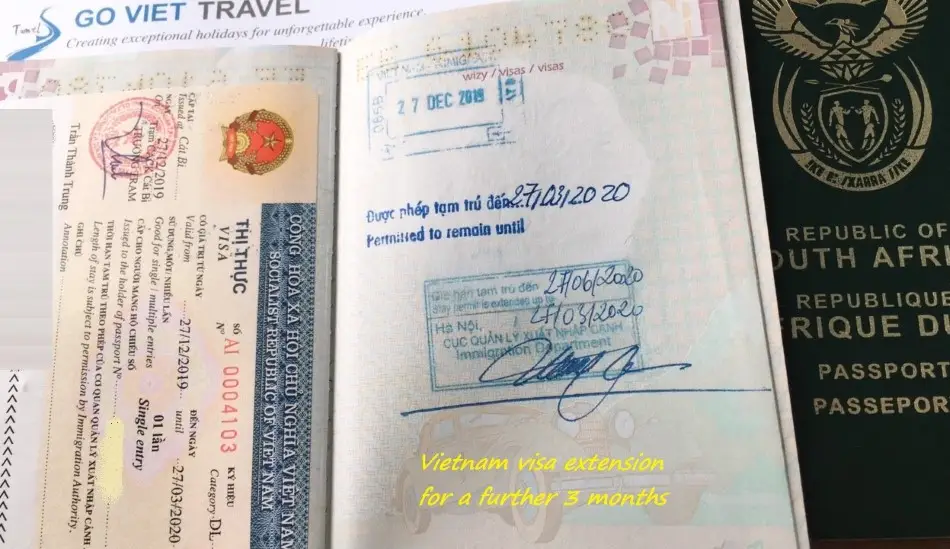
No. Tourist e-visas cannot currently be extended from within Vietnam. When your time is up, you need to leave and re-enter on a freshly approved e-visa. Most long-term visitors do a short border run to Laos or a quick flight to Bangkok to reset their stay. For a deeper look at what comes after the 90 days, read the long-term visas guide.
What happens if there is a mistake on my visa?
Immigration officers will deny entry if the passport number, name spelling, or date of birth on your printed visa PDF doesn’t match your physical passport. There is no on-the-spot fix. You’ll need to submit a new application with the correct details. This is exactly why checking every field manually during the application matters so much.
Do I need a visa for a brief transit through Vietnam?
If you are transiting through a Vietnamese international airport and staying within the transit lounge without clearing immigration, no visa is required. If you need to collect baggage, switch terminals, or pass through immigration for any reason, a valid e-visa is required.
Is it safe to apply through a third-party visa agency website?
Officially, no. And more to the point, it’s unnecessary. The Vietnam Immigration Department’s official portal at evisa.gov.vn handles everything directly. Third-party agency sites often charge two or three times the official fee for the same result. Always apply through the official portal and put the saving towards street food instead.
Can I change my entry or exit point after my visa is approved?
No. The entry and exit checkpoints you select during the application are locked in once the visa is issued. If your travel plans change, you need to apply for a new visa with the correct checkpoints. This is one of the most common reasons people get turned away at the border, so double-check before you submit.
How far in advance should I apply for my Vietnam e-visa?
Standard processing is three to five business days, but applying at least two weeks before you travel gives you a comfortable buffer to deal with any errors or requests for additional documents. Peak travel periods can slow things down. Don’t leave it to 48 hours before your flight.
Can I enter Vietnam multiple times on a single-entry e-visa?
No. A single-entry visa allows you to enter once only. If you plan to leave Vietnam and return during your trip, for example for a side trip to Cambodia or Laos, you need the multiple-entry e-visa at $50 USD. It covers exactly the same 90-day period but with unlimited entries and exits during that window.
What nationalities are exempt from the Vietnam e-visa?
Vietnam has expanded its visa exemption list significantly in recent years, with citizens of many European countries, ASEAN members, and others eligible for stays of 15 to 45 days without any visa at all. The full list and the exact conditions are covered in the Vietnam visa exemptions guide, which is updated as policy changes.
What is the Vietnam visa on arrival and is it still available?
Vietnam visa on arrival is a separate system where you obtain approval before travel and collect a physical stamp at the airport on arrival. It’s still available but involves more steps than the e-visa and typically costs more via third-party agencies. For most travellers, the standard e-visa through evisa.gov.vn is simpler and cheaper.
Do I need travel insurance to enter Vietnam?
Vietnam does not currently require proof of travel insurance for entry. That said, going without it is a risk not worth taking. Medical costs for anything serious can add up fast, and hospitals in some areas expect upfront payment. SafetyWing covers Vietnam well and is what most long-term travellers here use. Sort it before you fly.