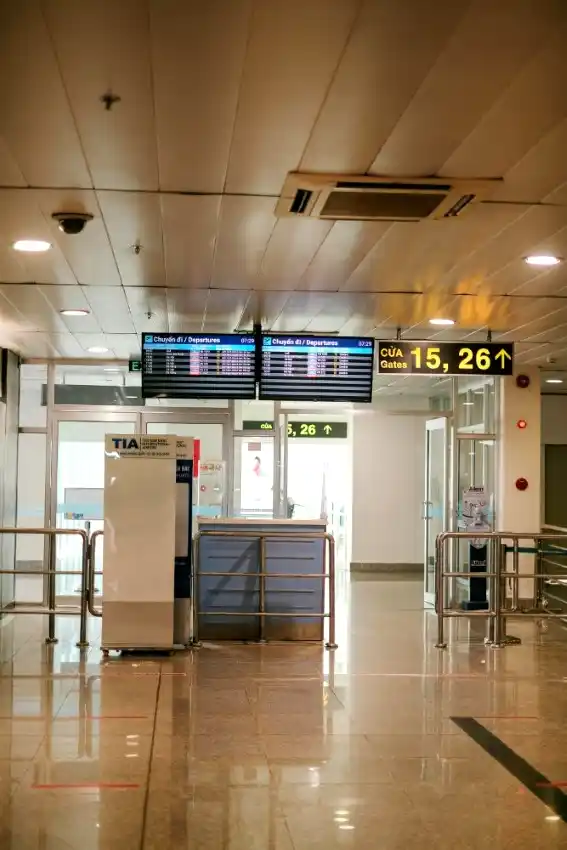
Vietnam Train Guide
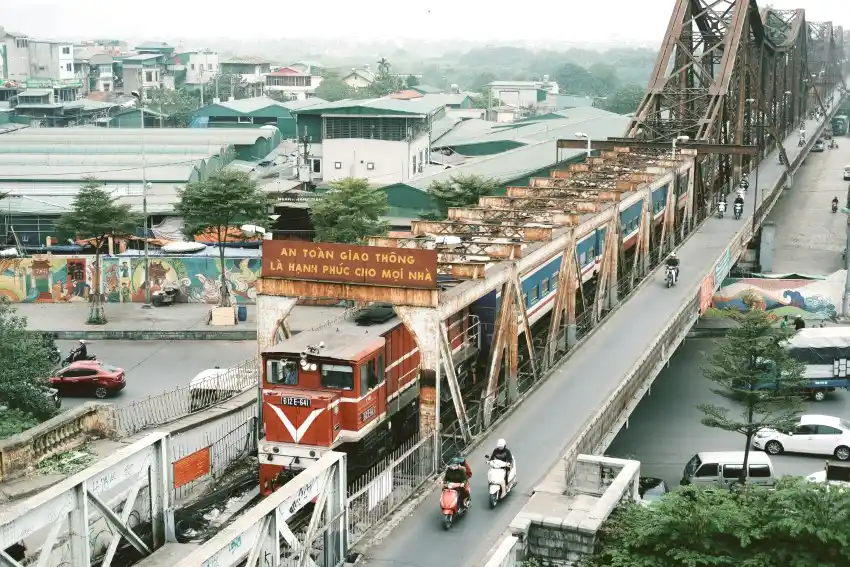
The steady click-clack of steel tracks tells the story of Vietnam better than any highway can. Traveling by rail across this slender country is an invitation to watch the landscape shift in real time, from mist-shrouded northern peaks and bright green rice paddies to sun-bleached coastal cliffs plunging straight into the sea. It is slow travel done right, the kind where the journey is half the point.
The Quick Summary:
- Primary Rail Line: The legendary Reunification Express runs 1,726 kilometres between Hanoi and Ho Chi Minh City, hugging the coast for much of the journey.
- Ticket Booking: Reservations open 30 to 60 days in advance. Book via the official state portal or through 12GO for hassle-free foreign card payments.
- Comfort Options: Classes range from basic hard seats to plush four-berth soft sleepers and private luxury carriages, so there is genuinely something for every budget.

Skip the bus-station haggling on your
way to Vietnam. Book online with 12Go,
get an e-ticket, and show it on arrival.
Refunds available on most routes.
How to Book Vietnam Train Tickets:
The official way to buy train tickets is through Vietnam Railways at their website (dsvn.vn), though international credit cards have a habit of throwing up errors at the payment screen. The simpler fix is to book through 12GO, which accepts foreign cards, issues your ticket by email, and takes about five minutes. It is worth paying the small booking fee to avoid the headache.
Book early. During Tet (Lunar New Year), tickets sell out months in advance, and even outside peak season the best berths on popular routes like Hanoi to Hue go fast. Three to seven days ahead is usually fine for quiet periods, but festival season is a different game entirely. You can also read our full guide on getting around Vietnam if you are weighing up trains against buses and flights.
| Train Carriage Class | Average Cost per 500 km | Best Used For |
|---|---|---|
| Hard Seat (Air-Conditioned) | 350,000 VND ($14 USD) | Short daytime journeys under three hours |
| Six-Berth Hard Sleeper | 600,000 VND ($24 USD) | Budget overnight travel with thin mattresses |
| Four-Berth Soft Sleeper | 900,000 VND ($37 USD) | Long-distance comfort and overnight security |
The Best Train Routes in Vietnam:
Vietnam’s rail network strings together nearly every major destination on the tourist trail, from Hanoi in the north all the way down to Ho Chi Minh City. Some of these journeys are purely practical. Others are genuinely worth doing for the view alone. These are the routes that earn a place on your itinerary.
The Journey Over the Hai Van Pass
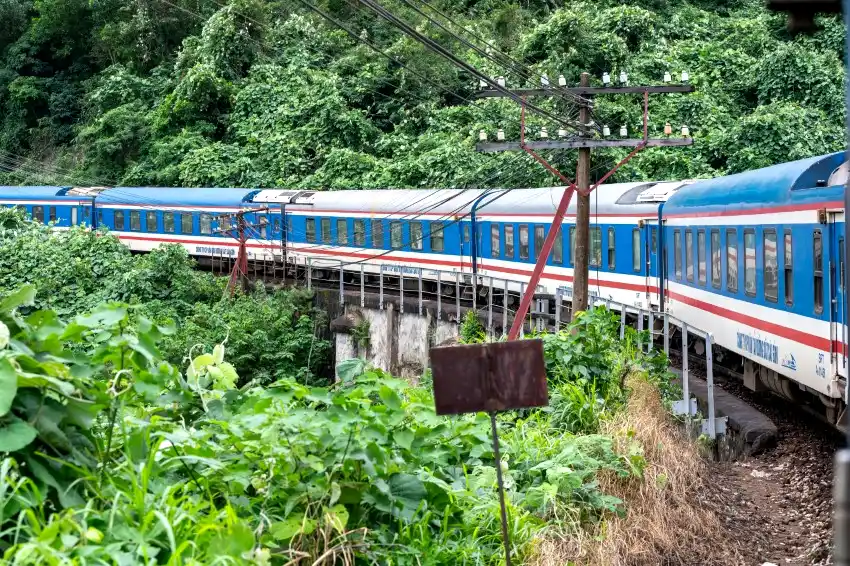
Connecting Hue Station on Le Loi Street to Da Nang Station on Hai Phong Street, this three-hour ride bypasses the road tunnels entirely and clings to mountain cliffs directly above the South China Sea.
The train slows around the tightest bends, giving you a clear look at isolated coves and dense jungle pressing right up against the waterline. For the best views, grab a seat on the left side traveling south, or the right side heading north.
Both ends of this route are worth lingering in. Read up on things to do in Hue before you go, and check where to stay in Da Nang once you arrive. You can also book guided day trips from either city through Get Your Guide or Klook.
The Night Express to Sapa
Night trains depart Hanoi Railway Station on Le Duan Street and wind northwest to Lao Cai Station near the Chinese border. You sleep through the journey and wake up to cool mountain air.
From Lao Cai, a short shuttle bus climbs the switchbacks up to the terraced rice fields of Sapa, which is one of the most dramatic arrivals in the country. It is a far more atmospheric start to the day than flying into a regional airport.
Sapa is a full destination in its own right. Browse Hanoi day trips for shorter options if you are pressed for time, or book a multi-day trekking tour through Get Your Guide to make the most of the highlands. For where to sleep before you board, check where to stay in Hanoi.
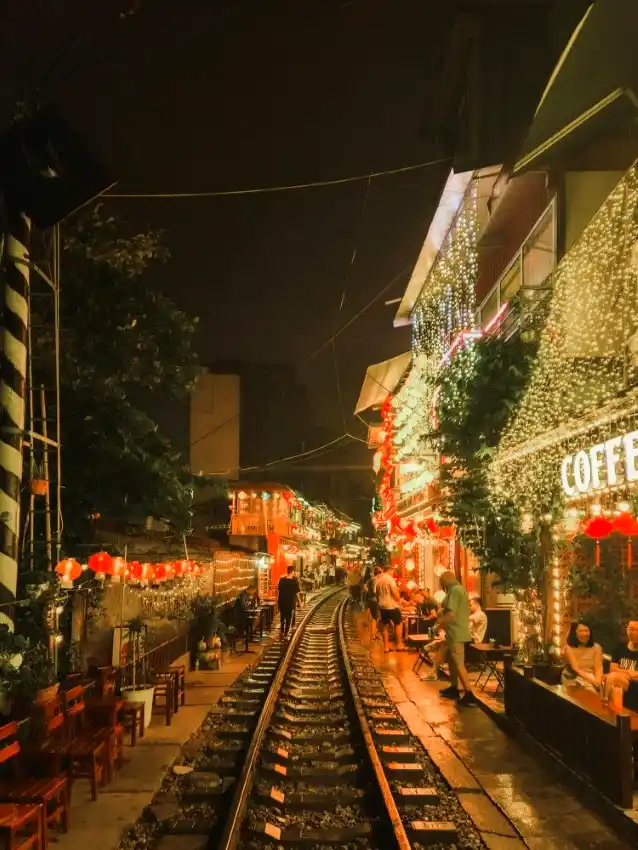
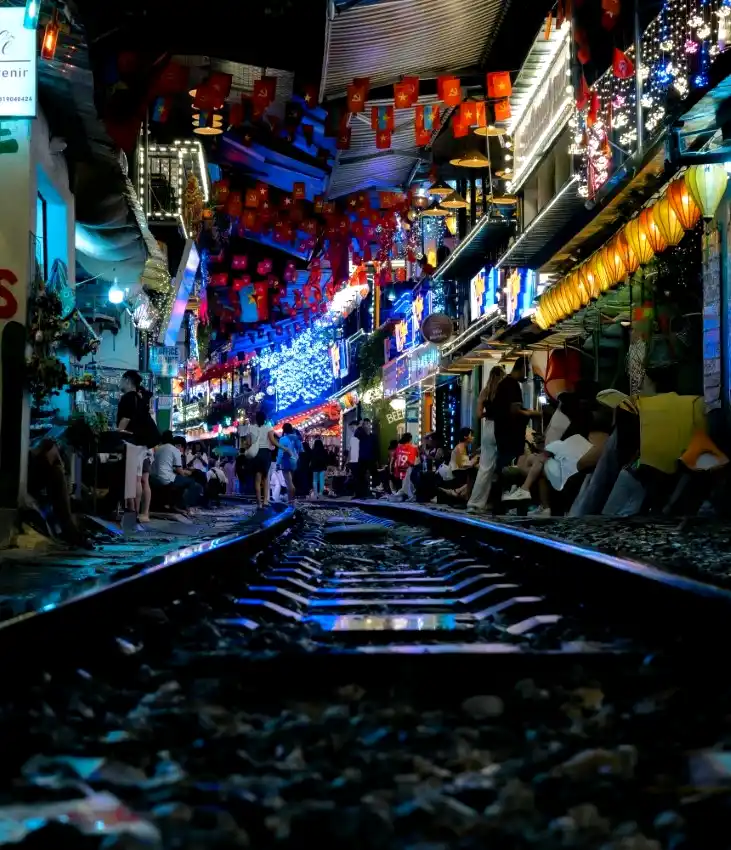
Hanoi to Ninh Binh
This is one of the most underrated short-hop train rides in the country. The journey takes around two hours and drops you at Ninh Binh Station, a short ride from the limestone karsts, river caves and ancient pagodas of the Ninh Binh region.
It makes a brilliant day trip from the capital, and the soft-seat daytime trains are comfortable enough that you hardly notice the time passing. Book a Trang An boat tour through Klook in advance so you have something lined up on arrival. Where to stay in Ninh Binh is worth a read too if you plan to make a night of it.
Da Nang to Hoi An (and Beyond)
There is no direct train to Hoi An, but Da Nang Station is the closest rail hub and it is only 30 kilometres away by taxi or Grab. Using Da Nang as a base and making a half-day trip across to the Ancient Town is one of the most popular moves on the central coast.
If the Da Nang vs Hoi An question is keeping you up at night, our comparison guide breaks it all down. Once you are in Hoi An, Get Your Guide and Klook both have good options for cooking classes and day trips to My Son.

Land in Vietnam stress-free with a
pre-booked English-speaking driver.
Welcome Pickups offer fixed-price
transfers with flight tracking included.
Pro Tips For Stress-Free Travel:
- Book Trains with 12GO: 12GO is the easiest way to book tickets as a foreign traveller. It accepts international cards, sends your ticket directly to your inbox, and lets you compare train times against bus and boat options on the same platform.
- Stay Near the Station: Use Agoda to book accommodation close to major train hubs like Hanoi Railway Station or Da Nang Station. Agoda has the deepest inventory for mid-range hotels and guesthouses in Vietnam, including in smaller towns where Booking.com can be patchy.
- Stay Connected: Pick up an eSIM before you travel with Yesim, which gives you mobile data the moment you land without hunting for a SIM card. Rail corridors pass through genuinely remote stretches of countryside, so having offline maps downloaded is smart. Use NordVPN on public station Wi-Fi.
- Get to the Station Easily: Use Grab, Xanh SM, or Be to arrange reliable rides to and from major stations. For airport transfers at either end of your trip, Welcome Pickups offers fixed-price pre-booked transfers so there are no surprises.
- Book Tours on Arrival: Klook and Get Your Guide are the go-to platforms for booking guided excursions from train-stop cities, from Hue imperial citadel tours to Sapa trekking and Hoi An lantern nights.
- Get Insured: SafetyWing offers rolling travel insurance that is ideal for multi-stop trips and longer itineraries. It covers medical emergencies and trip disruptions, and can be bought after you have already left home.


Need budget data in Vietnam? Saily’s
eSIM plans start cheap and install in
a couple of minutes. Built by the team
behind NordVPN, so security is solid.
Train Classes Explained:
Carriage options on Vietnamese trains split into four main categories: hard seats, soft seats, hard sleepers, and soft sleepers. Select routes also feature premium private tourist carriages run by independent operators like Livitrans and Violette. Air conditioning is standard on almost all express trains, which carry the SE prefix (SE1, SE3, SE5, and so on). The lower the number, the faster the service.
Hard Seats and Soft Seats
Hard seats are wooden benches in older carriages, lively and packed with local commuters. They are absolutely fine for short hops of an hour or two, and the social atmosphere is part of the fun.
Soft seats are upholstered, reclining chairs similar to airplane economy class, perfectly comfortable for daytime city-to-city travel. The Hanoi to Ninh Binh run is a classic soft-seat daytime journey that needs no upgrade whatsoever.
Hard Sleepers and Soft Sleepers
Hard sleeper compartments hold six bunks stacked three high. Space is tight, the top bunk requires some agility, and the mattresses are thin but functional. Soft sleeper compartments hold four bunks with noticeably thicker mattresses, individual reading lights, and enough headroom to sit up properly.
Lower berths cost slightly more because of the easier access and storage space underneath the bed. For long overnight runs like Hanoi to Hue or the full journey south, the four-berth soft sleeper is the sweet spot between comfort and cost. Check out the full Reunification Express guide for more detail on the flagship north-south route.


Lock in your Vietnam accommodation early
and beat peak-season price hikes.
Agoda’s filters let you compare options
side by side before you commit.
What It Is Like to Sleep on a Vietnamese Train:
Overnight train travel in Vietnam has a particular rhythm to it. Vendors pile on at stations selling snacks and fresh fruit. The overhead fan hums. Someone in the next bunk is watching a Vietnamese drama on their phone with the volume down. It is not a luxury hotel, but it is very far from uncomfortable, and waking up somewhere new having not wasted a night or a travel day is a genuinely satisfying feeling.
Food and Drinks On Board
Attendants push food carts through the corridors selling com suon (broken rice with pork chops), chao ga (chicken porridge), and strong Vietnamese iced coffee in plastic cups.
It is perfectly edible, if not exactly a fine dining experience. For anyone with dietary preferences or simply a love of good food, pack fresh banh mi and snacks from a local market before boarding. Keeping some small notes of Vietnamese Dong handy matters too, since card payments are not an option on board.
Shared Compartment Etiquette
Clean linen and pillows are provided when boarding at the origin station. Bringing a light sleeping sheet or travel pillow is a nice comfort upgrade, especially on longer runs.
Remove shoes before stepping onto the lower berths, keep phone volume low, and the vibe is generally relaxed and friendly. Vietnamese families on overnight trains tend to be generous with snacks and completely unbothered by curious foreign travellers, which makes for some of the best spontaneous conversations on the road.
Check our Vietnamese culture and etiquette guide if you want to brush up on customs before you travel.

From classic Vietnam highlights to
hidden-gem private tours, GetYourGuide
makes booking painless. Cancel free
up to a day before your start time.
A Note for Nervous Travelers:

Train travel in Vietnam is safe, reliable, and far less chaotic than the streets outside the station. Platforms are clearly signed and carriages are numbered on your ticket, and station staff are genuinely helpful about pointing people in the right direction.
The main thing to do overnight is lock your bag zippers and store luggage under the lower bunk or use it as an extra pillow. Nothing dramatic, just standard common sense.
For long-stay visitors and digital nomads, the train network also makes for a sustainable alternative to the constant cycle of internal flights. Coastal routes connect beach cities like Da Nang to quieter stopovers like Hue or Quy Nhon at a fraction of the carbon footprint. It is a slower pace, but Vietnam rewards slow travel. See our Vietnam safety guide for a fuller picture of getting around the country safely.
Frequently Asked Questions:
Can bicycles or motorbikes be taken on the train?
Yes, Vietnam Railways allows passengers to transport motorbikes and bicycles on most long-distance trains. Vehicles are loaded into specialised cargo carriages and must be registered at the station cargo office at least one hour before departure. Fuel tanks must be completely drained before loading.
Are there private bathrooms inside the sleeper cabins?
No, individual cabins do not have private bathrooms. Every carriage has communal western-style toilets and Asian squat toilets at the ends of the corridors, alongside shared washing sinks with mirrors. The facilities are basic but functional.
What is the luggage allowance on Vietnamese trains?
The official luggage allowance is 20 kilograms per passenger. In practice, bags are rarely weighed as long as they fit inside your compartment’s overhead rack or under the lower bunk without blocking the walkway.
How far in advance should I book train tickets?
For regular travel, booking three to seven days ahead secures good berths. During Tet (Lunar New Year) and other major holidays, tickets can sell out months in advance, so booking as early as possible is strongly recommended.
Which is better: the train or the sleeper bus?
For scenic routes like the Hai Van Pass or the Hanoi to Lao Cai overnight, the train wins easily. Sleeper buses are cheaper and cover more destinations, including places with no rail connection, but the ride is bumpier and less atmospheric. For long stretches like Hanoi to Ho Chi Minh City, many travellers take a mix of both depending on their route.
Is the Reunification Express a single train or a service?
It is a service name, not a single train. Multiple daily express trains run between Hanoi and Ho Chi Minh City under the SE designation. The full journey takes around 30 to 35 hours depending on the specific service, so most travellers break the trip into two or three legs rather than doing it in one go.
What is the best berth to book in a soft sleeper?
Lower berths are the most comfortable and cost slightly more. They offer easier access, storage space underneath for your bags, and a surface to sit on during the day. Upper berths are cheaper and fine for sleeping, but you will be climbing up past your cabin mates every time you need the bathroom overnight.
Can I book train tickets on arrival in Vietnam?
Yes, you can buy tickets in person at any station ticket window. However, you will need patience and some basic Vietnamese numbers to get through the queue. Using 12GO before you travel saves a lot of time and stress, especially if your Vietnamese is non-existent.
Are trains in Vietnam safe for solo female travellers?
Yes. Train travel is considered one of the safer ways to travel Vietnam, particularly overnight in soft sleeper compartments where cabin mates are assigned randomly. Solo female travellers regularly report positive experiences on Vietnamese trains. As always, use a small padlock on your bag and keep valuables close. Our full Vietnam safety guide covers solo travel in more detail.
Do trains in Vietnam run on time?
Broadly yes, though minor delays of 15 to 30 minutes are not uncommon, especially on longer routes. Trains tend to run closer to schedule on popular express services like the SE1 and SE3. If you have a connecting bus or tour booked on arrival, build in a buffer rather than cutting it close.