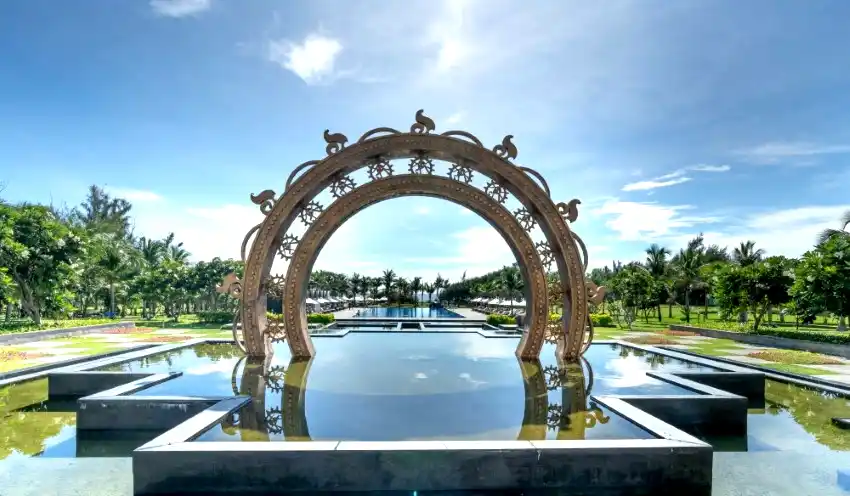
2 Weeks In Vietnam
Fourteen days is just enough time to fall completely in love with Vietnam. From the misty limestone peaks of the North to the electric chaos of Saigon and the lazy waterways of the Mekong Delta, this country packs more variety into a two-week window than most destinations offer in a month. Here is how to do it properly.
The Quick Summary:
- Entry Requirements: Most international travellers need a 90-day multi-entry e-visa, applied for online through the official government portal before you leave home. It is straightforward, affordable, and takes around three business days.
- Daily Budgets: Backpackers can live well on 600,000 VND to 900,000 VND ($25 to $38 USD) per day. Mid-range travellers should budget 1,500,000 VND to 3,000,000 VND ($62 to $125 USD) for private rooms, sit-down restaurants, and occasional taxis. Luxury travellers can expect to spend 4,800,000 VND ($200 USD) and upwards.
- Regional Flavour: The North brings cool mountain air, ancient temple complexes, and dramatic karst seascapes. The Central coast is all UNESCO heritage, silk lanterns, and royal history. The South is tropical, loud, delicious, and completely addictive.
- Getting Around: Domestic flights connect major hubs in under two hours. Overnight trains offer a scenic and sociable alternative between cities, saving you a night’s accommodation. Grab, Be, and Xanh SM handle everything else on the ground.
The Classic Two-Week Route
The tried-and-tested way to tackle Vietnam in fourteen days is to travel north to south, starting in Hanoi and finishing in Ho Chi Minh City. This direction keeps transit times short, follows the logical cultural arc of the country, and lets you end on a flight from Tan Son Nhat International Airport back to wherever home is. Here is the full breakdown at a glance.
| Day | Destination | Core Activity |
|---|---|---|
| Days 1 to 2 | Hanoi | Explore the Old Quarter, visit the Temple of Literature, drink egg coffee beside Hoan Kiem Lake. |
| Days 3 to 4 | Ha Long Bay or Lan Ha Bay | Overnight boutique cruise among towering karst islands. Kayak, swim, and watch the sun set over the water. |
| Day 5 | Ninh Binh | Row through Trang An grottoes. Climb Hang Mua Peak for panoramic views over the rice paddies. |
| Day 6 | Hue | Tour the Imperial Citadel and royal tombs along the Perfume River. Eat bun bo Hue at a pavement stall. |
| Days 7 to 9 | Hoi An and Da Nang | Wander the Ancient Town lantern streets, walk My Khe Beach, and cross the legendary Hai Van Pass. |
| Days 10 to 12 | Ho Chi Minh City | War Remnants Museum, Ben Thanh Market, rooftop bars in District 1, and the Cu Chi Tunnels day trip. |
| Days 13 to 14 | Mekong Delta | Boat through the floating markets of Can Tho. Watch vendors trade fresh fruit from wooden vessels at dawn. |

Check the latest hotel prices across Vietnams’s best
neighborhoods. From the bustling Old Quarter
and elegant French Quarter to scenic West
Lake. Compare your options and secure the
best deals before you book.
When to Go

Vietnam’s geography is long and narrow, which means the weather in the North, Centre, and South can be completely different at the same time of year. There is no single “best month” that works perfectly for every region, but there is a window that comes close.
March and April are the sweet spot for a north-to-south route. Hanoi is warm and bright, Central Vietnam sits neatly between its two monsoon seasons, and the South is hot, sunny, and bone dry. Crowds exist but have not yet hit their summer peak. If you have any flexibility in your travel dates, aim here first.
October and November are wonderful for Hoi An specifically, though the North can be misty and cool. The Central coast gets its heaviest rain from September through December, so expect the occasional downpour if you travel then. It rarely cancels plans entirely, and the light after rain in the Ancient Town is something else.
Summer (June to August) is peak season for domestic Vietnamese travellers, meaning higher prices and fuller beaches in the South. The North is hot and occasionally rainy but perfectly manageable. Tet (Vietnamese Lunar New Year) falls in late January or February and brings the country to a near standstill for a week. Magical to witness, but book everything months in advance. For a full regional breakdown by month, the best time to visit Vietnam guide covers it in proper depth.
Pro Tips for Stress-Free Travel
The difference between a stressful Vietnam trip and a seamless one usually comes down to a handful of apps and a bit of forward planning. Here is what actually makes a difference on the ground.
- Connectivity: Sort your data before you land. Yesim offers instant eSIM activation for Vietnam, so you step off the plane with maps and messaging working immediately. No hunting for a SIM kiosk with a trolley full of luggage. Airalo is a solid backup if Yesim doesn’t have the data plan you need.
- Security and Privacy: Use NordVPN when connecting to public Wi-Fi in cafes, hotels, or co-working spaces. Vietnam has excellent internet coverage but public networks carry the usual risks, and NordVPN runs quietly in the background without killing your battery.
- Getting Around: Download Grab, Be, and Xanh SM before you arrive. These apps show you the price before you confirm the ride, which eliminates the meter disputes and overcharging that can still catch out tourists in unmarked taxis. The Grab vs Xanh SM comparison is worth a quick read if you want to know the difference.


Forget the daily data limits of standard tourist SIMs.
Get a Yesim eSIM for unlimited 5G data from ~$10.
Work, stream, and be connected the second you land.
Days 1 to 5: The North
The North sets the tone for everything that follows. Give it five full days and it will completely reset your pace of life.

Hanoi, Ha Long Bay, and Ninh Binh
Arrive in Hanoi and spend the first two days getting thoroughly lost in the Old Quarter. Hang Bac Street, Hang Dao Street, and the tangle of alleyways between them are where the real city lives. Eat bun cha at a plastic stool, sip egg coffee on a balcony overlooking Hoan Kiem Lake, and visit the Temple of Literature as the afternoon light turns golden. Not sure where to sleep? The where to stay in Hanoi guide breaks down the best neighbourhoods and hotels across every budget, with Agoda covering the full range from Old Quarter guesthouses to five-star properties on the lakefront.
On day three, transfer east to Ha Long Bay. If you can, choose a cruise heading toward Lan Ha Bay for quieter waters and fewer other boats in frame during sunrise. Spend twenty-four hours on the water, kayaking into sea caves and watching the mist burn off the limestone towers each morning. Get Your Guide and Klook both list verified overnight cruise operators at fixed prices.
Day five belongs to Ninh Binh. Row through the river caves of Trang An, then push yourself up the five hundred steps of Hang Mua Peak. The view over the Ngo Dong River valley from the top is one of the finest in the country. That evening, board the overnight train south toward Hue and wake up somewhere entirely different. 12GO handles the booking in minutes and the Reunification Express is far more atmospheric than it sounds.
Travel Tip: Pre-book your Ha Long Bay or Lan Ha Bay cruise before you arrive, not from touts outside your hostel. Reputable operators sell out weeks ahead during peak season (October to April). Both Klook and Get Your Guide list verified options at transparent fixed prices.
Days 6 to 9: The Centre
Central Vietnam is the country’s cultural and culinary soul. Four days here barely scratches the surface, but it is enough to understand why so many travellers stop moving and simply stay.
Hue, Hoi An, and Da Nang
Step off the overnight train in Hue and head straight for the Imperial Citadel. The scale of this former imperial capital surprises most first-time visitors. Spend the afternoon on a boat along the Perfume River to visit the royal mausoleums dotted through the hills south of the city. Eat your way through bun bo Hue and banh khoai before catching a bus or taxi south. Where to stay in Hue is worth a read if you want a night here rather than pushing straight through.
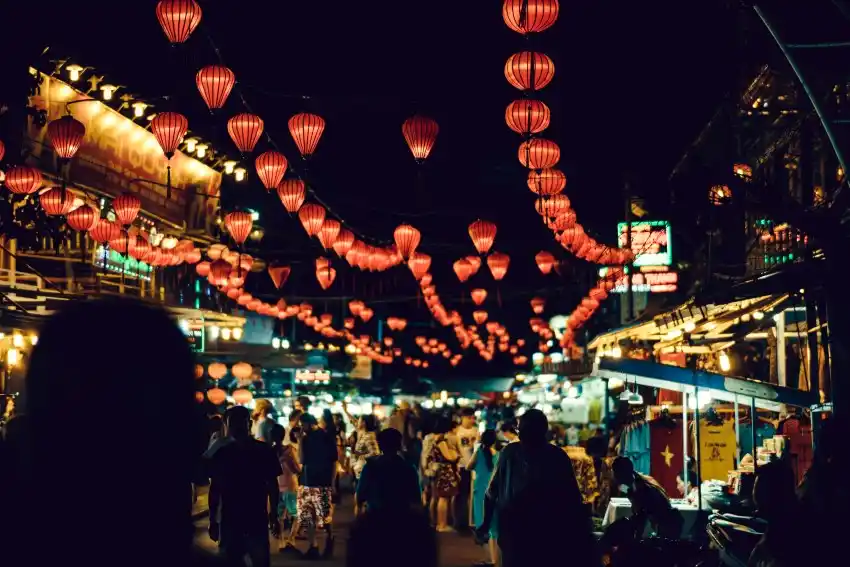
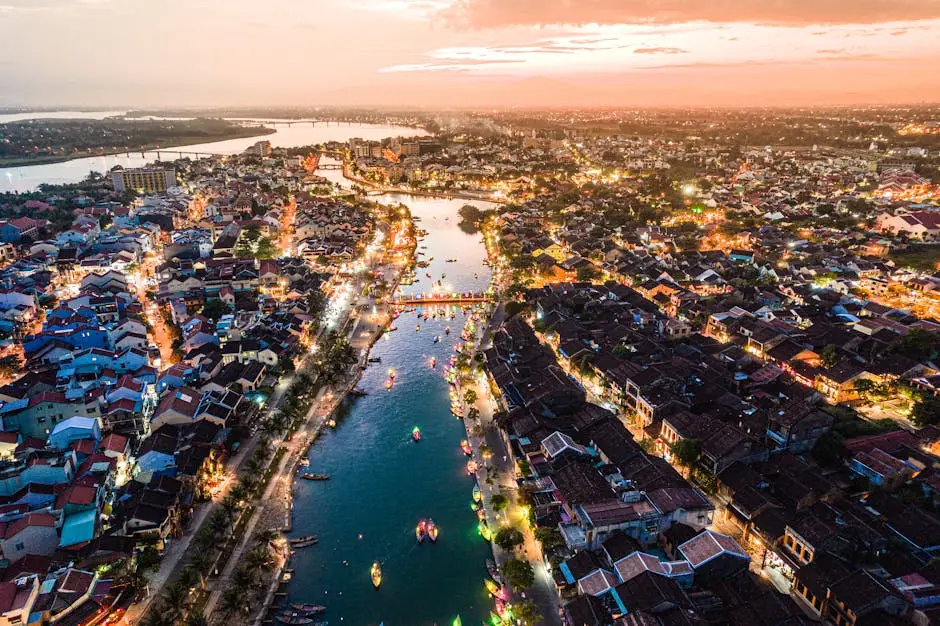
Hoi An gets three full days and earns every minute of them. The Ancient Town glows with silk lanterns after dark. Days are for browsing the tailor shops, hiring a bicycle toward An Bang Beach, and eating cao lau in the market. The lantern festival falls on the fourteenth of every lunar month and is genuinely worth timing your visit around. Agoda has brilliant coverage here, from boutique riverside hotels to beachside resorts just outside the old town. Check where to stay in Hoi An before you book.
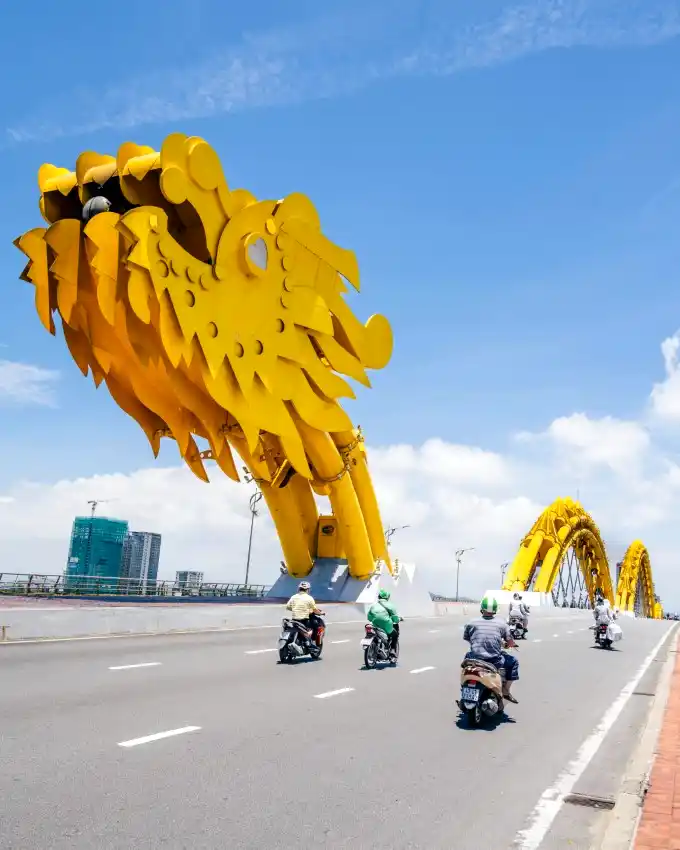
Use Da Nang as your transport hub. The Hai Van Pass between Da Nang and Hue is one of Vietnam’s most spectacular coastal drives. The Son Tra peninsula, Dragon Bridge, and My Khe Beach are all worth a half-day each if your schedule allows. From Da Nang International Airport, fly south to Ho Chi Minh City on day ten.
Days 10 to 14: The South
The South hits differently. It is louder, faster, hotter, and somehow even more delicious. Five days here will leave you exhausted in the best possible way.
Ho Chi Minh City and the Mekong Delta
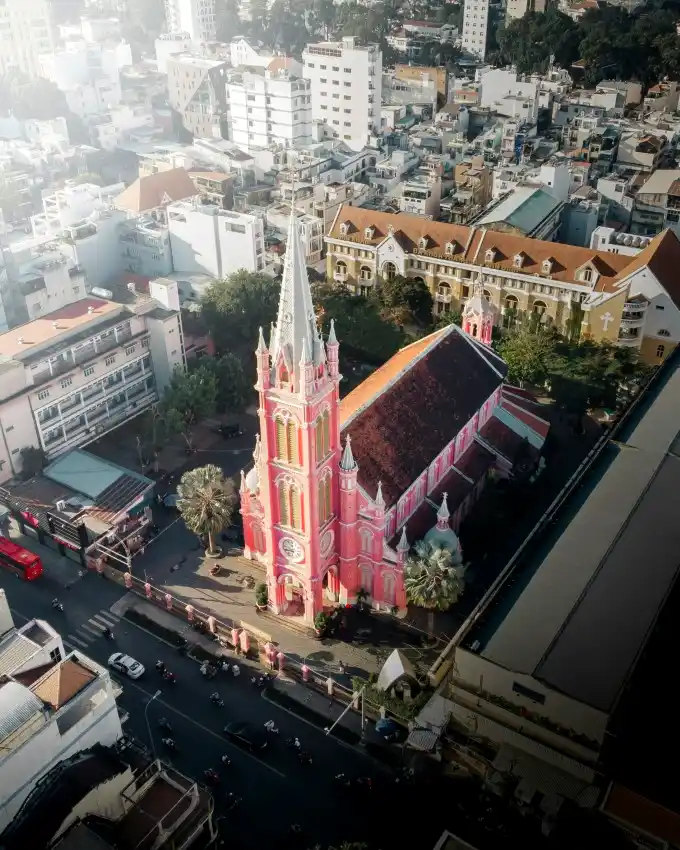
Land at Tan Son Nhat and let Ho Chi Minh City swallow you whole. Days ten and eleven work best split between the heavy history of the War Remnants Museum and the vivid, chaotic energy of Ben Thanh Market and the surrounding streets. District 1 gives you rooftop bars, French colonial architecture, and some of the best pho in the South. The pink Tan Dinh Church in District 3 is worth the short detour, especially at golden hour. Agoda covers everything from budget guesthouses in the backpacker district to five-star towers in District 1. The where to stay in Ho Chi Minh City guide will help you pick the right neighbourhood for your style.
On day twelve, catch a morning bus south to the Mekong Delta and base yourself in Can Tho. Wake before dawn on day thirteen to witness the Cai Rang Floating Market in full swing, watching vendors sell pineapples, watermelons, and dragon fruit directly from their wooden boats. Book the tour through Klook or Get Your Guide for a proper English-speaking guide who knows the back channels. It is one of those experiences that stays with you long after the tan fades.
Return to Ho Chi Minh City on day fourteen for your departure flight. A Welcome Pickups transfer from your hotel to the airport removes the stress of navigating traffic with luggage on your final day. Pre-book it the night before and it is one less thing to think about.
Family Travel Note: The Mekong Delta boat tours are wonderful for children. Most operators offer private boat hire, which keeps the experience relaxed and at your own pace. Book through Klook for vetted, English-speaking guides.
How Much Does Two Weeks in Vietnam Cost?
Vietnam is exceptional value regardless of how you travel. The gap between a backpacker experience and a genuinely luxurious one is surprisingly small in real terms, which makes it one of Southeast Asia’s most rewarding destinations at every budget level.
Budget Tiers
- Budget Traveller: 600,000 VND to 900,000 VND ($25 to $38 USD) per day covers a bed in a quality hostel dorm, three generous street food meals, local draft beer (bia hoi at around 10,000 VND per glass), and shared shuttles between cities.
- Mid-Range Traveller: 1,500,000 VND to 3,000,000 VND ($62 to $125 USD) per day covers a private room in a three-star hotel or boutique homestay, sit-down restaurant meals, app-based ride-hailing, and domestic flights to skip the longer bus legs.
- Luxury Traveller: 4,800,000 VND ($200 USD) and above per day opens up five-star heritage hotels, rooftop infinity pools, private guided excursions, and premium airport transfers. Vietnam’s luxury sector is world-class and remarkable value compared to Western equivalents.
A Few Notes on Money
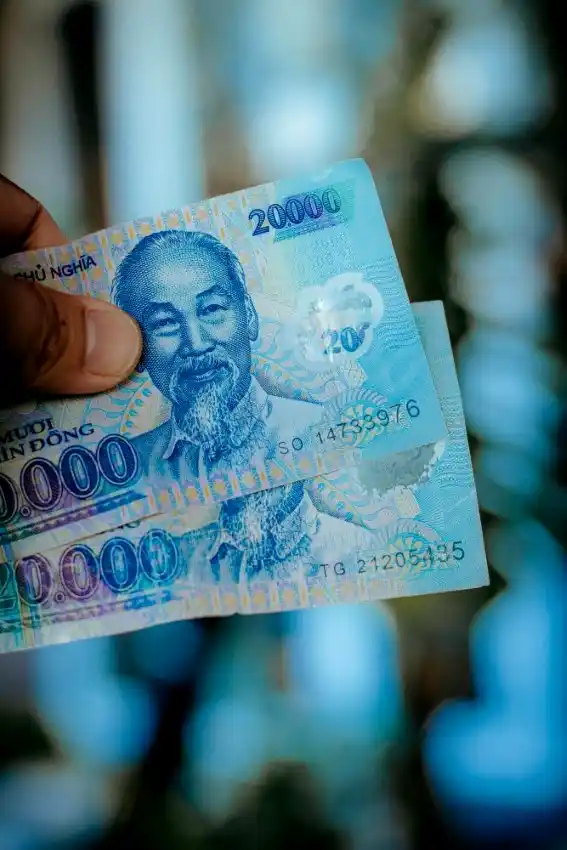
Cash remains king at street stalls, local markets, and smaller guesthouses. Keep a supply of 20,000, 50,000, and 100,000 VND notes on you at all times. Large 500,000 VND notes are hard for small vendors to break. ATMs are widely available in cities but can charge withdrawal fees, so withdrawing larger amounts less frequently saves money across a two-week trip. The Vietnam currency and money guide has everything you need to know about cards, ATMs, and avoiding the worst exchange rates.
Bargaining is expected and warmly received at traditional markets like Dong Xuan in Hanoi and Ben Thanh in Ho Chi Minh City. Open at roughly half the stated price, be cheerful about it, and meet somewhere in the middle. Never bargain for food or drinks, those prices are fixed for everyone.
Safety and Health: What You Actually Need to Know
Vietnam is a very safe destination for solo travellers, couples, and families alike. Violent crime against tourists is exceptionally rare. The main thing to watch is opportunistic petty theft, particularly phone-snatching from open bags or hands near busy roads in Ho Chi Minh City and Hanoi. Keep your phone in a front pocket or zipped bag when walking near traffic.
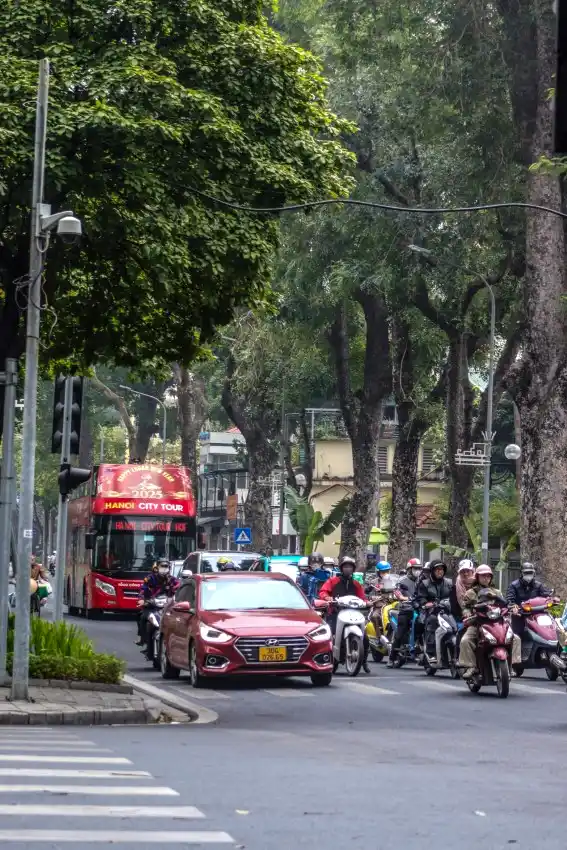
The traffic looks terrifying when you first arrive. It is not. When crossing streets lined with motorbikes, walk at a slow, steady, predictable pace and the riders will calculate their line and flow around you. Stopping suddenly is the only thing that causes problems.
For food safety: eat where the locals are eating. High turnover means fresh ingredients. Drink bottled water throughout your trip, and if you want ice, look for hollow cylindrical cubes, which indicate they were made in a commercial ice factory rather than from tap water.
Get travel insurance sorted before you fly. SafetyWing is a solid choice for longer trips and digital nomads, covering medical emergencies, trip disruption, and gear. If your flight is delayed or disrupted, AirHelp can assist with compensation claims under EU or international passenger rights regulations.

Was your flight delayed, canceled, or overbooked?
Don’t leave money on the table. AirHelp handles the
legal heavy lifting with airlines so you can claim the
compensation you deserve. Completely hassle-free.
- Getting Around: Download Grab, Be, and Xanh SM before you arrive. These apps show you the price before you confirm the ride, which eliminates the meter disputes and overcharging that can still catch out tourists in unmarked taxis. The Grab vs Xanh SM comparison is worth a quick read if you want to know the difference.
- Accommodation: Agoda is the primary pick for Vietnam, with deep inventory in smaller towns where Booking.com can be thin. Booking.com is great when free cancellation is a priority. Both have strong coverage across this entire route.
- Tours and Tickets: Klook and Get Your Guide are the most reliable platforms for booking guided day trips, cooking classes, and cruise packages at fixed prices. Both have strong customer support if anything goes wrong.
- Trains and Buses: 12GO covers the full network of domestic trains, sleeper buses, and airport transfers across Vietnam. Booking ahead is strongly advised for the Hanoi to Hue overnight train, particularly in peak season. The sleeper bus guide is handy if you want the cheaper option between cities.
- Airport Transfers: Welcome Pickups offers pre-booked, fixed-price airport transfers with English-speaking drivers. Particularly useful on arrival in Hanoi or Ho Chi Minh City when you are jet-lagged and just want to reach your hotel without negotiating.
Staying Longer: Digital Nomads and Expats
Two weeks has a way of turning into two months. The 90-day multi-entry e-visa makes this easy, and Vietnam’s infrastructure for remote workers and long-stay travellers has developed rapidly.
Da Nang has emerged as the country’s most popular base for digital nomads. The An Thuong neighbourhood in Ngu Hanh Son District has a dense cluster of coworking spaces, coffee shops with reliable fibre internet, and beachside restaurants that make Monday mornings feel slightly less like Mondays. For a deeper look at life there, the living in Da Nang guide is a good starting point.
Hoi An suits those wanting a slower pace, excellent food, and a warm expat community. Ho Chi Minh City suits those who want the full intensity of a major Southeast Asian capital, with world-class dining, co-working infrastructure, and an international social scene to match. The cost of living in Vietnam guide breaks down what monthly life actually costs across all three cities.
For those relocating with pets, Vietnam requires a microchip, a current rabies vaccination certificate, and an official international health certificate. The process is manageable with good preparation, so start early.
Check the latest hotel prices across Vietnams’s best
neighborhoods. From the bustling Old Quarter
and elegant French Quarter to scenic West
Lake. Compare your options and secure the
best deals before you book.
Frequently Asked Questions:
What is the best time of year to visit Vietnam?
March and April are widely regarded as the best months across the entire country. The North is warm without being oppressive, Central Vietnam sits between its two monsoon seasons, and the South is dry and sunny. October and November are excellent for Hoi An specifically, though the North can be cool and overcast at that time of year.
Is two weeks enough time to see Vietnam properly?
Two weeks covers the essential highlights comfortably if you follow a north-to-south route without trying to squeeze in every detour. You will leave with a genuine feel for the country and a long list of reasons to come back. Trying to add Sapa, Phu Quoc, and the Central Highlands all into the same trip tends to turn it into an airport relay race rather than a holiday.
Do I need a visa to visit Vietnam?
Most international passport holders need to apply for an e-visa before arrival. The standard tourist e-visa allows a stay of up to 90 days with multiple entries and is applied for online through the official Vietnamese immigration portal. Processing typically takes three working days. A small number of nationalities enjoy visa-free access; check the current list on the official government site before assuming you qualify.
Is Vietnam safe for solo travellers?
Yes, Vietnam is one of Southeast Asia’s safest destinations for solo travellers, including solo women. Violent crime against tourists is rare. The main risk is opportunistic petty theft in crowded areas, so keep your phone and wallet secure in busy markets and near roads. The Vietnamese people are famously warm and hospitable, and solo travel here tends to be a richly rewarding experience.
What is the best way to get between cities?
For long distances like Hanoi to Ho Chi Minh City, domestic flights are fast and surprisingly affordable when booked in advance. For medium distances like Hue to Da Nang, the overnight train is a lovely experience and saves a night’s accommodation cost. For shorter hops, sleeper buses are comfortable and cheap. 12GO covers bookings across all three modes in one place.
Can I drink the tap water in Vietnam?
No. Drink bottled water throughout your trip. This applies to brushing teeth as well in more rural areas. Ice is generally safe in cities and tourist areas if it comes in hollow cylindrical cubes, which indicates commercial production. Hollow cylinders are your friend; solid blocks or irregular chips are best avoided.
How do I get a local SIM card or eSIM?
Physical SIM cards are available from Viettel, Mobifone, and Vietnamobile kiosks at all major international airports, usually for around 150,000 to 200,000 VND ($6 to $8 USD) including several gigabytes of data. Alternatively, activating an eSIM through Yesim before you fly means you land connected without queuing. Airalo is a solid backup option. Both work excellently across Vietnam’s cities and main tourist routes.
Is it worth hiring a guide for any part of the trip?
Absolutely, particularly for the Imperial Citadel in Hue, the Cu Chi Tunnels near Ho Chi Minh City, and a street food walking tour in either Hanoi or Hoi An. A knowledgeable local guide adds context that transforms a sightseeing visit into something moving and memorable. Klook and Get Your Guide both list well-reviewed guided experiences across all the main stops on this route.
What should I pack for a two-week Vietnam trip?
Light, breathable clothing for the South and Central regions. A light layer or two for Hanoi in the cooler months (November through February). Good walking shoes, since most of the best experiences involve a lot of pavement. A small day backpack with a zip closure for market visits. Reef-safe sunscreen, since it is harder to find locally. And a portable power bank, because the days are long and your phone will work hard.
Do I need travel insurance for Vietnam?
Yes, and it is not worth skipping. While Vietnam is very safe, medical costs at international-standard hospitals can add up quickly, and a single missed flight or stolen laptop can derail the whole trip financially. SafetyWing offers flexible coverage that works well for trips of this length, including medical emergencies, trip interruption, and gear. Sort it before you fly, not after something goes wrong.