How To Get Around Vietnam
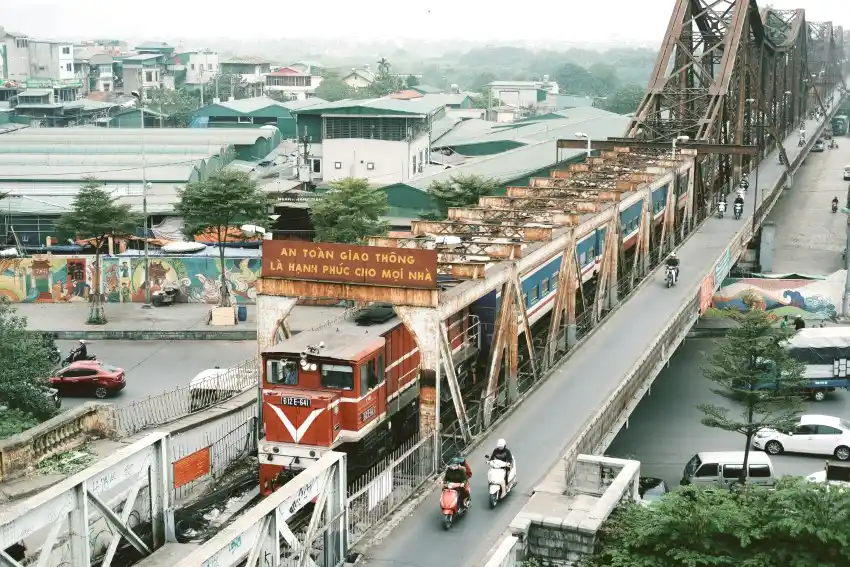
From the neon-lit alleyways of Ho Chi Minh City to the misty mountain passes of Ha Giang, the rhythm of Vietnamese transit is half the adventure. Getting between regions is a constant trade-off between speed, scenery and budget, and the choices run from one-hour domestic hops to a clattering, romantic, colonial-era rail line that hugs the coast for hundreds of kilometres.
This guide walks through every option so you can move around the country like you have done it a hundred times before. If you are still shaping the bigger picture, our first time visiting Vietnam guide sets the scene, and the north to south Vietnam route shows how these transport links stitch together end to end.
The Quick Summary:
- Best Long-Distance Option: Domestic flights save you days of travel time between major hubs like Hanoi and Da Nang.
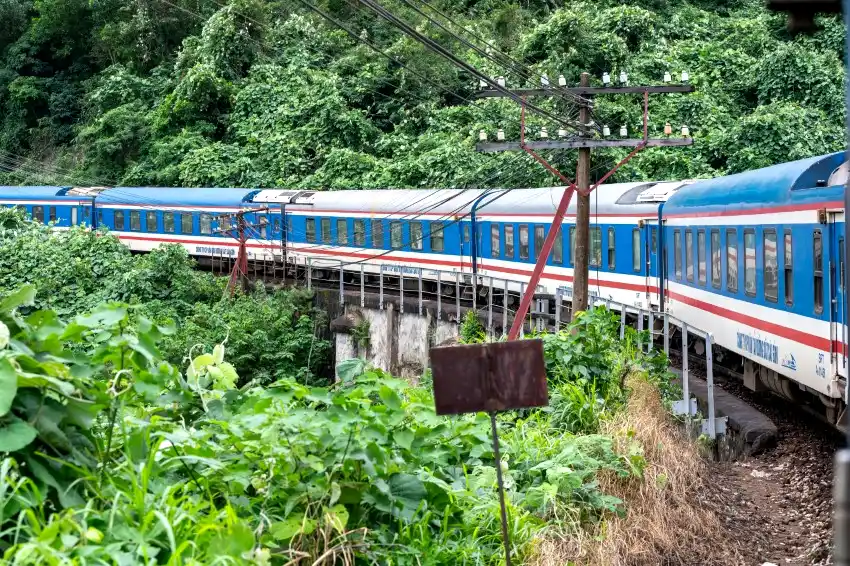
- Best Scenic Option: The Reunification Express train serves up coastal views you simply cannot get any other way, especially over the Hai Van Pass.
- Best Urban Transit: Ride-hailing apps give you instant, cash-free motorbike and car trips in every major city.
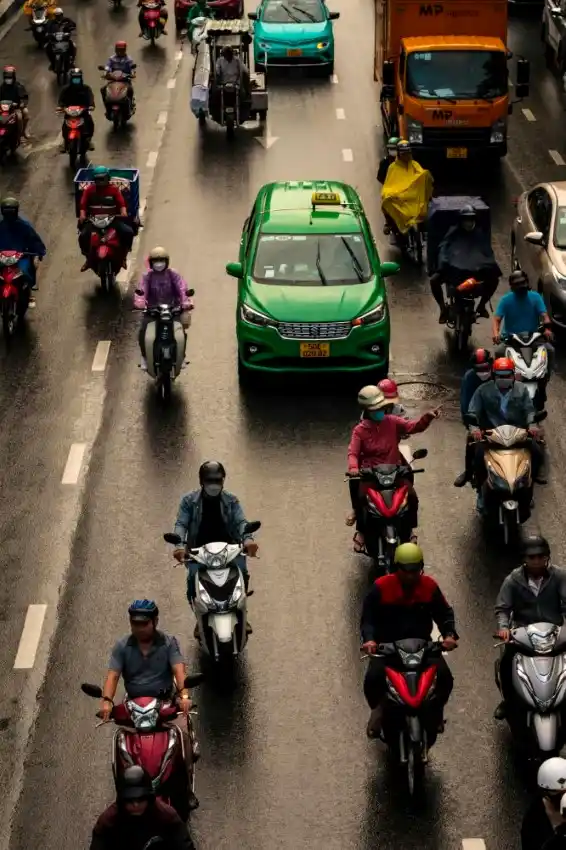
- Key Cultural Rule: Motorbikes rule the road. When crossing streets, walk at a slow, predictable pace so riders can read your movement and flow around you.

12Go takes the guesswork out of
Vietnam transport. See real-time
availability, compare classes, and
book in your own language and currency.
Traveling Between Cities:
How you move between cities comes down to balancing your travel time against your appetite for watching the landscape shift outside the window. Domestic flights, sleeper trains and plush limousine buses each suit a different kind of traveller, and the table below lays out how they stack up. If you are pacing a longer trip, our 2 weeks in Vietnam itinerary leans on flights to cover ground, while the slower 1 month in Vietnam plan makes room for the train and the scenery that comes with it.
| Transit Type | Average Cost | Best For |
|---|---|---|
| Domestic Flight | 1,200,000 – 2,500,000 VND ($49 – $103 USD) | Speed across vast distances |
| Sleeper Train | 700,000 – 1,200,000 VND ($29 – $49 USD) | Coastal scenery and overnight comfort |
| Limousine Bus | 250,000 – 450,000 VND ($10 – $19 USD) | Regional trips under five hours |
Whichever you pick, booking the long-haul legs ahead of time is the smart move. For trains and buses between cities, 12GO is the easiest place to compare schedules and lock in seats before you arrive. If you want the deeper detail on any one mode, the Vietnam train guide and the Vietnam sleeper bus guide both go further than we can here.
Which Transport Option is Right for You?
Every mode here suits a different travel style and budget. Whether you are racing the clock between cities or deliberately savouring the journey, Vietnam’s network has you covered top to bottom. Here is how each one actually feels in practice.

Domestic Flights
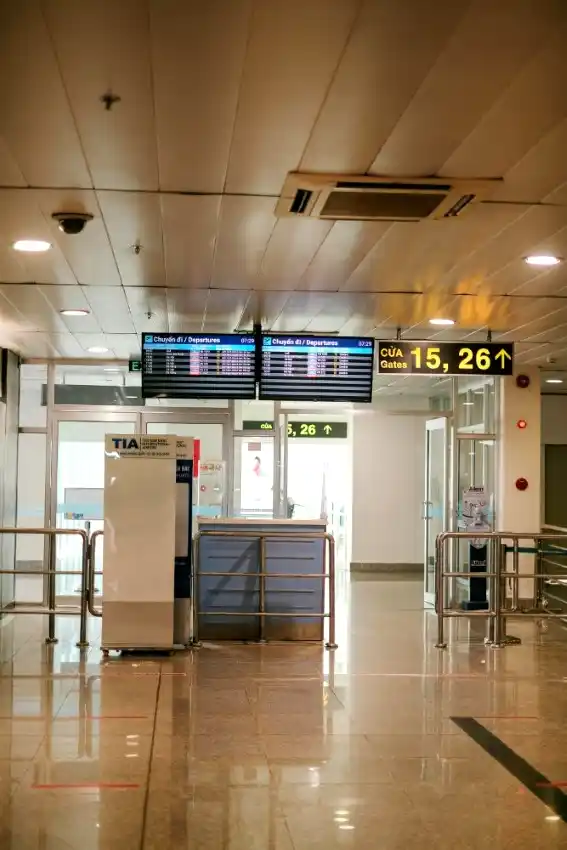
When time is tight, flying is your best friend. Vietnam Airlines, VietJet Air and Bamboo Airways connect Hanoi, Da Nang and Ho Chi Minh City daily, and booking a couple of weeks ahead keeps fares low and timings sensible.
On the Hanoi to HCMC run, a one-hour flight saves you roughly 30 hours on the ground. Knowing which terminal you land in helps too, so it is worth a look at our guide to the best airports in Vietnam before you fly.
The Reunification Express Train
The historic line linking Hanoi and Ho Chi Minh City is the gold standard for anyone who values the journey as much as the destination. Book a first-class, four-berth soft sleeper for a comfortable overnight leg.
The real showstopper is the stretch between Hue and Da Nang, where the tracks cling to the cliffs of the Hai Van Pass with the East Vietnam Sea glittering far below. Our dedicated Reunification Express train guide breaks down cabins and routes, and if you are based in the capital, the Hanoi hub helps you plan the days either side.
Luxury Limousine Buses
Forget the cramped old public buses you might be picturing. Travel here now runs on premium limousine buses, Ford Transits kitted out with plush reclining leather seats, USB ports and air conditioning that actually works.
They use Vietnam’s new expressways, which makes them ideal for shorter hops like Hanoi to Ninh Binh or Da Nang down to Hoi An. They are also the standard way most visitors reach Ha Long Bay from the capital.
Motorbike Taxis (Xe Om)
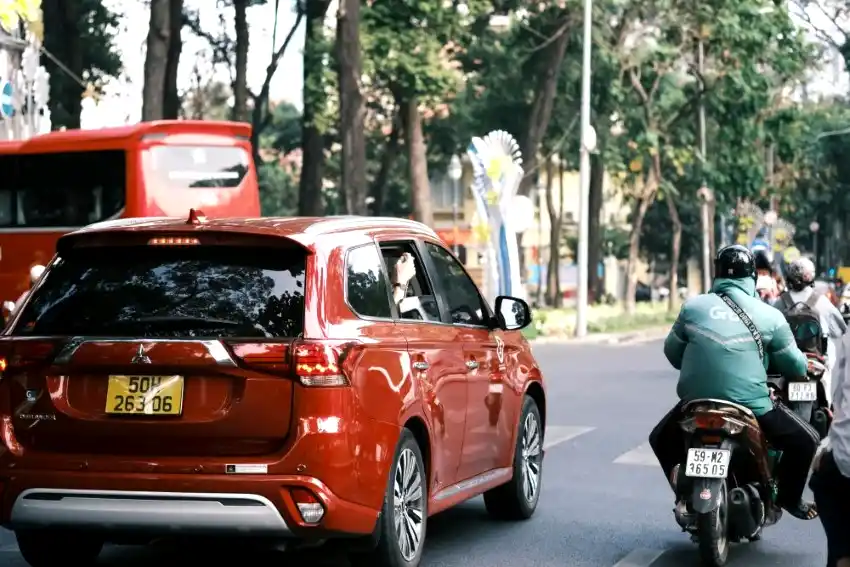
Xe om are the fastest way to slice through rush-hour gridlock in dense districts. Always book them through an app like Grab or Xanh SM for upfront pricing, GPS tracking and a verified driver.
It gets you where you are going in a flash while handing you a proper taste of local commuter life. If you want to weigh the two main apps against each other, our Grab vs Xanh SM comparison settles it.


No taxi haggling at Vietnam airport.
Welcome Pickups dispatch a vetted
local driver who knows the city, with
the fare confirmed before you even fly.
Pro Tips For Stress Free Travel:

- Ride-Hailing Apps: Download Grab, Xanh SM and Be before you arrive. They give clear, upfront pricing for both bikes and cars, so you never argue over a taxi meter again.
- Connectivity: Grab an eSIM from Yesim before you fly so you land with data and GPS live from the first minute. Airalo is a solid backup. On public cafe and hotel Wi-Fi, run NordVPN to keep your data locked down. Our Vietnam SIM cards and internet guide compares your options.
- Booking Tours and Transport: Use Get Your Guide to pre-book day trips with private drivers or scenic rail journeys without negotiating on the spot. Klook is a strong alternative for activities. For intercity buses and trains, 12GO is the most reliable place to compare schedules and reserve seats.
- Airport Transfers: Skip the post-flight scramble and pre-book a driver with Welcome Pickups, who meet you at arrivals with your name on a sign and a fixed fare agreed in advance.
- Cover Yourself: A lot of getting around involves bikes, buses and the odd boat, so travel insurance is non-negotiable. SafetyWing is built for long-term and flexible trips. See our travel insurance for Vietnam guide for what to check before you buy.
- Cash is King: Street vendors and small operators rarely take cards. Keep physical Dong on you in smaller bills like 20,000, 50,000 and 100,000 VND. Those big 500,000 VND notes are a pain to break.

Saily’s Vietnam eSIM keeps you online
for less than most tourist SIMs charge.
Easy install, transparent pricing, and
trusted infrastructure behind it.
Getting Around Cities:
Once you are inside a city, the rules change. Distances shrink, traffic thickens, and the humble ride-hailing app becomes your single most useful tool. Each city also has its own quirks, which is why we keep dedicated guides for getting around Hanoi, around Ho Chi Minh City and around Da Nang.
Ride-Hailing Apps
Download Grab, Xanh SM and Be the moment you land. Grab is the all-rounder, handling everything from rides to food delivery.
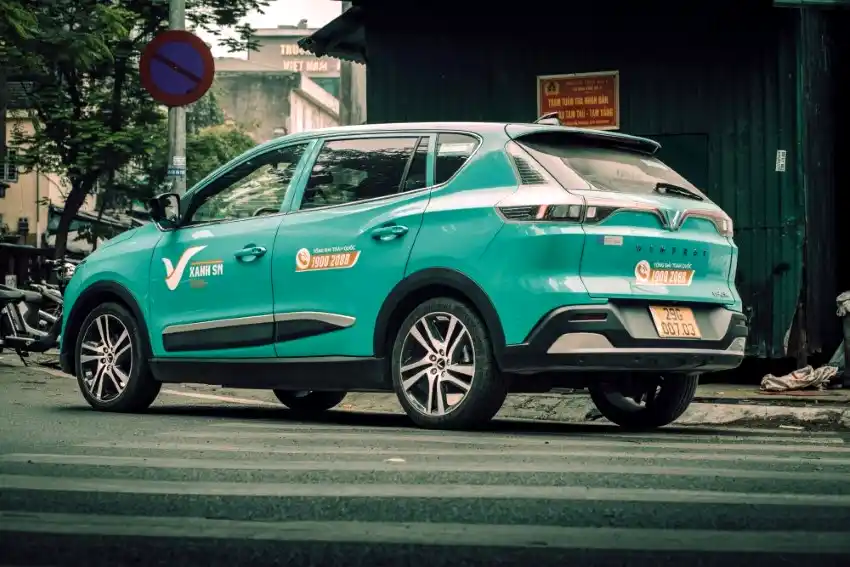
Xanh SM runs a sleek all-electric fleet of VinFast cars and scooters that is quiet, professional and often the comfier choice. When one app shows surge pricing in the rain or at rush hour, the other usually has a better rate waiting.
Road-Crossing Strategy
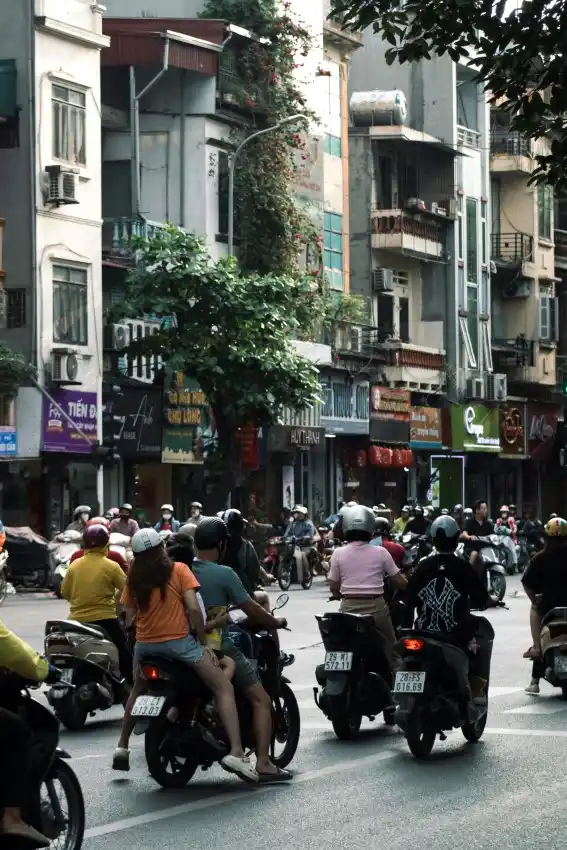
In gentle, walkable towns like Hoi An’s Ancient Town, crossing the road is no drama at all. In a high-traffic city like Ho Chi Minh City it can feel genuinely nerve-wracking the first time.
The trick is simple: step off the kerb when you spot a small gap, hold a slow and steady pace, and never lurch or stop dead. Riders will read your line and flow around you like water. If road safety is on your mind generally, our is Vietnam safe overview puts the risks in honest perspective.
Where you base yourself shapes how much you will lean on these apps in the first place. Stay central and many sights are a short stroll away, which is exactly why our where to stay in Hanoi and where to stay in Ho Chi Minh City guides are worth a read before you book anything.

Compare hotel prices across Vietnam’s best
neighbourhoods and book with confidence.
Filter by budget, location, or guest score
to find the right stay for your trip.
Renting a Motorbike:
Renting your own bike unlocks a kind of freedom nothing else matches, but it is not for the faint of heart, and the legal side trips up more travellers than almost anything else. Read the next part carefully, because getting it wrong can cost you far more than the rental.
Here is the part nobody tells you until it is too late. To ride legally you need your home motorcycle licence plus an International Driving Permit issued under the 1968 Vienna Convention. This matters enormously, because the 1949-style IDP that the UK, US, Canada and Australia hand out is not recognised in Vietnam. Riding on the wrong version is treated as riding with no licence at all, which means heavy fines, refused insurance claims, and being held liable in a crash. Our full renting motorbikes in Vietnam guide walks through exactly how to get the right permit.
Pro Tip: Always wear a quality helmet, watch for gravel and potholes, and avoid riding after dark. Big vehicles, trucks and buses especially, always take right of way whether you like it or not. At sights and markets, look for Giu Xe parking signs, where an attendant watches your bike for 5,000 to 10,000 VND. It is money well spent.
Rental shops sit in every tourist town and usually charge 100,000 to 200,000 VND ($4 to $8 USD) a day for a standard automatic scooter. Inspect the bike closely before you ride off and photograph any existing scratches or dents, so you are not blamed for them on return. If a self-drive trip feels like a stretch, a guided ride is the safer route. Our Vietnam motorbike adventures guide covers tours with a driver, and operators like Get Your Guide list plenty of beginner-friendly options.


Lock in top-rated Vietnam tours with
GetYourGuide’s free cancellation up to
24 hours before. Reserve now and pay
later if your dates aren’t locked in.
A Note for Nervous Travelers:

Vietnamese roads look like pure chaos at first glance, then reveal a surprisingly intuitive rhythm once you stop fighting it. Ride-hailing apps remove any need to haggle with drivers, and the expressway bus network is modern and safe. Your biggest practical worry is simply keeping smaller cash notes on hand, since most transit is cash-only. The Vietnam travel tips guide is full of little habits that smooth all of this out.
Pickpocketing does happen on crowded city transport, so keep bags zipped and phones tucked away on motorbike taxis. On overnight sleeper trains, use the under-bunk storage and keep valuables within arm’s reach. A little preparation goes a long way, and our Vietnam safety guide covers the rest. Get these basics right and getting around becomes one of the most enjoyable parts of the whole trip, whether you are heading for the beaches of Da Nang or the imperial calm of Hue.
Frequently Asked Questions:
Is it safe to use sleeper buses in Vietnam?
They are generally safe and very economical. Always book VIP or Luxury limousine services, which use professional drivers and run at regulated speeds. Avoid flagging down random buses on the roadside.
Do I need to tip drivers in Vietnam?
Tipping is not expected for standard rides. If a private tour driver gives you exceptional service for a full day, a tip of 20,000 to 50,000 VND ($1 to $2 USD) is genuinely appreciated.
Which ride-hailing app is best in Vietnam?
Grab is the most common, but having both Grab and Xanh SM installed is the smartest move. If one is surging due to rain or rush hour, the other often has a better rate.
Do I legally need a license to rent a motorbike?
Yes. You need your home motorcycle licence plus an International Driving Permit issued under the 1968 Vienna Convention. The 1949-style IDP issued by the UK, US, Canada and Australia is not recognised in Vietnam, and riding on it is treated as riding with no licence, which voids your insurance.
How much does it cost to fly between Vietnamese cities?
Domestic flights typically run 1,200,000 to 2,500,000 VND ($49 to $103 USD) one way. Book a couple of weeks ahead with VietJet Air, Vietnam Airlines or Bamboo Airways for the best fares and timings.
Is the Reunification Express train worth it?
How do I get from the airport to my hotel?
The easiest options are a ride-hailing app like Grab or Xanh SM from the airport rank, or a pre-booked airport transfer that meets you at arrivals with a fixed fare. Both avoid haggling after a long flight.
Can I use my phone for maps and ride apps as soon as I land?
Yes, if you set up an eSIM before you fly. Activate it ahead of arrival and you will have data and GPS the moment you switch off airplane mode, which makes booking that first ride effortless.
What is the cheapest way to get around Vietnam?
Sleeper buses and trains are the most budget-friendly for long distances, while ride-hailing motorbikes are cheapest within cities. Booking buses and trains in advance online usually beats turning up at the station.
Are taxis or ride-hailing apps better in Vietnam?
Ride-hailing apps win in nearly every case. You see the fare before you accept, the route is tracked by GPS, and there is no risk of a rigged meter or a long-way-round detour.