Hoi An Cooking Classes
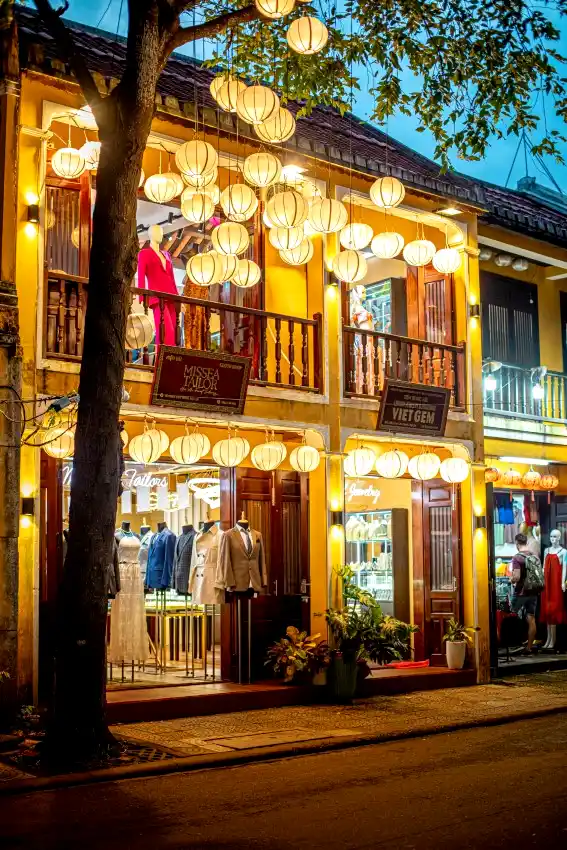
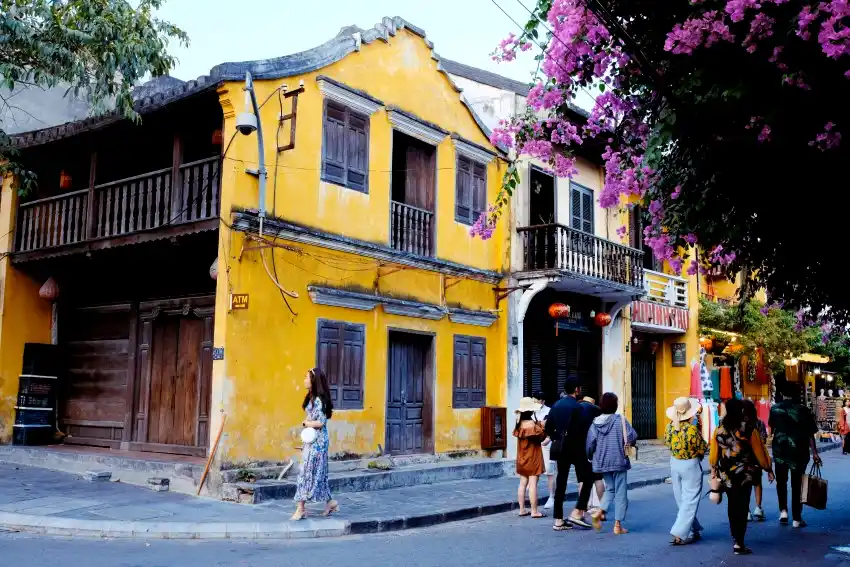
The yellow-walled alleys of Hoi An’s ancient port town offer more than something pretty to photograph. The scent of charcoal-grilled pork, fresh herbs, and simmering broth drifts from every corner, and Central Vietnam is quietly one of the world’s great culinary destinations.
Taking a cooking class here gives you something most tours never do: a real, hands-on connection to local heritage. Whether you’re picking ingredients at a buzzing riverside market or paddling a bamboo basket boat through a coconut grove, you’ll leave understanding why this food tastes so different anywhere else in the world.
The Quick Summary:
- Budget: Group classes run between 500,000 VND and 1,125,000 VND ($20 to $45 USD) per person. Private masterclasses and specialist experiences range from 1,500,000 VND to 2,500,000 VND ($60 to $100 USD).
- Booking Advice: Reserve at least 48 hours ahead during peak season. Good small-group eco-cookery schools fill up fast, and the best ones are worth a little planning.
- Regional Flavour: Central Vietnamese cooking leans heavily on fresh greens, rice paper, and big savoury notes from fish sauce and shrimp paste. It sits somewhere between the sweeter South and the subtler, black-pepper-forward North.
- Getting There: Most reputable cooking packages include complimentary hotel pick-up within the ancient town or along An Bang Beach, usually in electric vehicles or private cars.

Compare tours and tickets across Hoi An
and book instantly on your phone.
Klook’s mobile vouchers mean no
printing, no fuss, just turn up and go.
Which Hoi An Cooking Class Should You Choose?
Classes here range from breezy two-hour restaurant demos to full six-hour farm-to-table adventures. The right one depends entirely on whether you want a quick, fun recipe session or you’d rather spend a half-day immersed in the way locals actually grow, catch, and cook their food. Here’s a straightforward comparison of the main types to help you decide. And if you want to get a feel for the full range of food experiences available before you choose, the nationwide street food guide gives you a great grounding in what makes Central Vietnamese cooking so distinctive. You can also browse cooking classes across Vietnam if you’re planning to cook your way through more than just Hoi An.
| Class Type | Average Cost Per Person | What’s Included |
|---|---|---|
| Eco-Farm and Basket Boat Experience | 750,000 VND to 1,000,000 VND ($30 to $40 USD) | Market tour, basket boat ride in Cam Thanh, 4-course meal, round-trip transport |
| Boutique Restaurant Masterclass | 1,125,000 VND to 1,625,000 VND ($45 to $65 USD) | Advanced knife skills, dish history and context, premium ingredients, central town location |
| Rural Herb Village Immersion | 625,000 VND to 875,000 VND ($25 to $35 USD) | Farming at Tra Que, herbal foot massage, traditional cooking methods, bicycle tour |
How Does a Hoi An Cooking Class Actually Work?
Most classes run four to five hours and follow a satisfying arc: you start at the market, travel to your kitchen, cook, and then sit down together to eat everything you made. Here’s what to expect at each stage.
The Morning Market
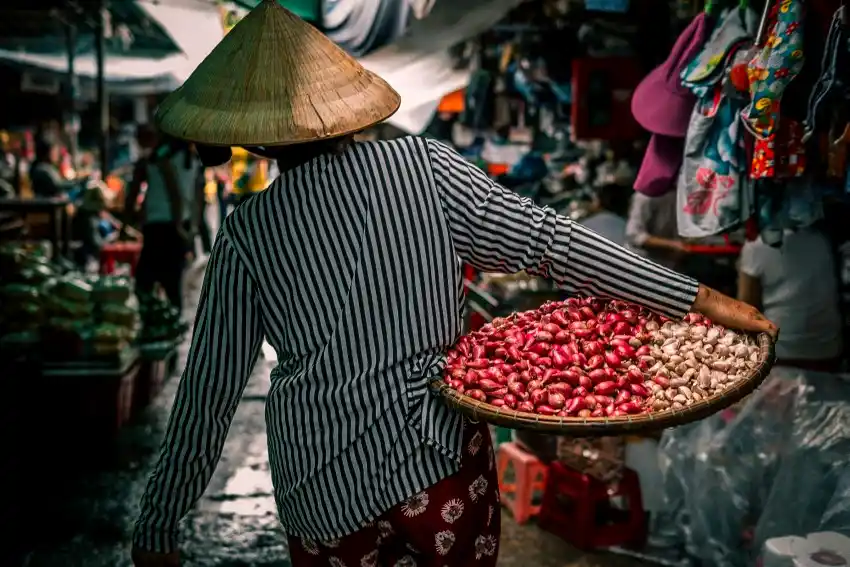
Things almost always kick off at Central Market or Ba Le Market. Your instructor walks you through the maze of stalls, pointing out the ingredients that define Central Vietnamese cooking: purple shallots, lemongrass, fresh ginger, and an impressive variety of mint and coriander. Watch how local vendors do things.
Transactions are quick, polite, and nothing like the drawn-out bargaining you’ll find at souvenir stalls. The day’s catch from the Thu Bon River largely decides what ends up on your menu, which is a wonderful thing. If you want a bit of background on market etiquette and local customs before you go, the culture and etiquette guide is a handy read.
Getting to the Kitchen
After the market, you head to the cooking space. Eco-school groups often travel by boat or a short drive out to the Cam Thanh water coconut grove or the green fields of Tra Que Herb Village. Many rural schools include a spin in a traditional bamboo basket boat, where you can try your hand at crabbing before you put on an apron.
It sounds gimmicky, but it’s one of the most fun thirty minutes you’ll have in Vietnam. If the basket boat experience appeals, it’s also bookable as a standalone activity through Klook for those who want to do it separately from a cooking class.
Cooking and Eating
Each participant gets their own gas burner and prep station. Instructors walk you through using the mortar and pestle properly, rolling thin rice paper without tearing it, and nailing the precise timing for a smoky clay-pot sear. Nobody rushes you.
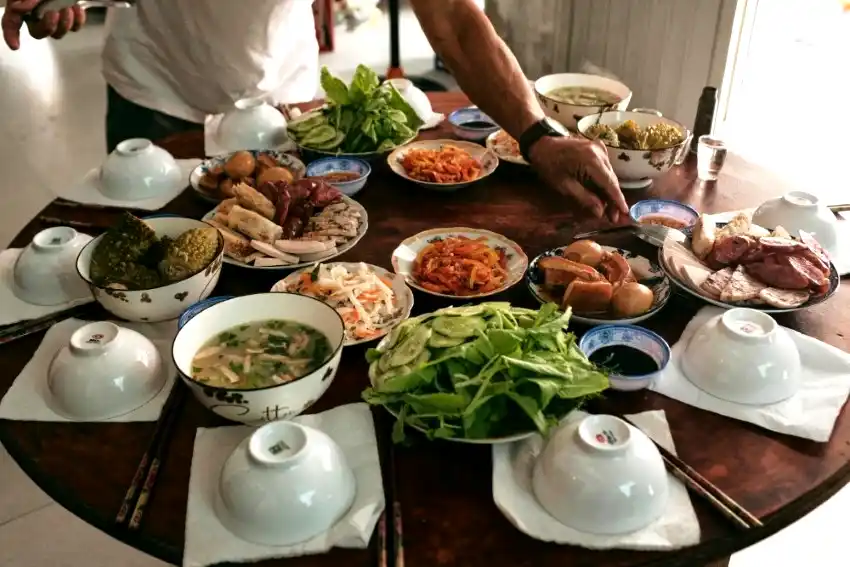
The whole thing wraps up with everyone sitting down to share and eat exactly what they cooked, which is deeply satisfying and usually quite a lot of food. For context on what you’ll be eating and where those flavours come from, the Ancient Town guide gives great background on Hoi An’s culinary history.

Lock in your Hoi An accommodation early
and beat peak-season price hikes.
Agoda’s filters let you compare options
side by side before you commit.
What Dishes Will You Actually Learn?
Hoi An classes focus on the regional specialties that are genuinely hard to recreate at home without understanding the precise balance of Central Vietnamese flavours. Rice flour, pork, shrimp, and fresh herbs form the backbone of almost every menu. Once you’re back home, Vietnam’s coffee culture is another rabbit hole worth exploring if you fell in love with what’s in your cup during the market visit.
Banh Xeo: The Crispy Vietnamese Pancake
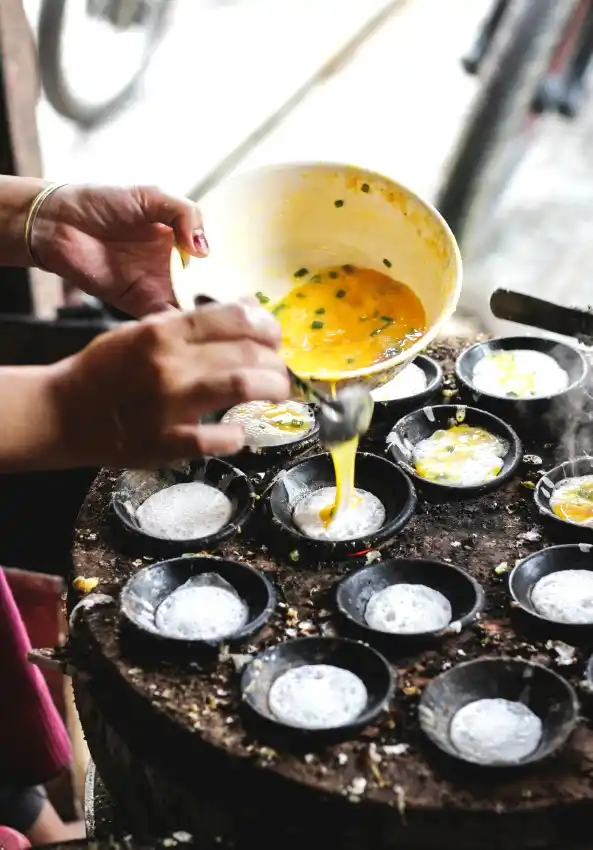
The Hoi An version is smaller, crunchier, and more intensely savoury than the coconut-milk Banh Xeo you’ll find down south in Ho Chi Minh City. You learn to swirl rice flour batter at just the right moment, add pork belly, shrimp, and bean sprouts, and fold it cleanly.
The real lesson comes from rolling the finished pancake into rice paper with bitter banana flower and mustard leaves alongside it. Get that right and you’ll be making it at home within a week of returning.
Cao Lau: Hoi An’s Ancient Noodle
Authentic Cao Lau has a chewiness that historically came from water drawn from the ancient Ba Le Well and ash from trees on the Cham Islands.
Classes use pre-made noodles for practicality, but instructors teach you how to marinate and braise the five-spice pork, make the crispy rice crackers that go on top, and build the highly concentrated, savoury broth that ties everything together.
This dish genuinely does not taste like anything else in Vietnam, and it’s one of the main reasons food lovers keep coming back to Hoi An.
Fresh Summer Rolls and Dipping Sauces
Rolling summer rolls properly introduces you to how delicate and temperamental local rice paper actually is. More importantly, you learn the sauces. You’ll make Nuoc Cham from fish sauce, lime juice, sugar, chili, and garlic, and a rich warm peanut and pork liver dipping sauce paired specifically with Central Vietnamese grilled meats.
The sauce lessons alone are worth the price of admission. If you want to explore more of this food culture beyond the class itself, the Hoi An day trips page has plenty of food-focused excursions to places like Hue that pair brilliantly with a cooking class day.

GetYourGuide has Hoi An’s best
excursions covered: museums, tours,
and unique experiences with verified
operators and instant mobile vouchers.
A Note for Nervous Travellers:
Hoi An is a welcoming, safe destination for food exploration. Cooking schools maintain high hygiene standards: purified ice, filtered water for washing herbs, and clean prep stations throughout. If you have severe allergies to peanuts, gluten, or seafood, tell the school at the time of booking. Vietnamese hospitality is remarkably adaptable, and instructors are well practised at substituting ingredients without losing the dish’s character.
Pro Tip: Motorbike traffic can feel chaotic during the morning rush, but booking a class that includes a private hotel shuttle removes that stress entirely. If you’re exploring the markets independently beforehand, cross streets at a slow, steady pace and the riders will steer around you. It works exactly as advertised.
Pro Tips for a Stress-Free Experience:
- Ride-Hailing Apps: Download Grab or Xanh SM before you arrive. Both give you fixed upfront fares, no haggling with unmetered taxis, and Xanh SM’s electric vehicles are a pleasant bonus for the short hop between your hotel and the meeting point.
- Booking Activities: Compare prices and read verified reviews on Klook or Get Your Guide to find certified eco-tours and boutique classes. Reviews are useful here for filtering the great from the average, and both platforms offer free cancellation on most listings.
- Stay Connected: Pick up an eSIM through Yesim before you fly and you’ll have working data from the moment you land at Da Nang Airport. No queues, no fumbling with a physical SIM, just instant maps and translation throughout your stay.
- Cash is Essential: Major cooking schools accept international cards, but market vendors only take cash or local QR bank transfers. Always carry Vietnamese Dong in smaller notes for the market portion of your morning. For a full breakdown of how money works here, the Vietnam currency guide has everything you need.
- Travel Insurance: SafetyWing is solid, affordable, and covers the kind of things that actually happen on a trip like this: motorbike scrapes, unexpected illness, and trip disruption. Don’t skip it.

Stay online across Hoi An without the
daily-data limits of standard tourist
SIMs. Yesim’s eSIM offers unlimited 5G
from around $10 for the whole trip.
Thinking of Staying Longer? Central Vietnam as a Base:
For travellers who fall hard for the culinary rhythms of this region, Hoi An and neighbouring Da Nang make excellent longer-term bases. The An Bang Beach neighbourhood and the Cam Chau riverside area are popular with expats and slow travellers, and modern coworking spaces in Da Nang are just a twenty-minute drive away.
The standard 90-day e-visa makes an extended stay straightforward, and the region has solid international clinics, pet-friendly rentals, and some lovely long-term accommodation options for those in no hurry to leave.
If the idea of staying longer is taking shape, Living in Da Nang is a great companion read alongside the Vietnam Digital Nomad Guide, since most long-stayers end up splitting their time between the two. For those relocating with pets, the pet relocation guide covers everything you need to know about bringing animals along. And if you want to see how local rental prices stack up, the cost of living breakdown will give you a realistic picture of what a life here actually costs.
Find Your Stay Near Hoi An:
Whether you’re after a budget guesthouse near the ancient town, a beachfront resort on An Bang, or a long-stay rental in Cam Chau, there’s a wide range of accommodation to suit every style and budget. The Hoi An accommodation guide breaks it all down by neighbourhood. Book through Agoda for the best rates on boutique guesthouses and smaller properties, or Booking.com if free cancellation is a priority.
Frequently Asked Questions:
Are Hoi An cooking classes suitable for vegetarians and vegans?
Yes, almost every reputable cooking school accommodates vegetarians and vegans. Chefs readily swap fish sauce for mushroom-based soy sauce and replace pork or shrimp with tofu, local mushrooms, and braised eggplant. Just mention your dietary needs at the time of booking.
What is the best time of day to take a cooking class?
The morning session starting around 8:00 AM is the one to go for. Morning classes include visits to the market at its peak hour when produce is freshest, the cultural energy is highest, and the whole experience wraps up comfortably before the afternoon heat sets in.
Can children join a cooking class in Hoi An?
Children are welcome at most eco-farms and rural cooking schools. Instructors adapt the tasks so younger participants focus on safe activities like rolling spring rolls, mashing ingredients in a mortar, or decorating plates, while adults handle the hot burners.
How far in advance should I book?
At least 48 hours ahead for most schools, and ideally several days during peak season between November and February. The best small-group eco-cookery experiences have limited spots and fill up quickly, particularly for morning sessions.
What should I wear to a cooking class?
Comfortable, casual clothing you don’t mind getting a little oil or sauce on. Closed-toe shoes are more practical at outdoor farm settings. If your class begins with a market visit, lightweight breathable fabric is your best friend in the morning heat.
Do I need to speak Vietnamese?
Not at all. All reputable cooking schools in Hoi An run their classes entirely in English, with instructors who are experienced at working with international visitors. Translation apps can be a fun bonus for chatting with market vendors along the way.
Is the food I cook included, or do I pay extra to eat it?
The meal at the end is always included in the class price. You cook it, you eat it. Most classes produce a generous spread of three to five dishes, so arrive hungry.
What is Tra Que Herb Village and is it worth visiting?
Tra Que is a small farming village about three kilometres north of the ancient town, famous for growing the fresh herbs used in Hoi An’s most iconic dishes. Classes based here include a short farming activity and a bicycle ride through the fields. It’s a lovely, low-key way to understand where the flavours actually come from, and well worth the slightly longer commute.
Can I take a cooking class as a solo traveller?
Absolutely, and it’s a great way to meet people. Most classes mix solo travellers, couples, and small groups together, and the shared cooking and eating format naturally breaks the ice. Solo travellers should note that per-person pricing is the same regardless of group size.
How do I get from Hoi An to my cooking class if it’s out of town?
Most schools include complimentary hotel pick-up from within the ancient town and the An Bang Beach area, usually in private cars or electric vehicles. If you’re making your own way, download Grab or Xanh SM for a fixed-price ride with no meter negotiation. Both apps work reliably throughout the Hoi An area.