
Where To Stay In Hanoi
Hanoi gets its hooks in quickly. The smell of woodsmoke and roasted Robusta coffee hits you before you’ve even cleared the taxi rank, and by the time you’ve navigated your first motorbike-flooded junction, you’re already half in love with it.
But where you sleep in this city shapes everything: the pace of your mornings, how far your feet carry you, and whether you’re lulled to sleep by lake breezes or alleyway energy. Each neighbourhood is genuinely a different Hanoi. Here’s how they break down, so you can pick the one that actually fits the trip you’re planning.
The Quick Summary:
- First-Time Visitors: The Old Quarter (Hoan Kiem) puts you within walking distance of everything: street food, temples, night markets, and the lake. Noisy, chaotic, and brilliant.
- History & Culture: The French Quarter delivers grand colonial avenues and easy Opera House access with considerably less tourist noise.
- Monuments & Museums: Ba Dinh is leafy, calm, and a short stroll from the Ho Chi Minh Mausoleum and the Imperial Citadel, great for families and slower travellers.
- Long Stays & Digital Nomads: Tay Ho (West Lake) has clean air, excellent coffee, international dining, and a lakeside running path. It has ruined the Old Quarter for a lot of people.
- Local Life & Foodies: Hai Ba Trung is less touristy, more residential, and quietly packed with excellent local restaurants and neighbourhood cafes.
- Budget Guide: Boutique guesthouses from around 500,000 VND ($21 USD) per night. Mid-range hotels average 1,000,000–2,500,000 VND ($41–$103 USD). Luxury properties start from 5,000,000 VND ($206 USD) upward.


Check the latest hotel prices across Hanoi’s best
neighborhoods. From the bustling Old Quarter
and elegant French Quarter to scenic West
Lake. Compare your options and secure the
best deals before you book.
Which Neighbourhood Is Right for You?
Each of Hanoi’s neighbourhoods has a completely different personality. The Old Quarter is the classic: immersive, walkable, and relentlessly alive. The French Quarter is polished and calm. Ba Dinh is green and historic. West Lake is breezy and liveable.
Hai Ba Trung is where Hanoi gets properly local. If you’re deciding between them all, have a look at our Hanoi vs Ho Chi Minh City comparison to understand what makes the north tick. Use the table below as your starting point, then read each area in full below.
| Neighbourhood | Best For | Avg. Cost Per Night |
|---|---|---|
| Old Quarter (Hoan Kiem) | First-timers, foodies, night market lovers | 625,000–1,875,000 VND ($26–$77 USD) |
| French Quarter | Couples, upscale travellers, history buffs | 1,250,000–4,000,000 VND ($51–$165 USD) |
| Ba Dinh | Families, culture seekers, slow travellers | 1,000,000–2,500,000 VND ($41–$103 USD) |
| Tay Ho (West Lake) | Long stays, digital nomads, expats | 875,000–3,750,000 VND ($36–$154 USD) |
| Hai Ba Trung | Local food scene, shoppers, repeat visitors | 500,000–2,000,000 VND ($21–$82 USD) |
Not sure how long you need? Most first-timers underestimate Hanoi. Read our breakdown of things to do in Hanoi and you’ll quickly realise three nights is really the minimum to do it justice. And when you’re ready to plan your onward route, our two-week Vietnam itinerary maps out where Hanoi fits into the bigger picture.
The 5 Best Areas to Stay in Hanoi:
1. The Old Quarter (Hoan Kiem), Best for First-Timers

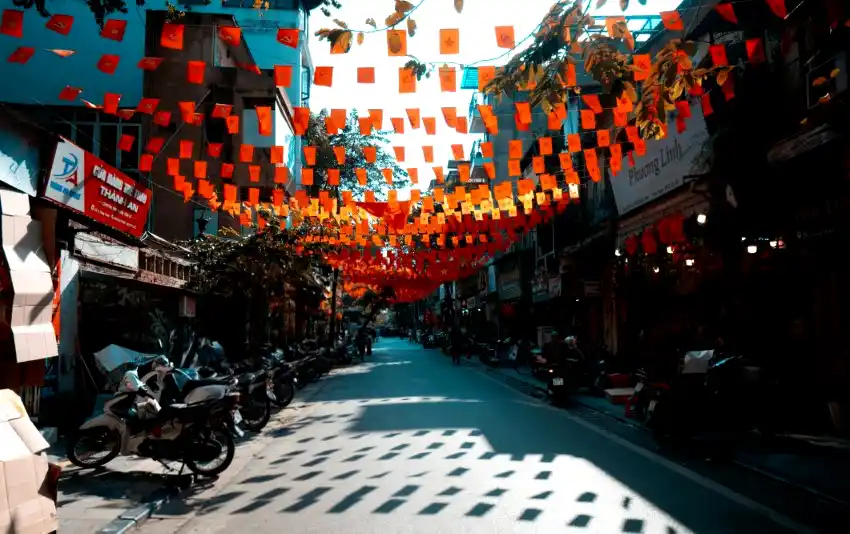
If this is your first time in Hanoi, start here. The Old Quarter is classic Hanoi: narrow streets stacked with centuries of trade history, every surface alive with signage, steam, and the permanent hum of motorbike engines.
Each street was historically dedicated to a single craft (silk, tin, paper, medicine) and traces of those trades linger if you wander slowly. Our full Old Quarter guide maps out the best streets to explore. Hoan Kiem Lake sits at the southern edge, Dong Xuan Market anchors the north, and Train Street, the night market, water puppet theatres, and Ngoc Son Temple are all within walking distance. You won’t need a taxi for the first two days.
The trade-off is noise. This area doesn’t sleep quietly, and cheaper guesthouses on the main streets will hear every motorbike. Hunt down boutique properties tucked into the narrow alleys (ngõ): they block out the worst of it while keeping you beautifully central. For the full rundown on Hanoi’s night markets, which spill right outside your door here, we’ve got a dedicated guide worth bookmarking.
Budget stays start from around 500,000 VND ($21 USD) per night; mid-range boutiques sit in the 1,000,000–1,600,000 VND ($41–$66 USD) range. Search on Agoda first for the best smaller guesthouses and boutique properties in this part of town. Booking.com is worth a cross-check if free cancellation matters to you.
2. The French Quarter, Best for Couples & Upscale Stays
Just south of Hoan Kiem Lake, the French Quarter (also called the Trang Tien or Opera House area) is a completely different city. Wide, tree-lined boulevards replace the tangle of Old Quarter alleyways. Grand colonial buildings house some of Hanoi’s finest hotels: the Sofitel Metropole is the most storied, but the surrounding streets have excellent boutique options at far more accessible prices. Browse our Hanoi luxury hotel guide for the best picks in this neighbourhood.
The Hanoi Opera House is practically on your doorstep, as are the city’s better restaurants and cocktail bars. It’s noticeably calmer at night, and the streets are wide enough to actually walk on. Still very close to Hoan Kiem Lake and easily within a short Grab ride of all the Old Quarter highlights, so you lose nothing in terms of access. This is the pick for a romantic city break, or for anyone who wants comfort alongside the culture of northern Vietnam without the sensory overload.
For this neighbourhood, Agoda consistently turns up the best boutique options. Rates typically run 1,250,000–4,000,000 VND ($51–$165 USD) per night.

3. Ba Dinh, Best for Families & Culture Seekers

Ba Dinh is Hanoi at its most stately: wide leafy boulevards, government buildings, embassies, and some of the city’s most significant historic sites all in one walkable district. The Ho Chi Minh Mausoleum, the Presidential Palace, the One Pillar Pagoda, and the Imperial Citadel of Thang Long are all clustered here. The Temple of Literature is also within easy reach. For anyone with a serious interest in Vietnam’s modern history, this neighbourhood is extraordinary: you could spend two full days without needing to leave.
The pace is noticeably slower than the Old Quarter, the streets are wide enough for children to walk safely, and the air quality is genuinely better. The trade-off is that you’ll use Grab more often for evening food and nightlife. Truc Bach, a smaller lake tucked between Ba Dinh and West Lake, is particularly worth noting: quiet, local, and lovely for an evening walk.
If temples and pagodas are on your agenda, nowhere in the city positions you better. Good value guesthouses and family-run hotels are plentiful in this district, and Agoda has strong inventory here.
4. Tay Ho (West Lake), Best for Long Stays & Digital Nomads
West Lake is where Hanoi breathes. Tay Ho wraps around the largest lake in the city and draws a mix of expats, long-term travellers, and Hanoians who can afford a quieter postcode. Streets like Xuan Dieu and To Ngoc Van are lined with excellent multi-storey cafes, artisanal bakeries, craft beer bars, and wellness studios. The lakeside running path is beautiful at sunrise, and the evening light over the water is the kind of thing that makes you extend your stay. Tran Quoc Pagoda, the oldest temple in Hanoi, sits on its own little island near the southern edge of the lake.
It’s about 20–25 minutes from the Old Quarter by Grab, so budget a little more for transport if you’re planning to sightsee centrally every day. But for anyone staying more than a week, working remotely, or simply wanting to fall asleep without alleyway noise, Tay Ho is hard to beat. Our guide to the best Hanoi neighbourhoods for digital nomads goes deeper on why West Lake has become the default for the remote-working crowd.
A newly opened PARKROYAL Serviced Suites property with West Lake views opened in 2025 for those wanting long-stay luxury. For all other options, Agoda has the widest selection of apartments and serviced suites in this area, and Booking.com is useful for flexible-cancellation long stays. If you’re thinking about settling in longer-term, our living in Hanoi guide has everything on neighbourhoods, costs, and finding a flat.
5. Hai Ba Trung, Best for Local Life & Returning Visitors

Hai Ba Trung sits just south and southeast of Hoan Kiem and feels like Hanoi without the tourist filter. Local commerce, neighbourhood cafes, excellent local restaurants, and a younger creative energy define this district. Thong Nhat Park, a wide green breathing space in the middle of the city, is here, and the streets have a rhythm that continues completely regardless of tourist season.
Accommodation here tends to be better value than equivalent quality in the Old Quarter, and you’re still a short Grab ride from every major sight. The local food scene is quietly outstanding: this is where Hanoians actually eat. Pair a stay here with our Hanoi street food guide and you’ll eat very well indeed for very little. If you want to understand the full picture of Vietnamese street food culture more broadly, that’s worth a read too. For anyone visiting Hanoi for a second or third time, this neighbourhood tends to become the default. Prices typically run 500,000–2,000,000 VND ($21–$82 USD) per night, with Agoda having the best range of smaller guesthouses and boutique properties.
A Note for Nervous Travellers:
Hanoi is a safe city. Violent crime is rare across all districts, and most travellers have completely uneventful trips. The challenges are more about sensory adjustment than genuine danger. For a full, honest picture, our Vietnam safety guide covers everything from petty theft to traffic to solo travel. The short version: traffic follows a fluid logic rather than strict rules. Step off the curb slowly and steadily and the motorbikes will read your line and flow around you. Never stop suddenly in the middle of the road or step backwards unexpectedly.
For food safety, the simplest rule is to eat where locals eat in numbers. High turnover means fresh ingredients, and anything cooked at high heat over charcoal in front of you is going to be fine. Keep your phone in a front pocket near busy streets (Old Quarter in particular), bags zipped, and use Grab or Xanh SM rather than street taxis to avoid any fare confusion. Beyond that, Hanoi is one of the most welcoming cities in Southeast Asia.
Pro Tip: Book accommodation slightly off the main tourist drag in the Old Quarter. Properties one or two alleys back from Hang Bac, Hang Gai, or Ma May Streets offer significantly better sleep quality at the same price, and you’re still thirty seconds from everything.

Pro Tips for Stress-Free Travel:

- Book in Advance for High Season: October to April is peak travel season in northern Vietnam. Good boutique properties in the Old Quarter and French Quarter fill up weeks ahead. Use Agoda for the best boutique inventory, or Booking.com if you want free cancellation flexibility, and book early.
- Getting Around: Download Grab or Xanh SM before you fly. Fixed-price ride-hailing removes all fare negotiation stress and is cheap even by Western standards: most short hops in Hanoi cost under $1.50 USD. Our how to get around Hanoi guide breaks down all your options.
- Stay Connected: Get your eSIM sorted before you land. Yesim is our top pick: you activate it before departure and you’re online the moment you touch down at Noi Bai. Airalo is a solid alternative with a large selection of Vietnam data plans. Good data coverage is essential for maps, Grab, and translation apps throughout the city. Read our full Vietnam SIM and internet guide if you want to compare all the options.

Forget the daily data limits of standard tourist SIMs.
Get a Yesim eSIM for unlimited 5G data from ~$10.
Work, stream, and be connected the second you land.
- Book Day Trips Early: Hanoi day trips to Ha Long Bay, Ninh Binh, and Sapa fill up fast, especially the popular overnight cruises and guided tours. Use Get Your Guide or Klook to lock in top-rated options ahead of arrival. Both platforms offer free cancellation on most bookings.
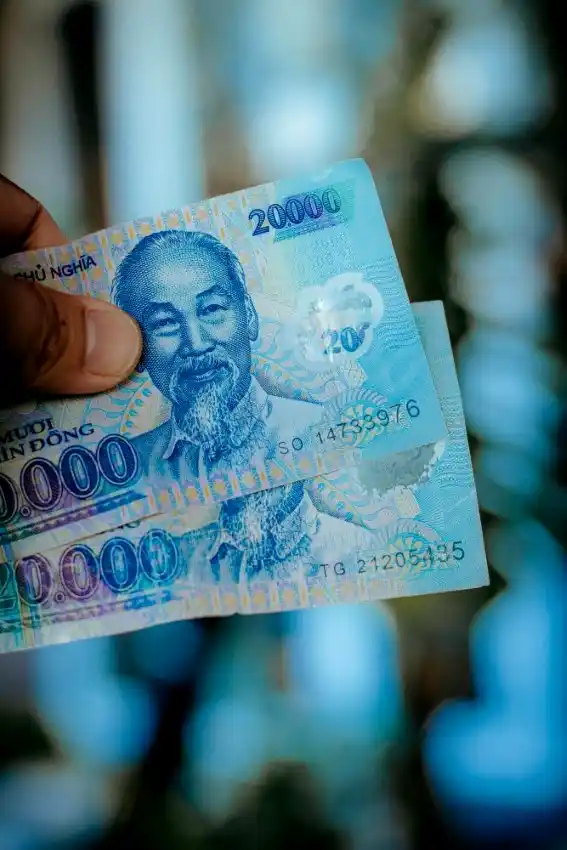
- Cash First: Hotel bills can often be paid by card, but keep Vietnamese Dong in smaller denominations (20,000, 50,000, 100,000 VND notes) for street food, market shopping, and smaller guesthouses. Our Vietnam currency and money guide covers ATMs, card fees, and where to exchange.
- Get Insured: Vietnam is safe but things happen: delayed flights, stomach bugs, lost luggage. SafetyWing is our go-to recommendation for affordable, no-fuss travel insurance that covers the whole trip. Sort it before you go, not after something goes wrong.
- Airport Transfers: If you want a stress-free arrival after a long-haul flight, Welcome Pickups offers fixed-price transfers from Noi Bai Airport directly to your hotel. Your driver meets you at arrivals with your name on a sign. No haggling, no surprise fares.
Frequently Asked Questions:
Is it better to stay in the Old Quarter or West Lake?
First-time visitors are almost always happiest in the Old Quarter: the walking access to food, temples, and markets is unbeatable. But West Lake wins for anyone staying more than a week, working remotely, or wanting a quieter, more spacious base. Many travellers split their stay and do a few nights in each.
How many nights should I spend in Hanoi?
Three nights is the comfortable minimum for covering the main sights and sampling the food scene properly. Four or five nights allows for a day trip to Ha Long Bay or Ninh Binh without feeling rushed. If you’re using Hanoi as a base for northern highlands trekking, a week is ideal.
Which neighbourhood is best for families with children?
Ba Dinh and West Lake are both excellent for families. Ba Dinh is close to the major monuments and has wide pavements and parks. West Lake gives children space to run, a lakeside path for morning walks, and a much calmer traffic environment than the Old Quarter.
Can I walk between the main neighbourhoods?
The Old Quarter, Hoan Kiem Lake, and the French Quarter are very walkable between each other. Ba Dinh is about 20–25 minutes on foot from the Old Quarter, manageable in decent weather. West Lake and Hai Ba Trung are better reached by Grab, which is cheap and hassle-free.
What is the best area for street food in Hanoi?
The Old Quarter is the obvious answer: street food is everywhere and at all hours. But Hai Ba Trung is actually where Hanoians go to eat without a tourist premium, and the food quality is outstanding. For a deep dive, our Hanoi street food guide maps out exactly what to eat and where.
Is Hanoi safe for solo female travellers?
Yes, broadly speaking. Hanoi is one of the safer cities for solo female travel in Southeast Asia. The usual common-sense precautions apply: avoid poorly lit alleys late at night, use Grab rather than flagging down street taxis, and stay in well-reviewed accommodation. The Old Quarter and French Quarter are both active and well-lit well into the night.
When is the best time of year to visit Hanoi?
October to April is the sweet spot for northern Vietnam: cooler, drier, and far more comfortable than the humid summer months. January and February can be cold and misty but have a real atmosphere to them. March and April are arguably the best months, warm without the summer heat. July and August are hot and very wet.
How do I get from Noi Bai Airport to Hanoi city centre?
Grab is the easiest and most reliable option: book it from the arrivals hall and a fixed price is shown before you confirm. Expect around 250,000–350,000 VND ($10–$14 USD) to the Old Quarter, taking 35–50 minutes depending on traffic. If you want someone waiting at arrivals with a name sign, Welcome Pickups offers a fixed-price pre-booked transfer service.
Do I need to book Hanoi hotels far in advance?
For budget guesthouses and hostels, a few days notice is usually enough outside peak season. For mid-range boutiques in the Old Quarter or French Quarter between October and March, book at least two to three weeks out, popular properties fill up quickly. For luxury hotels like the Sofitel Metropole, a month or more ahead during peak season is sensible.
Is West Lake (Tay Ho) too far from the sights?
Not really. Grab rides from West Lake to the Old Quarter take about 20–25 minutes and typically cost 60,000–90,000 VND ($2.50–$3.70 USD). For most people that’s a completely acceptable commute, especially given the quality of life improvement. If you’re planning to walk to everything every day, the Old Quarter makes more sense. If you’re happy to Grab in and out, West Lake is worth it.