
Where To Stay In Hoi An
Hoi An gets under your skin in a way that very few places do. The smell of wood smoke curling past mustard-yellow merchant houses, thousands of silk lanterns glowing over the Thu Bon River, and the kind of relaxed, unhurried pace that makes you push your return flight back by a week. The only real question is: which part of this magical little town do you want to wake up in?
The Quick Summary:
- Best For Heritage Seekers: Ancient Town puts you steps from historic merchant halls, world-class tailors, and the nightly lantern displays that make Hoi An famous.
- Best For Beach Lovers: An Bang Beach gives you a laid-back coastal escape with brilliant seafood shacks, just ten minutes from the ancient streets by bicycle.
- Best For Value: Cam Chau and Cam Thanh offer peaceful rice paddy views, spacious boutique villas, and excellent value for money at every budget level.
- Best For Peace and Quiet: Cam Nam Island sits directly across the river from the busy centre but feels like a completely different world. Traditional village life, local restaurants, and almost no tourist crowds.
- Budgets: Boutique stays in the Ancient Town run between 1,200,000 VND and 3,500,000 VND ($50 to $145 USD) per night. Countryside villas in Cam Chau start around 700,000 VND ($29 USD). Beachside options at An Bang sit in the 800,000 to 2,500,000 VND range ($33 to $104 USD).

Stay closer to the action in Hoi An.
Agoda lists everything from local
guesthouses to riverside resorts, with
verified reviews and instant booking.
Which Neighbourhood Is Right For You?
Hoi An is a small town but the neighbourhood you pick will shape your entire trip. Staying inside the Ancient Town means cobblestones outside your door and lanterns overhead. Cam Chau puts you among rice paddies with easy cycling access in both directions. An Bang Beach trades historic atmosphere for salty air and sunset cocktails. Each one is the right answer, depending on what kind of holiday you are after. If you need help figuring out what to fill your days with once you have picked your base, the things to do in Hoi An guide has you covered.
| Neighbourhood | Primary Appeal | Best For | Avg. Nightly Cost |
|---|---|---|---|
| Ancient Town | Heritage, dining, and immediate walkability | First-timers and culture lovers | 1,200,000 to 3,500,000 VND ($50 to $145 USD) |
| Cam Chau | Rice paddies, boutique resorts, and value | Families, couples, and long-stay visitors | 700,000 to 2,000,000 VND ($29 to $83 USD) |
| An Bang Beach | Coastal relaxation and seafood dining | Beach lovers, wellness travellers, expats | 800,000 to 2,500,000 VND ($33 to $104 USD) |
| Cam Nam Island | Local village life, total quiet, river views | Solo travellers and slow-travel regulars | 500,000 to 1,500,000 VND ($21 to $62 USD) |
Use the interactive map below to explore accommodation options across all four neighbourhoods and find the right spot for your budget and travel style. Book through Agoda for the widest selection across smaller guesthouses and boutique properties, or Booking.com if free cancellation is a priority for you.
A Closer Look at Each Area:
Staying in Hoi An Ancient Town
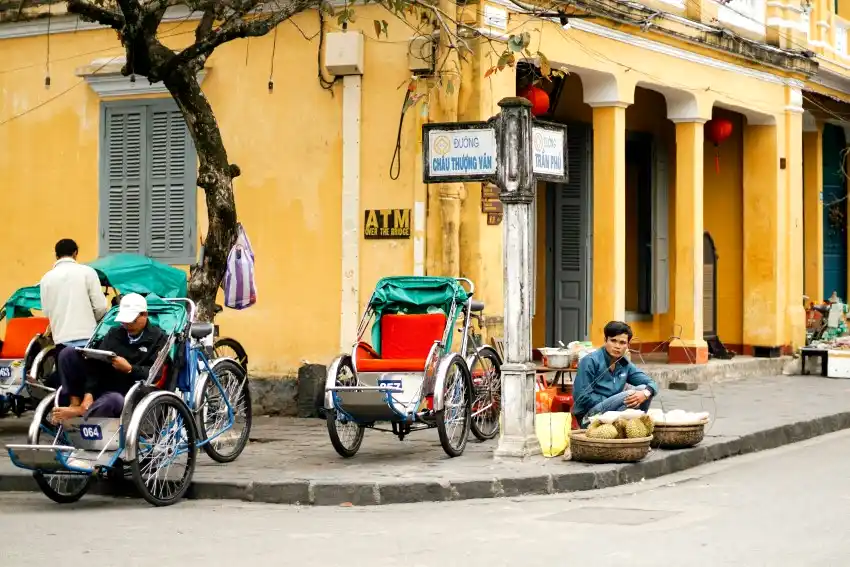
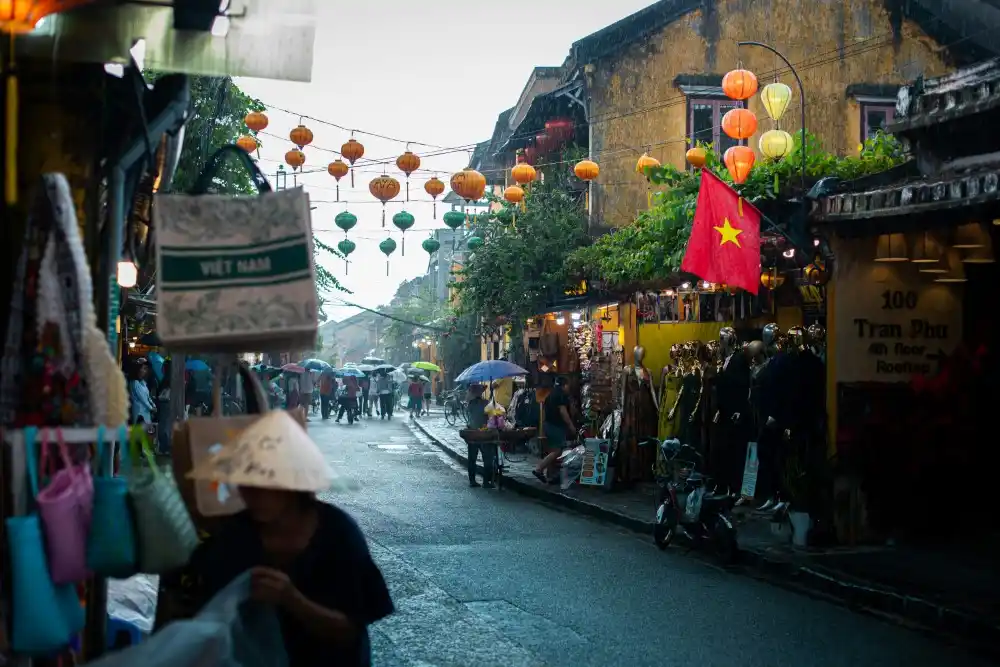
This is where the magic is most concentrated. Motorbikes are restricted during large parts of the day, so you get to stroll centuries-old trading streets in relative peace, which is a rare luxury in Vietnam. Walking out of your hotel lobby directly onto Tran Phu Street or Nguyen Thai Hoc Street means the morning belongs entirely to you before the day-trippers arrive from Da Nang.
For food, the Ancient Town is the clear winner. Local legends like Com Ga Ba Buoi (white rose chicken rice) and Cao Lau Thanh (the real deal Cao Lau noodles, only possible with this water) are within easy walking distance. Nights here feel electric, with the Hoai River glowing and lantern sellers on every corner ready to negotiate a fair price. If timing works out, align your stay with the full moon Lantern Festival and you will not forget it.
Worth knowing: Rooms are smaller here due to heritage preservation laws that limit structural changes. Prices are the highest in the district, and the night market buzz along the riverfront can last until around 10:00 PM. If you sleep lightly, request a room facing a courtyard rather than the main street.
Staying in Cam Chau
Cam Chau is the sweet spot that experienced Vietnam travellers tend to discover on their second or third visit. It sits as a geographic bridge between the Ancient Town and the coast, and the views across emerald green rice fields from a villa breakfast terrace are hard to beat. Properties here are more spacious, more modern, and significantly better value than anything inside the historic core.
Most boutique hotels along Cua Dai Road throw in complimentary bicycles, which changes everything. A pleasant ten-minute ride west gets you into the Ancient Town. Fifteen minutes east brings you to the beach. The local dining scene along the side lanes is wonderfully authentic, with neighbourhood noodle shops sitting next to tiny specialty coffee houses that roast their own beans on-site. If you want to dig into Vietnam’s brilliant coffee culture, Cam Chau is a great place to start exploring it.
Worth knowing: Cam Chau works best for travellers who are happy on a bicycle or motorbike. If you prefer to walk everywhere or are travelling with young children or grandparents, the slight distance from the main sites may feel inconvenient, though ride-hailing apps make the journey quick and affordable.

Staying at An Bang Beach
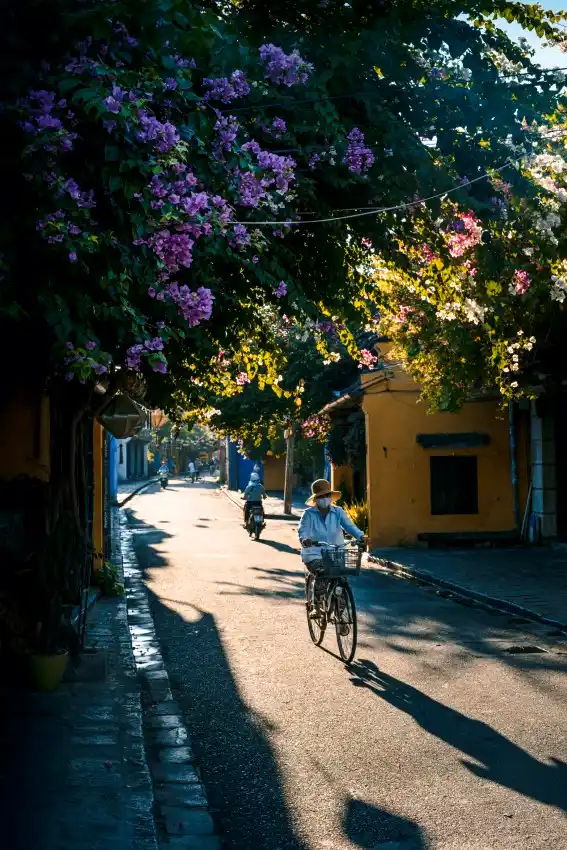
An Bang has quietly replaced Cua Dai Beach as the top coastal choice in the area, and for good reason. It has a distinct village-meets-bohemian feel, with a strong expat and slow-travel community that gives it a social warmth you rarely find at resort-heavy beaches. Mornings are for swimming. Afternoons are for exploring historic temples by bicycle. Evenings are for fresh seafood and cocktails as the sun drops into the horizon.
Accommodation ranges from incredibly charming homestays tucked down narrow palm-lined alleys to mid-rise beachfront hotels with pools. There is something for every budget here, from the backpacker looking for a clean fan room fifty metres from the sand to the family wanting a private villa with a plunge pool and a chef. For a full breakdown of the coastline, our Hoi An beaches guide covers An Bang, Cua Dai, and the Cham Islands all in one place.
Seasonal note: The northeast monsoon runs from October through February and brings rough seas, strong winds, and heavy rain to this coastline. During those months, An Bang loses much of its appeal and the Ancient Town or Cam Chau countryside becomes a much smarter base. Plan your beach stay for March through September and you will be rewarded with calm, warm, clear water.
Staying on Cam Nam Island
Cross the small footbridge from the southern edge of the Ancient Town and you step into a completely different Hoi An. Cam Nam Island is where real local life happens: fishing families, vegetable gardens, riverside restaurants serving nothing but fresh catch, and an almost total absence of souvenir shops. The views back across the Thu Bon River toward the illuminated Ancient Town at night are spectacular, and you are still less than five minutes from everything.
Accommodation is mostly small family-run guesthouses and homestays. Prices are the most affordable in the area, making this a favourite for solo travellers and long-stay visitors who want to integrate into daily life rather than observe it through a shop window. Some of the best pho in Hoi An is served from unmarked doorways on this island. Locals will point you in the right direction.
Making the Most of Your Stay:
Getting Around Town
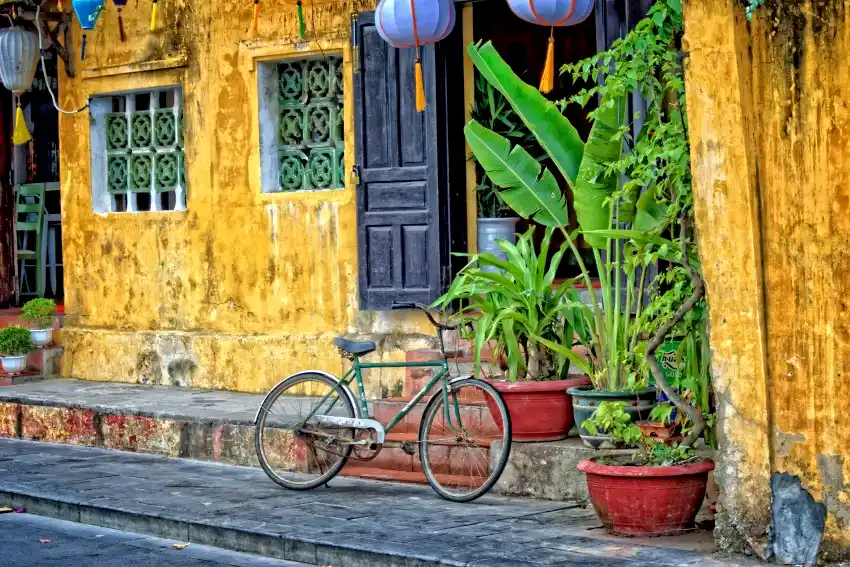
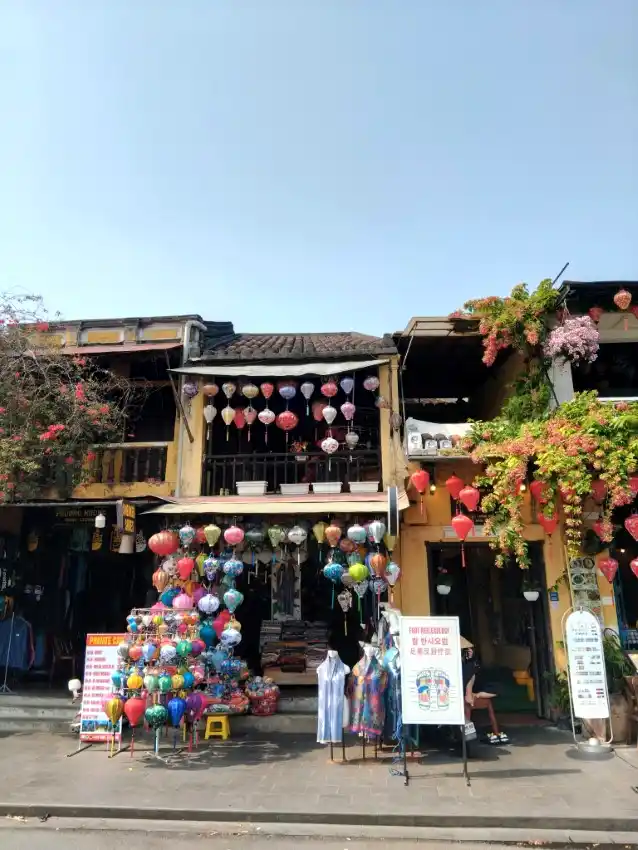
Hoi An is one of the most bicycle-friendly places in Southeast Asia. The Ancient Town itself is flat, compact, and partly pedestrianised, making it enjoyable to explore on two wheels. Most guesthouses and boutique hotels include complimentary bicycles with your stay, which is worth confirming at booking. For longer distances between the beach, countryside, and town, Grab and Xanh SM both operate reliably and show transparent pricing upfront, saving the usual taxi fare negotiation. For a side-by-side breakdown of both apps, our Grab vs Xanh SM guide covers everything you need to know.
Insider tip: Arrive at the Ancient Town before 8:00 AM. For about two golden hours you will have the streets almost entirely to yourself. The light is extraordinary, the food vendors are just setting up, and the whole place feels like it belongs to you. Worth setting the alarm for.
Local Customs Worth Knowing
Hoi An is a welcoming and relaxed place, and most visitors never encounter any friction. A few small things will make your interactions noticeably warmer. When visiting any of the neighbourhood pagodas or temples near your accommodation, cover your shoulders and knees as a sign of respect. Remove your shoes before entering homestays and many traditional boutique properties: a cluster of sandals at the threshold is the universal cue. Our Vietnamese culture and etiquette guide goes deeper on customs worth understanding before you arrive.
Tipping is not a traditional Vietnamese custom, but it is appreciated in hotels, spas, and guided experiences. Leaving 50,000 to 100,000 VND ($2 to $4 USD) for housekeeping or a particularly helpful porter is a lovely gesture. At the markets near the river, polite bargaining is part of the experience and vendors enjoy it, but always keep things light and good-humoured. Aggressive haggling sours the interaction for everyone. And never bargain for food: street food and market snacks have fixed prices that apply to all.


From classic Hoi An highlights to
hidden-gem private tours, GetYourGuide
makes booking painless. Cancel free
up to a day before your start time.
Thinking of Staying Longer?

Hoi An has transformed from a quick two-night stopover into one of the most popular slow-travel hubs in Southeast Asia, and it is not hard to see why. The pace is gentle, the cost of living is very affordable, the food is world-class, and the community of long-stay visitors is warm and well-established. The standard 90-day e-visa makes a proper stay very easy to arrange from most nationalities. For everything about the visa process, our Vietnam e-visa guide walks you through it step by step.
Monthly Rentals and Longer Stays
The residential lanes of Cam Chau and An Bang Beach have a strong supply of serviced villas available for monthly rental, with options ranging from simple two-bedroom homes with gardens to fully staffed luxury villas with pools. Most landlords require a deposit equivalent to one month of rent and prefer direct communication over platforms. Ask your guesthouse manager for a recommendation: the best properties rarely appear online. Our full guide to renting apartments in Vietnam covers contracts, deposits, and what to watch out for.
For those working remotely, the neighbouring city of Da Nang has a larger coworking ecosystem with faster internet infrastructure. Hoi An itself has several excellent cafes with strong Wi-Fi and a community of freelancers who have made them informal offices. The trade-off is obvious: Da Nang has the speeds, Hoi An has the views. Our Vietnam digital nomad guide breaks down both cities in detail.
Bringing a pet? Research Vietnamese import requirements early. You will need a rabies titre test, an international veterinary health certificate, and potentially a period of quarantine depending on your origin country. Airlines and regulations change regularly, so confirm the current requirements with both your vet and the Vietnamese agricultural authority at least three months before travel. Our moving pets to Vietnam guide covers the whole process in detail.

Skip the airport rank queue in Hoi An.
Welcome Pickups confirm your transfer
in advance, track your flight, and
meet you at arrivals with a name sign.
Safety and Practical Basics:
Hoi An is one of the safest destinations in Vietnam, and violent crime is exceptionally rare. Petty theft in crowded market areas is the only real concern worth mentioning. Keep bags zipped, carry only what you need for the day, and hold your phone securely in busy pedestrian zones during evening hours. For a thorough rundown of what to watch for across the country, our Vietnam safety guide is worth reading before you arrive.
Motorbike traffic around the market perimeters can feel chaotic at first. The trick is to walk at a steady, predictable pace and never stop suddenly. Riders watch for your forward movement and steer around you. Once you understand the rhythm, it becomes second nature within a day or two.
For food safety, follow the locals. Stalls with a constant queue of Vietnamese residents are your best guarantee of fresh ingredients and proper cooking temperatures. Drink bottled water throughout. The ice in reputable restaurants and hotels is manufactured from purified water and is generally safe, but when in doubt, skip it. It is also worth having travel insurance in place before you arrive. SafetyWing offers straightforward cover designed specifically for travellers and nomads, including medical and emergency evacuation.
Pro Tips for Stress-Free Travel:

- Transport Apps: Download Grab or Xanh SM before you land. Both show transparent fares for motorbike taxis and cars, and you will use them constantly. Avoid unmarked street taxis without a meter.
- Booking Your Stay: Use Agoda for the best selection of boutique guesthouses and villas across all Hoi An neighbourhoods. Booking.com is the better pick if free cancellation matters to you. For tours, cooking classes, and day trips to My Son Sanctuary or the Marble Mountains, Klook and Get Your Guide have verified operators at fair prices.
- Cash is Essential: The Vietnamese Dong is king at street stalls, markets, and smaller guesthouses. Keep 20,000, 50,000, and 100,000 VND notes in your wallet at all times. Large 500,000 VND notes can be impossible for a small food stall to change. Our Vietnam currency guide has everything on ATMs, exchange, and avoiding bad rates.
- Stay Connected: Pick up a local SIM card on arrival at Da Nang Airport or, better yet, set up a Yesim eSIM before you board your flight so you have working data the moment you land. Run NordVPN over hotel and cafe Wi-Fi to keep your banking apps secure.
- Travel Insurance: Do not skip it. SafetyWing offers flexible, affordable cover for travellers and nomads, including medical emergencies and evacuation. Vietnam’s private hospitals are competent but not cheap without insurance behind you.
- How Long to Stay: Three nights lets you cover the Ancient Town, do a cooking class, cycle the countryside, and have a full day at An Bang Beach without rushing. Five or more nights is when Hoi An really starts to feel like yours.

Need budget data in Hoi An? Saily’s
eSIM plans start cheap and install in
a couple of minutes. Built by the team
behind NordVPN, so security is solid.
Frequently Asked Questions:
Is it better to stay at the beach or in the Ancient Town?
For short stays of two to three nights focused on culture, food, and sightseeing, the Ancient Town wins easily. For stays of four nights or more between March and September, splitting your time or basing yourself at An Bang Beach gives you the best of both. During the monsoon months of October to February, the town and countryside are far more practical than the beach.
How many days do you actually need in Hoi An?
Three days is the comfortable minimum to see the main highlights without rushing. Five to seven days gives you time to pick up a tailored piece of clothing (allow at least two days for fittings), take a cooking class, visit the Cham ruins at My Son, cycle the countryside, and still have lazy mornings with a coffee and a good book. Most people who plan three nights end up extending.
Is Hoi An easy to get around without a motorbike?
Yes. The Ancient Town is entirely walkable and restricts motorised traffic for much of the day. Bicycles handle the gaps between the town, Cam Chau, and An Bang Beach perfectly well on flat, well-maintained roads. For anything further, Grab and Xanh SM are cheap, reliable, and available around the clock.
Is Hoi An good for families with young children?
One of the best places in Vietnam for families. The town is walkable and low-traffic in the centre, the food is diverse and accessible, and the beaches are calm and shallow during the dry season. Many boutique hotels in Cam Chau have pools and gardens that kids love. Just pack mosquito repellent and a hat for the little ones.
Can you get clothes made to measure in Hoi An?
Absolutely, and it is one of the great pleasures of the town. Hoi An has hundreds of tailors ranging from basic to genuinely exceptional. For quality results, budget at least two days for fittings and alterations. Ask your hotel for a trusted recommendation, bring reference photos of what you want, and agree on price and timeline clearly upfront. Avoid rushing the process.
Which accommodation booking site is best for Hoi An?
Agoda tends to have the widest selection across smaller guesthouses, boutique hotels, and homestays in Hoi An, including properties in the quieter Cam Chau and Cam Nam areas that do not always appear on other platforms. Booking.com is the better choice if free cancellation is important to you. Both are worth cross-checking for the best rate on any given property.
Is An Bang Beach worth staying at over the Ancient Town?
It depends entirely on your travel style and the time of year. An Bang is a genuinely lovely place to base yourself if you are visiting between March and September and want a mix of beach days and cultural exploration. The Ancient Town remains the better choice for short stays, first-time visitors, and anyone visiting during the wetter months when the beach loses much of its appeal.
What is the best eSIM for Hoi An?
Yesim is the best recommendation. You can set it up before you fly, and it activates the moment you land at Da Nang Airport. That means maps, ride-hailing apps, and WhatsApp are all working from your first step off the plane. Local physical SIMs from Viettel or Mobifone are also excellent and widely available at the airport if you prefer a SIM card.
Do I need a VPN in Hoi An?
Not for basic browsing, but it is a good habit if you are connecting to cafe or hotel Wi-Fi and using banking apps or accessing work accounts. NordVPN is the most reliable option and takes about two minutes to set up. Worth it for the peace of mind.
Is Hoi An a good base for digital nomads?
Yes, though with a caveat. Hoi An has a great lifestyle, affordable accommodation in Cam Chau and An Bang, and plenty of cafes with decent Wi-Fi. For serious remote work with faster, more reliable internet, nearby Da Nang has a more developed coworking infrastructure. Many nomads split their time between both, enjoying Hoi An’s pace at weekends and Da Nang’s connectivity during the working week.