Vietnam Temples & Pagodas Guide
Incense smoke curls through carved wooden rafters as the deep chime of a bronze bell cuts through the humid air. Across Vietnam, sacred spaces offer a beautiful, raw look into the soul of the country.
From the mist-shrouded peaks of the north to the sun-baked deltas of the south, these architectural marvels have stood through centuries of devotion, dynastic pride, and shifting cultures. Knowing the difference between a temple and a pagoda, nailing the local etiquette, and finding the right spots will completely transform your trip from a standard sightseeing tour into something unforgettable.
The Quick Summary:
- Pagodas vs. Temples: It all comes down to who is inside. Pagodas (Chùa) are dedicated to Buddha, while Temples (Đền) honor historical heroes, royalty, or ancient deities.
- Dress Code: Keep it modest. Your shoulders and knees must be fully covered. Only remove your shoes when you see explicit signs or a big pile of footwear at the entrance.
- Entry Fees: Most active places of worship are completely free. However, major historical complexes charge a small entry fee, usually between 20,000 VND and 40,000 VND ($0.80 to $1.60 USD).
- Regional Styles: Northern sites favor ancient, weathered wood and Chinese-influenced architecture. Down south, you’ll run into much brighter, vibrant colors, along with Cao Dai or Khmer Theravada styles.

From caves and cruises to cooking
classes, Klook covers Vietnam’s best
experiences. Hotel pickup is often
included and prices are usually lower.
What’s the Real Difference Between a Temple and a Pagoda?
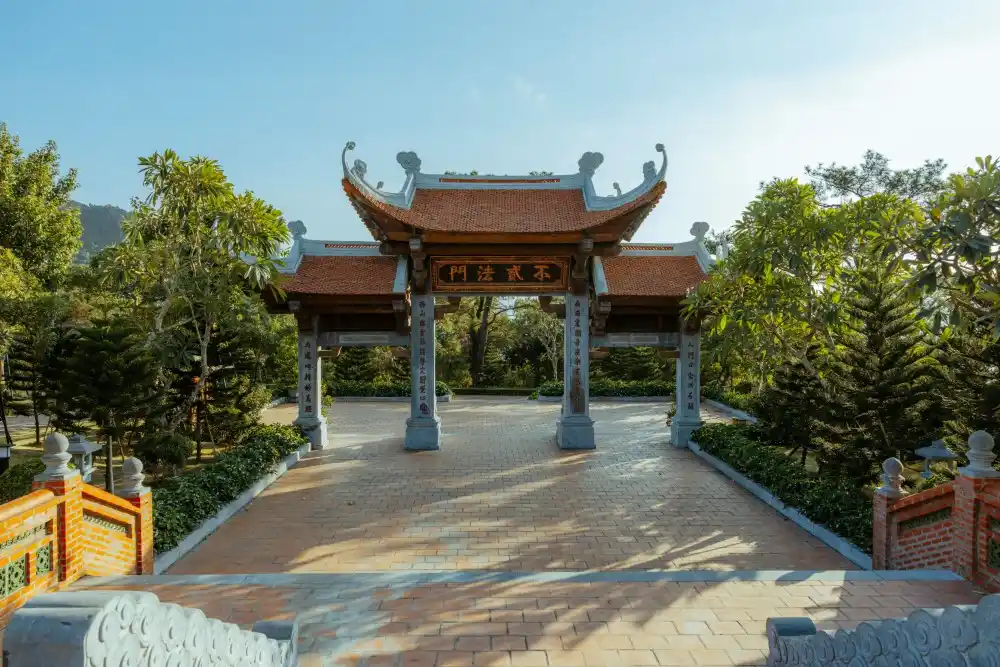
In Vietnam, sacred architecture is split into two main buckets based on who the space is built for. Mistaking one for the other is easy to do, but it means missing out on the country’s rich spiritual tapestry, which beautifully blends Mahayana Buddhism, Taoism, Confucianism, and ancient folk religions.
A pagoda, known locally as a Chùa, is a dedicated Buddhist sanctuary. Step inside, and the main altars will be lined with statues of Gautama Buddha, Bodhisattvas, and Arhats. These are quiet spaces meant for contemplation, chanting, and finding a little inner peace.
A temple, known as a Đền or Phủ, is a bit different—it serves a secular or historical purpose. These structures honor national heroes, legendary kings, or powerful mother goddesses. For instance, a temple might celebrate Tran Hung Dao (the general who repelled the Mongols) or the legendary Trung Sisters. The vibe in a temple is often much more high-energy, packed with elaborate offerings of fruit, boiled chickens, and fake paper money meant to secure real-world favors like wealth, health, or passing a big exam.
Sacred Sites Across Vietnam:
| Sacred Site Name | Location | Primary Focus | Distinct Architectural Feature |
|---|---|---|---|
| Tran Quoc Pagoda | Tay Ho District, Hanoi | Mahayana Buddhism | Eleven-story red stupa towering right over West Lake |
| Thien Mu Pagoda | Huong Long Ward, Hue | Buddhist History | An iconic, octagonal, seven-tier Phuoc Duyen tower |
| Temple of Literature | Dong Da District, Hanoi | Confucian Learning | Ancient stone steles resting on the backs of carved tortoises |
| Ba Thien Hau Temple | District 5, Ho Chi Minh City | Mazu (Sea Goddess) | Massive hanging incense coils and intricate porcelain dioramas |
| Bich Dong Pagoda | Ninh Hai Commune, Ninh Binh | Cave Buddhism | Three tiered stone shrines built directly into a dramatic mountain cliff |
How to Dress and Behave:
Wearing conservative clothing that covers both your shoulders and knees is non-negotiable at every spiritual site in Vietnam. Showing too much skin can get you turned away at the gate, and honestly, it just makes the elderly locals practicing their faith feel uncomfortable.
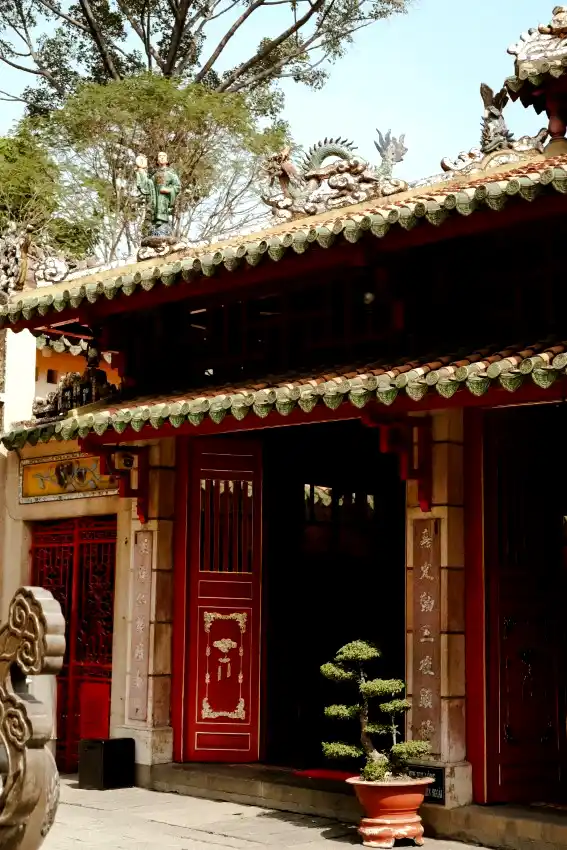
Skirts, short shorts, and tank tops are out. Instead, go for lightweight trousers, linen pants, or long maxi skirts paired with a regular t-shirt. High-traffic spots like the Temple of Literature in Hanoi enforce this strictly, they’ll either turn you away or make you buy a pair of paper overalls at the entrance.
When it comes to your footwear, look for cues. You can keep your shoes on while walking around the outdoor courtyards, but you must take them off before stepping over the raised wooden thresholds into the inner sanctuaries. Speaking of those wooden thresholds: always step over them, never on top of them. Stepping on the wood is traditionally thought to disturb the structure’s guardian spirits.

Compare hotel prices across Vietnam’s best
neighbourhoods and book with confidence.
Filter by budget, location, or guest score
to find the right stay for your trip.
Pro Tips For Stress Free Travel:

Getting Around: Use apps like Grab, Xanh SM, or Be to book fixed-price rides out to more remote temples. It completely saves you from having to haggle with unregulated street taxis.
Booking Trips: Turn to Klook or Get Your Guide if you want to book a guided day trip to trickier locations like the Perfume Pagoda. For hotels and guesthouses, Agoda and Booking.com are your best options.
Tech & Data: Grab an eSIM through Yesim before you land so you have instant data, and run Nord VPN to keep your information secure when logging onto public Wi-Fi at nearby coffee shops.
Cash is Mandatory: Always keep physical Vietnamese Dong (VND) on you. Temple donation boxes and the little street vendors nearby don’t take cards. Small bills like 10,000 VND and 20,000 VND are perfect for donations or buying a cold bottle of water.

Skip the airport SIM queue when you
land in Vietnam. Yesim’s eSIM activates
before takeoff so you’re online the
second your plane touches the tarmac.
The Best Spiritual Sites in Northern Vietnam:
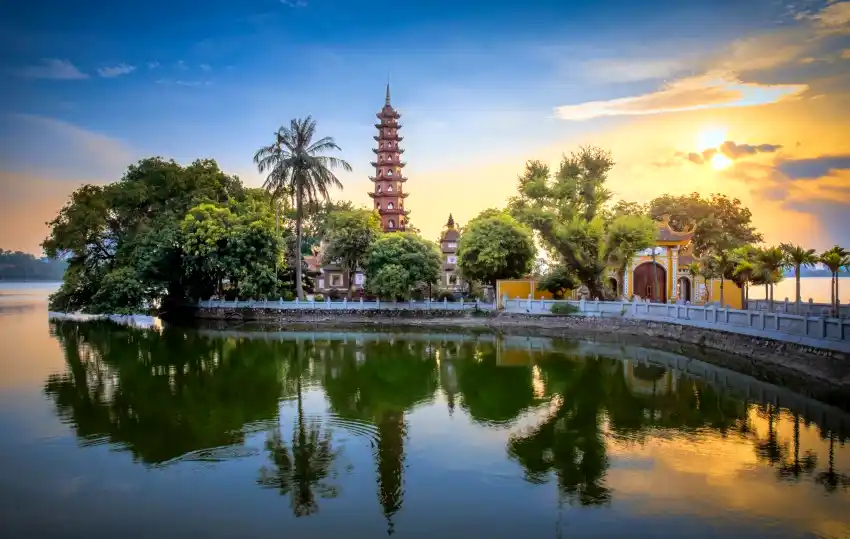
Northern Vietnam is home to the oldest shrines in the country, characterized by gorgeous weathered ironwood beams, low-slung tiled roofs, and a deep integration with the surrounding nature.
Tran Quoc Pagoda
Sitting on a tiny islet in West Lake, this sanctuary connects to the mainland by the Thanh Nien causeway. It dates all the way back to the 6th century, making it the oldest pagoda in Hanoi. Its standout feature is a stunning 15-meter red stupa, and the courtyard actually houses a sacred Bodhi tree grown from a cutting of the original tree in India where Buddha achieved enlightenment.
Perfume Pagoda (Chùa Hương)
Tucked deep into the Huong Son limestone mountains, getting here is half the adventure. You’ll take a traditional metal rowboat down the scenic Yen Stream before tackling a mountain trek. Your ultimate destination is Huong Tich Cave, a massive cavern that looks like the open mouth of a dragon, packed with stone altars carved directly into the stalagmites.
One Pillar Pagoda
Located right near the Ho Chi Minh Mausoleum in Hanoi, this unique little shrine was designed to look like a lotus blossom rising out of a square pond. Built by Emperor Ly Thai Tong in 1049, the entire wooden structure rests on a single stone pillar to celebrate a vision of the Goddess of Mercy granting the emperor a male heir.

Lock in top-rated Vietnam tours with
GetYourGuide’s free cancellation up to
24 hours before. Reserve now and pay
later if your dates aren’t locked in.
Unmissable Architecture in Central and Southern Vietnam:
As you move south, the spiritual architecture shifts, reflecting a blend of Imperial court style, Khmer traditions, and newer indigenous religions.
Thien Mu Pagoda
Overlooking the famous Perfume River in Hue, this pagoda is an absolute icon of the old imperial capital. Founded in 1601, the grounds hold the striking seven-story Phuoc Duyen tower. You can also see the vintage Austin motor car used by monk Thich Quang Duc to travel to Saigon before his famous self-immolation in 1963.
Ba Thien Hau Temple
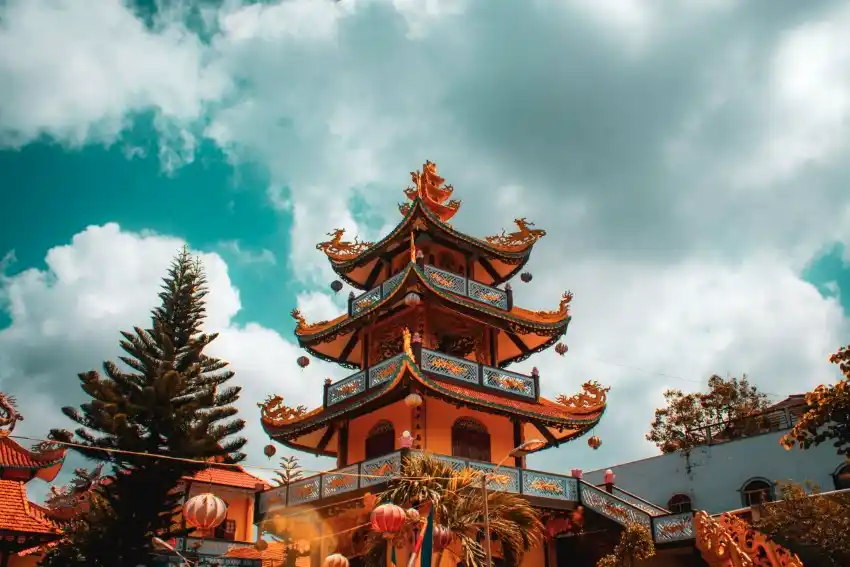
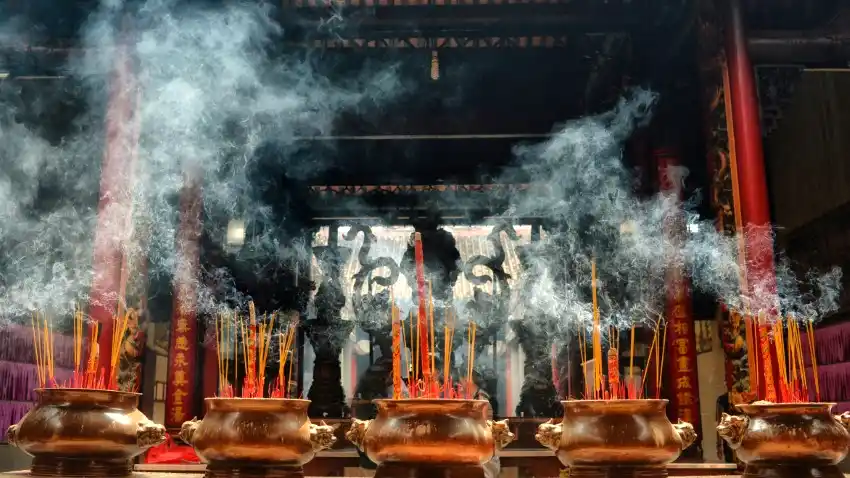
Located in the middle of Ho Chi Minh City’s bustling Cho Lon (Chinatown) neighborhood, this temple honors Mazu, the Taoist goddess of seafarers. The air here is always thick with smoke from the massive, conical incense coils hanging from the rafters, which burn for weeks at a time. Don’t forget to look up at the roof ridges to see the incredibly detailed porcelain dioramas showing scenes from Chinese myths.

Skip the airport kiosk queue in Vietnam.
Airalo’s eSIMs are pre-loaded before
you fly and ready to switch on the
instant you connect to the network.
A Note for the Nervous Traveler:
Vietnam is incredibly safe, and violent crime against tourists is virtually unheard of. That said, petty theft can happen. When you’re visiting crowded shrines—especially during massive festivals like Tet or the Mid-Autumn Festival—keep an eye on your phone and camera, as pickpockets love a distracted crowd.
If you’re grabbing food near religious sites, just look for the crowds. Avoid the dead-quiet stalls and pick the busy ones where high turnover means the ingredients are guaranteed to be fresh.
And if the chaotic traffic makes it feel impossible to cross the street near a popular temple, just take a deep breath and start walking at a slow, steady, predictable pace. Don’t stop, and don’t make sudden runs. The sea of motorbike riders will easily calculate your path and smoothly glide right around you.
Slow Travel Sidebar:
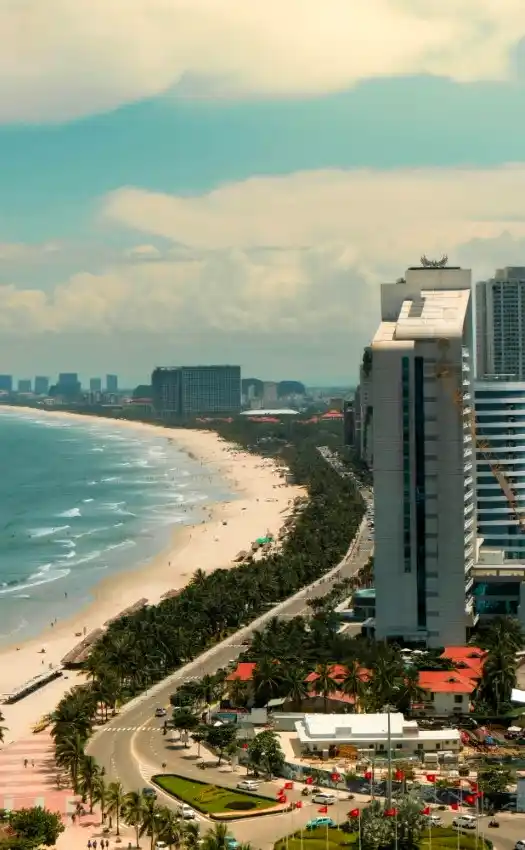
If you’re looking to stretch your trip beyond a standard vacation, Vietnam is a dream for slow travel. Plenty of digital nomads flock to coastal cities like Da Nang to enjoy the low cost of living and beachside cafes.
While long-term tourist visas have tightened up a bit, the standard e-visa gives you a solid 90 days to explore, which you can easily renew with a quick border run to a neighboring country. If you happen to be relocating long-term with a pet, the process has gotten much smoother. Pet relocation services can easily handle the international health certificates and paperwork needed to get your furry friend through the major airports in Hanoi or Ho Chi Minh City.
Frequently Asked Questions:
Can anyone visit a pagoda in Vietnam?
Absolutely. All temples and pagodas are open to everyone, regardless of your religious background. You are more than welcome to wander the grounds, observe ceremonies, and take everything in, just remember to keep your voice down, dress appropriately, and be mindful of the people praying.
Is it okay to take photos inside the temples?
Taking photos in the outdoor courtyards and gardens is completely fine. However, once you step inside the inner sanctuaries, it’s best to put the camera away. Pointing a lens directly at the main altars or people actively praying is considered disrespectful.
What are the best hours to visit?
If you want a truly serene experience, head out early in the morning between 6:00 AM and 8:00 AM. You’ll catch the monks performing their morning chants and beat both the midday heat and the tour buses. Late afternoon (around 4:00 PM to 5:30 PM) is also great for catching that soft, golden-hour lighting.