Vietnam Sleeper Bus Guide
Stepping onto a Vietnamese sleeper bus is a proper rite of passage. It is an immersive, slightly chaotic, genuinely fun slide into local life that connects ancient imperial capitals, misty mountain outposts, and sun-bleached coastal strips. For budget travellers doing the classic north-to-south run, these rolling hotels are a brilliant trick: you travel while you sleep, wake up somewhere completely new, and your wallet barely notices. If you have been researching how to get around Vietnam, the sleeper bus deserves a serious look before you commit to anything else.
The Quick Summary:
- Budgets: Standard sleeper seats run between 250,000 and 400,000 VND ($10 to $16 USD). Fancy a private pod? Luxury VIP cabins go from 450,000 to 700,000 VND ($18 to $28 USD).
- Regional Variance: Northern routes out of Hanoi tackle winding mountain switchbacks, while Central and Southern routes cruise the flatter National Route 1A.
- Booking Window: Grab your berth 2 to 3 days ahead via an app or local agent. During Tet, book at least a week out. These things sell out fast.
- Luggage: Big bags go in the under-carriage hold. Keep your valuables, phone, passport, and wallet, with you in your berth.
- Travel Insurance: Sort this before you board. SafetyWing is great value and covers overland transport including buses. It takes five minutes to set up.

Skip the airport rank queue in Vietnam.
Welcome Pickups confirm your transfer
in advance, track your flight, and
meet you at arrivals with a name sign.
What Is a Vietnam Sleeper Bus?
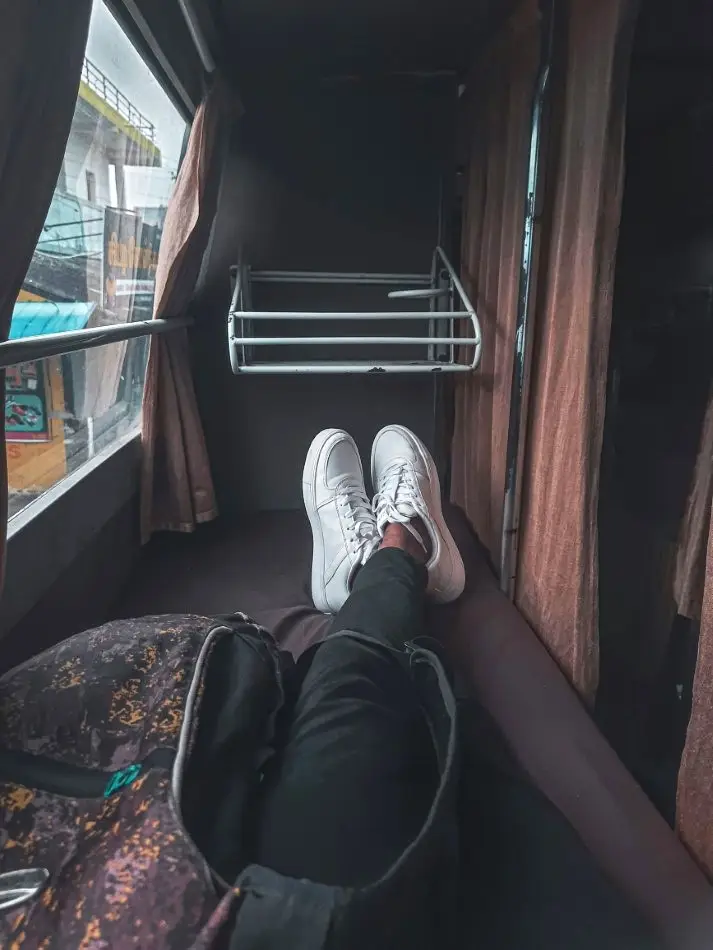
Forget everything you know about long-distance coaches. Vietnamese sleeper buses ditch the standard upright seats entirely in favour of three parallel rows of double-decker bunk beds. You kick off your shoes at the door, shuffle down the aisle in your socks, and recline at a generous 150-degree angle, or lie completely flat in one of the newer premium pods. It is more comfortable than it sounds, and it covers ground that the Vietnam train network simply does not reach. Buses connect major cities like Ho Chi Minh City and Hue with smaller towns that have no rail link, making them the backbone of budget travel across the country.

Standard Sleeper vs VIP Cabin
The classic 40-berth coach is the workhorse of Vietnamese highways: affordable, ubiquitous, and perfectly fine for most routes. Upper bunks offer more isolation but feel every pothole. Lower bunks are more stable and far easier to get in and out of at 2am. If you are tall, a light sleeper, or simply value your personal space, splash out on a VIP Limousine cabin. You get a fully enclosed pod with privacy curtains, USB charging, a reading light, and occasionally a massage function built into the mattress. At under $30 USD, it is one of the best travel upgrades in Southeast Asia.
Not sure whether the bus or the Reunification Express train is the right call for your route? Both have their charms. The short version: buses win on price and route coverage, trains win on scenery and space to wander. More on that in the FAQs below.
Comparing Sleeper Bus Classes:
Here is how the three main classes stack up so you can pick the right one for your route and budget.
| Bus Class | Average Price Range | Top Features | Best Suited For |
|---|---|---|---|
| Standard Sleeper | 250,000–400,000 VND ($10–$16 USD) | Open 3-row layout, 150-degree recline, shared blanket | Budget backpackers, short daytime routes |
| VIP Limousine (34-Berth) | 350,000–500,000 VND ($14–$20 USD) | Semi-private partitions, individual USB ports, pillows | Value hunters, medium-distance night trips |
| Luxury Cabin (20/24-Berth) | 450,000–700,000 VND ($18–$28 USD) | Full-privacy curtains, flat-bed pod, entertainment screen | Tall travellers, light sleepers, long overnight hauls |
How to Book Sleeper Buses in Vietnam:
The easiest way to book is through 12GO, which pulls together routes, operators, real-time availability, and berth selection all in one place. It accepts international cards and sends confirmation straight to your email. You can also use apps like Vexere or Baolau if you want to browse directly, and Klook covers popular tourist-corridor routes if you prefer everything bundled.
If you prefer the old-school approach, any travel agent on Hanoi’s Old Quarter streets or in Ho Chi Minh City’s Pham Ngu Lao backpacker district will sort you out face-to-face, just expect a small commission on top. Either way, one rule applies: always request a lower bunk (tầng dưới) in the front or middle of the bus if you are prone to motion sickness. The rear lower section on many coaches merges into a shared platform for four or five people with zero privacy between them. Best avoided unless you really enjoy making new friends at 3am.
For popular routes like Hanoi to Ha Long Bay, or Hoi An to Nha Trang, book 2 to 3 days ahead. Around Tet, give yourself a week at minimum. Turning up at a terminal hoping for a spare bunk during peak season is a gamble not worth taking.

Skip the bus-station haggling on your
way to Vietnam. Book online with 12Go,
get an e-ticket, and show it on arrival.
Refunds available on most routes.
Pro Tips For Stress-Free Travel:
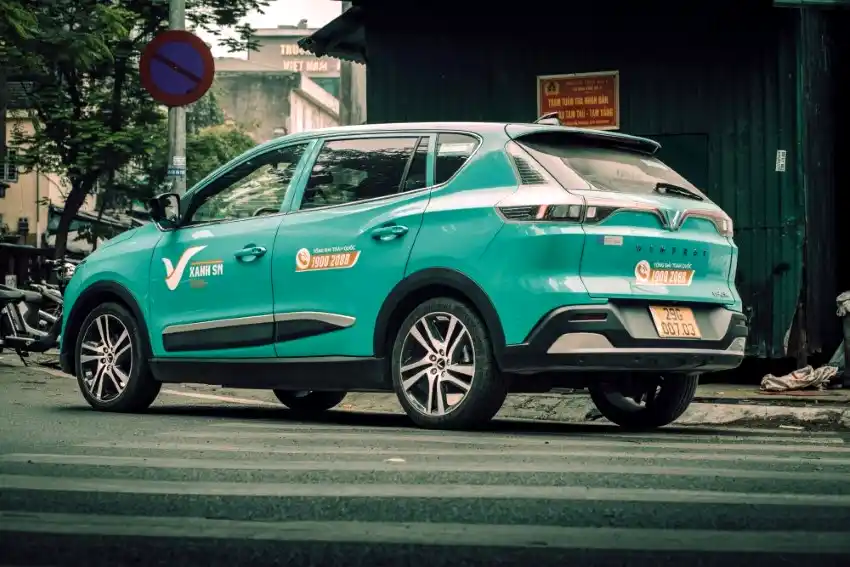
- Ride-Hailing: Have Grab or Xanh SM installed before you board. Our full Grab vs Xanh SM comparison breaks down which app to use where. Bus drop-off points can be chaotic and the last thing you want at 6am is to negotiate a taxi fare in broken Vietnamese.
- eSIM: Get Yesim set up before you leave home. It activates the moment your plane lands, runs on strong local networks, and means Google Maps is live the second you roll into an unfamiliar city at dawn. No hunting for a SIM counter half-asleep. Our full Vietnam SIM and eSIM guide covers all your options.
- Travel Insurance: Do not skip this. SafetyWing covers overland transport, trip interruption, and medical, all in one affordable plan. Sort it before you travel, not after something goes wrong.
- Cash is King: Keep small VND notes handy, 20,000, 50,000, and 100,000, for rest stop snacks and drinks. Nobody at a highway service station at midnight wants to break a 500,000 VND note. Our Vietnam currency guide has everything you need on cash, cards, and ATMs.
- Booking: Use 12GO or Klook to lock in your berth ahead of time. During peak season, showing up at a terminal hoping for a spare bunk is a gamble not worth taking.
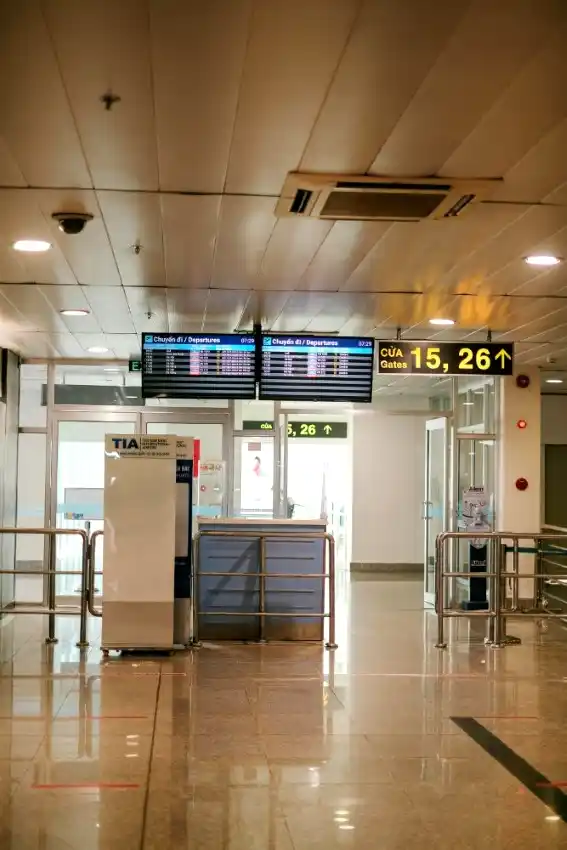
- Airport Transfers: If your sleeper bus journey starts or ends near a major airport, Welcome Pickups is worth booking for the door-to-door leg. Fixed price, meets you by name, no faff.


Maps, Grab, translation apps, all need
data in Vietnam. Yesim’s eSIM installs
in a minute and gives you reliable 5G
from the moment you arrive.
Surviving the Night on a Vietnamese Highway:

Pack Smart, Sleep Better
Vietnamese bus drivers treat air conditioning as a competitive sport. No matter what season you travel, the cabin will be cold, sometimes absurdly so. Pack a hoodie, thick socks, and a light scarf and you will sleep like a baby. Ignore this advice and you will spend the night shivering under a tissue-thin blanket wondering why you did not listen.
Keep a small daypack inside your berth with your passport, wallet, phone, and power bank. Your main bags are perfectly safe in the under-carriage hold, but drivers do open it at stops to drop off cargo, so make sure everything is locked and clearly tagged before it goes in. It is also worth having your accommodation pre-booked ahead of arrival. Agoda has solid inventory across smaller towns on the major sleeper bus routes, and Booking.com is worth checking if free cancellation matters to you. Rolling into Hue or Da Nang at dawn without a bed lined up is a special kind of stress you do not need.
The Midnight Rest Stop
Every three to four hours the bus pulls into a blazing fluorescent highway service station. The driver shouts something in Vietnamese, everyone shuffles off, and suddenly you are standing under harsh lights at 2am surrounded by steamed buns (bánh bao) and sticky rice (xôi). It is chaotic and a little surreal, and honestly one of the best parts of the whole experience. The food is cheap, the tea is scalding hot, and the people-watching is extraordinary.
Pro Tip: Do not stress about your shoes. The crew puts baskets of shared plastic sandals at the steps for rest stop use. More importantly, memorise your bus number plate. The car park will be full of identical neon-striped coaches, and drivers leave on schedule the moment the headcount is done. Missing your bus at a dark highway stop at midnight is an experience best avoided. Set a timer on your phone the second you step off.

Lock in top-rated Vietnam tours with
GetYourGuide’s free cancellation up to
24 hours before. Reserve now and pay
later if your dates aren’t locked in.
Unwritten Rules: Bus Etiquette:
Nobody hands you a rulebook when you board, but there is a clear set of unspoken norms that keep 40 strangers living harmoniously in a metal tube hurtling through the dark. Stick to these and everyone gets along just fine. Ignore them and you will get the look, the one that needs no translation.
- Shoes off, always. Remove your footwear the moment you step on board and place them in the plastic bag provided. Walking the carpeted aisles in shoes is a genuine faux pas that will earn you disapproving looks from the entire cabin.
- Headphones after dark. Once the lights go down, loud phone calls and video streaming are firmly off the table. Keep screens dimmed and sound to yourself.
- Leave the durian at the rest stop. Strong-smelling snacks, dried squid, durian, heavy fish sauce dishes, are for outside consumption only. Your bunkmates will thank you.
- Respect the crew. The driver and their assistant (lơ xe) are managing a heavy vehicle, complex cargo drops, and chaotic highway traffic simultaneously. A calm, friendly approach goes a long way. If you have a question or concern, a smile and a bit of patience will get you much further than frustration.
Reading up on Vietnamese culture and etiquette before you travel is worth ten minutes of your time. A little context goes a long way on the road.
Frequently Asked Questions:
Are Vietnamese sleeper buses actually safe?
Yes. The major operators like Phuong Trang (Futa), Thanh Buoi, and Hanh Cafe have solid safety records and run modern, well-maintained coaches. Stick to established operators booked through reputable platforms like 12GO or Klook and you will be absolutely fine. That said, sorting travel insurance with SafetyWing before you go is always smart for any overland journey in Southeast Asia.
What happens if I miss the bus at a rest stop?
This is every traveller’s nightmare, and it does occasionally happen. The best prevention is simple: memorise your bus number plate before you get off, set a timer on your phone for five minutes before departure, and never wander far from the car park. If the worst does happen, call the bus company number on your ticket immediately. The crew may be able to hold at the next scheduled stop, or the company can sometimes arrange an onward ticket.
Can I book a specific berth or do I get assigned one?
On most platforms you can select your exact berth from a seat map at the time of booking, which is one of the main reasons to book online rather than at the terminal. Always go for a lower bunk in the front or middle section for the smoothest ride and easiest access at rest stops.
Is the sleeper bus better than the train?
It depends entirely on your priorities. Sleeper buses are cheaper and cover far more routes, including plenty of destinations the train does not reach at all. The Reunification Express is more comfortable, more scenic, and gives you room to stretch and wander. For budget travellers covering long distances overnight, the bus wins on value. For the actual experience of travelling Vietnam, the train is hard to beat. Many travellers mix both across a longer trip.
How long do major routes actually take?
Hanoi to Hue runs roughly 12 to 14 hours overnight. Hue to Da Nang is a short 3 to 4 hours. Da Nang to Hoi An is so close (about 30 minutes) that a sleeper bus is overkill. Hoi An to Nha Trang is around 10 to 12 hours. Nha Trang to Ho Chi Minh City takes 8 to 10 hours. Times vary by operator and road conditions, but overnight departures around 7pm to 9pm typically arrive early morning, which is ideal for maximising your days.
What should I pack in my carry-on berth bag?
Keep it simple. Passport, wallet, phone, power bank, earbuds, eye mask, a light neck pillow, and a hoodie or thin blanket layer for the aggressive air conditioning. Everything else, main luggage, shoes, anything bulky, goes in the hold underneath. A small pack of tissues and some hand sanitiser are worth adding too.
Which operators are the most reliable?
Phuong Trang (also known as Futa Bus Lines) is the gold standard for the central and southern routes and runs a huge fleet of modern coaches. Thanh Buoi is well-regarded on the central corridor. Hanh Cafe is popular on northern mountain routes. For tourist-oriented routes, The Sinh Tourist and Queen Cafe Bus also get good reviews. Booking through 12GO or Klook means you are only seeing vetted operators, which takes the guesswork out of it.
Is there a toilet on the bus?
Most standard sleeper coaches do not have an onboard toilet. Rest stops happen every three to four hours, and the facilities at highway service stations are basic but functional. If this is a concern, plan your liquid intake accordingly in the hour or two before boarding.
Can I eat and drink on the bus?
Yes, within reason. Light snacks, water, and quiet food are fine. Strong-smelling things, hot noodle soups, durian, dried squid, anything that fills an enclosed space with a powerful aroma, are not welcome. Rest stops are the time to eat properly, and the highway stalls are usually a good spread of Vietnamese comfort food at very low prices.
What if I am tall? Will I actually fit?
Standard berths are designed with Vietnamese body proportions in mind, which means someone over 185cm (6ft 1in) will find their feet pressed against the end panel. The solution is a VIP Limousine or Luxury Cabin berth, which offers more length and a fully flat pod. Book the upper bunk in a standard coach if a VIP upgrade is not available, as upper berths typically run slightly longer. It is not perfect, but it is manageable for one night.