Vietnamese Street Food Guide & Allergy Tool
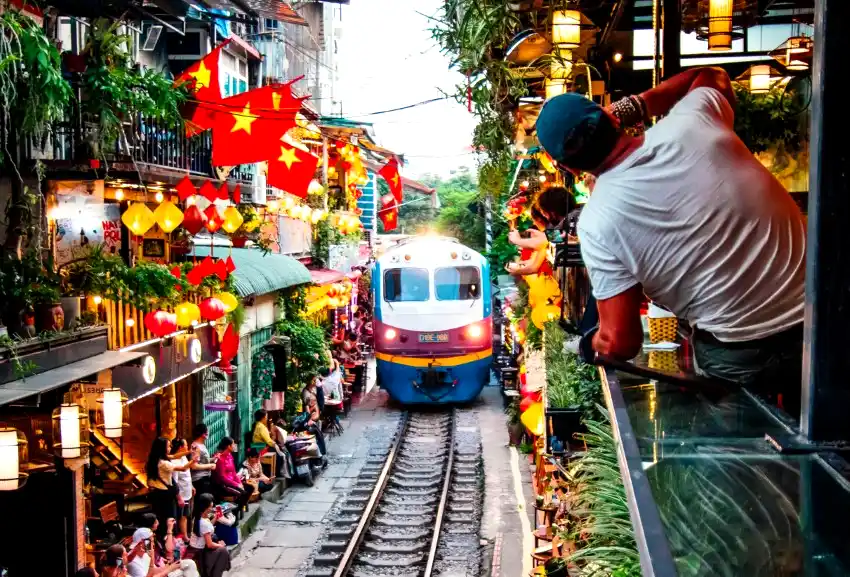
Picture this: steam rising from a bubbling cauldron of bone broth on a chaotic pavement corner in Hanoi. The high-pitched whine of passing motorbikes creates a rhythmic backdrop as a vendor snips fresh herbs into a ceramic bowl. This is the real heartbeat of Vietnam. Street food here isn’t just a cheap dining option, it’s the social fabric that binds the country together.
From the cool, delicate flavors of the North to the fiery, herb-laden plates of the Central coast and the sweet, rich sauces of the South, every sidewalk tells a story. Pulling up a tiny plastic stool just inches from oncoming traffic isn’t just a meal; it’s the ultimate Vietnamese experience.
🚨Got food allergies? Get your Vietnam Allergy Flash Cards & Spoken words!
Free mobile tool: Generate an instant Vietnamese warning card to show street food vendors and overcome the language barrier. →
The Quick Summary:
- Average Cost: Most street food dishes will set you back between 30,000 VND and 70,000 VND ($1.20 to $2.80 USD).
- Regional Flavors: The North is all about clear, subtle, and savory broths. Central Vietnam turns up the heat with intense spice and complex textures. The South hits you with bold sweetness and a mountain of fresh herbs.
- Peak Dining Hours: Breakfast runs from 6:00 AM to 9:00 AM. The lunch rush peaks between 11:30 AM and 1:30 PM. The night market and evening street food scene kicks off around 6:00 PM.
- Payment Methods: Cash is king. While larger stalls might accept local banking QR codes, international credit cards are practically useless on the pavement.

Compare tours and tickets across Vietnam
and book instantly on your phone.
Klook’s mobile vouchers mean no
printing, no fuss, just turn up and go.
What Makes Vietnamese Street Food So Special?
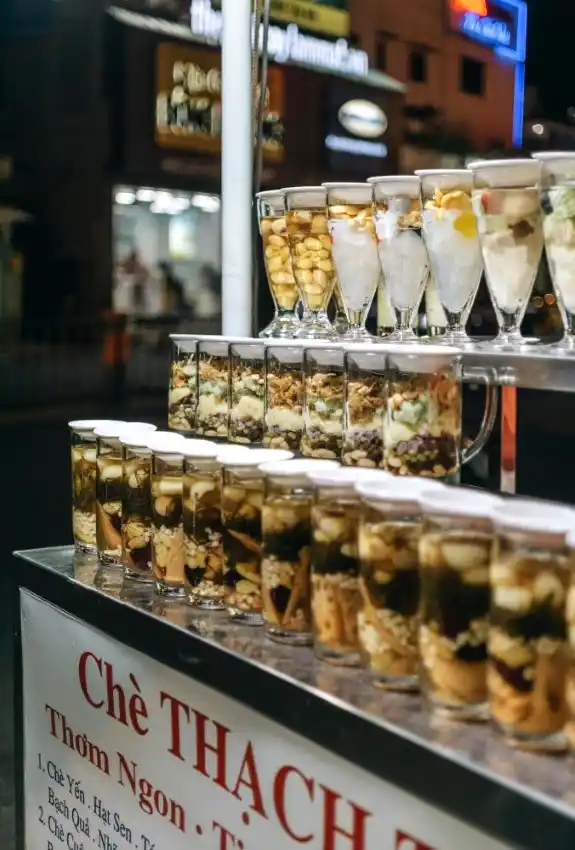
At its core, Vietnamese street food revolves around a strict culinary philosophy: balancing the five flavor elements (spicy, sour, bitter, salty, and sweet). Every single dish hits these notes while playing with contrasting textures, think crunchy fresh sprouts paired with tender noodles, or rich pork belly balanced by crisp, pickled papaya.
The sheer freshness of the ingredients dictates the daily routine here. Vendors head to wholesale markets at 3:00 AM to grab herbs, meats, and seafood harvested just hours prior. This obsession with freshness is why even the humblest pavement stall tastes like a five-star meal.
The local motorbike culture also shapes the food scene. It’s incredibly common to see locals pull right up to a stall, order without even turning off their engines, grab their takeaway container, and merge right back into traffic. If you’re staying to eat, the experience centers around low plastic stools and communal tables, turning the sidewalk into one massive, vibrant dining room.
| Dish Name | Primary Region | Key Flavor Profile | Average Price (VND & USD) |
|---|---|---|---|
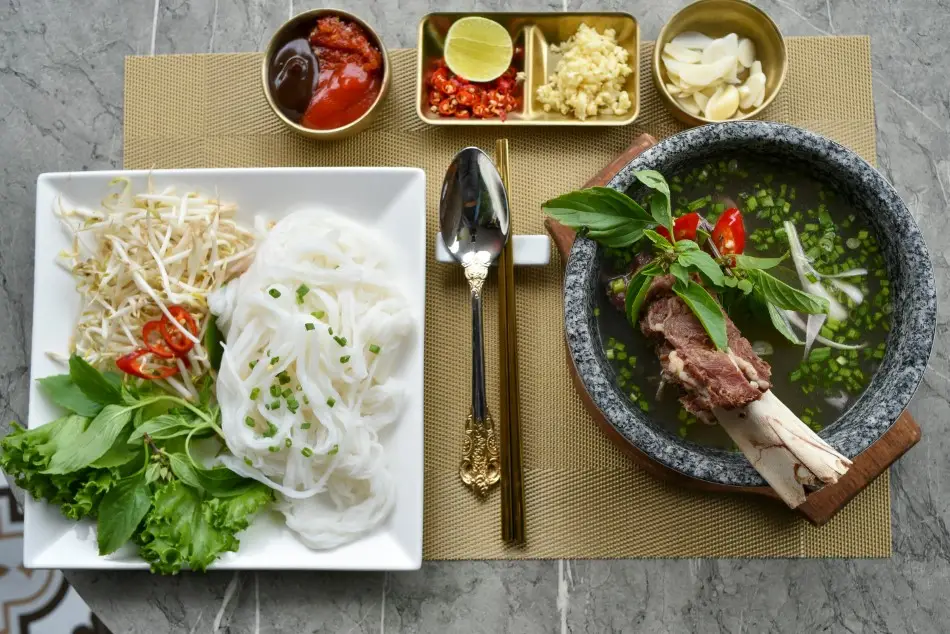
| Pho Bo (Beef Noodle Soup) | North (Hanoi) | Delicate, aromatic, clear bone broth with star anise | 45,000 VND – 65,000 VND ($1.80 – $2.60 USD) |
| Bun Bo Hue (Spicy Beef Noodle) | Central (Hue) | Fiery, robust, lemony broth with savory shrimp paste | 50,000 VND – 75,000 VND ($2.00 – $3.00 USD) |
| Hu Tieu Nam Vang (Pork & Seafood Noodle) | South (HCMC) | Sweet, savory garlic broth with dried shrimp undertones | 45,000 VND – 70,000 VND ($1.80 – $2.80 USD) |

From classic Vietnam highlights to
hidden-gem private tours, GetYourGuide
makes booking painless. Cancel free
up to a day before your start time.
Pro Tips For Stress Free Travel:
Transport & Food Delivery: Grab, Xanh SM, and Be are your go-to ride-hailing apps. Xanh SM runs a fantastic fleet of electric cars and motorbikes. Use them to book cheap rides directly to hidden food alleys, or to order food straight to your accommodation when you’re feeling lazy.
Accommodations & Tours: Stick to Booking.com or Agoda to find local guesthouses right in the heart of the food districts. For incredible street food walking tours led by local students, check out Klook and Get Your Guide.
Connectivity & Security: Snag a Yesim eSIM for instant data the second you land. It’s also smart to run a VPN like Nord VPN to keep your data secure when you’re jumping on public Wi-Fi networks at sidewalk cafes.
Handling the Cash: The Vietnamese Dong (VND) can be tricky because of all the zeros. Always double-check your banknotes—the 20,000 VND note and the 500,000 VND note are both blue and look dangerously similar in the dark. Keep a stash of smaller bills (10,000, 20,000, and 50,000 VND) in an easy-to-reach pocket specifically for quick street food purchases.


Skip the airport SIM queue when you
land in Vietnam. Yesim’s eSIM activates
before takeoff so you’re online the
second your plane touches the tarmac.
Scouting the Best Street Food in Hanoi:
Hanoi’s street food is steeped in tradition, favoring minimalist seasoning and deeply comforting, clear broths that let the natural flavors of the meat shine. The food scene here relies on traditional techniques passed down through generations within the historic Old Quarter.
Pho Cuon at Truc Bach Lake
While standard beef pho is everywhere, make your way to Ngu Xa Street near Truc Bach Lake for pho cuon. This genius dish features uncut sheets of steamed rice noodles wrapped tightly around stir-fried beef and fresh cilantro. Skip the tourist-heavy stalls right on the main intersection and wander a bit deeper into the alleyways to find the vendors where locals sit three rows deep.
Bun Cha along Hang Buom Street
Bun cha is a beautiful mess of grilled pork patties floating in a warm, sweet, and tangy fish sauce dipping broth, served alongside cold rice vermicelli and an absolute mountain of fresh perilla and mint leaves. For the real deal, look for the midday smoke billowing from small grills on Hang Buom Street. The meat has to be grilled over charcoal briquettes to get that perfect smoky caramelization.

Skip the airport kiosk queue in Vietnam.
Airalo’s eSIMs are pre-loaded before
you fly and ready to switch on the
instant you connect to the network.
Where to Eat in Ho Chi Minh City:
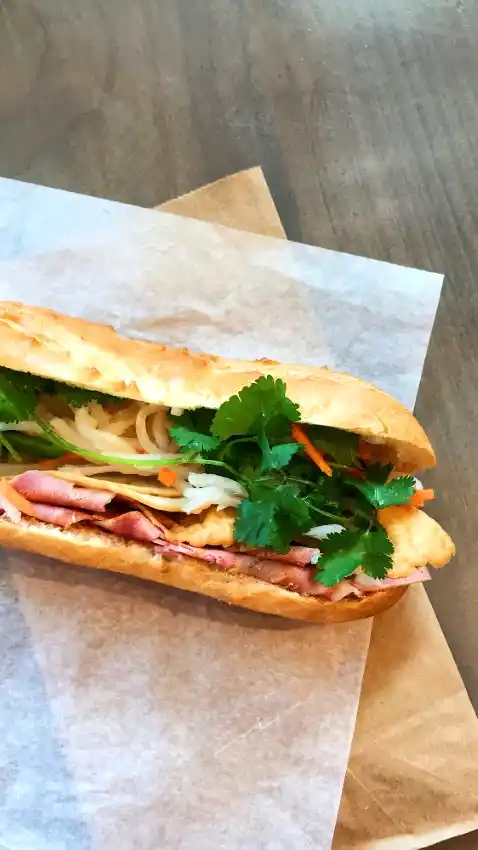
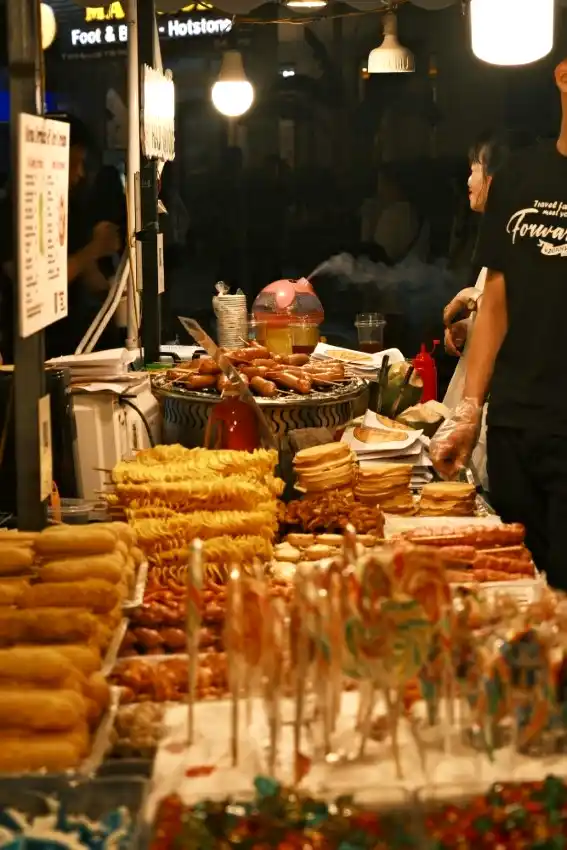
Street food in Ho Chi Minh City is bold, uninhibited, and unapologetically sweet. Heavily influenced by historic trade routes, you’ll find plenty of coconut milk, curry powder, and heavy garlic. The southern metropolis transforms its pavements into massive open-air dining rooms the second the sun goes down.
Banh Mi Huynh Hoa vs. The Local Alternatives
Banh Mi Huynh Hoa is legendary for its massive, meat-heavy baguettes, but it’s become a bit of a chaotic tourist trap. For a much more authentic, local vibe, head over to Banh Mi Bay Ho on Huynh Khuong Ninh Street in District 1. They’ve been operating for over eighty years, using a lighter smear of rich pate and traditional cold cuts for a crispier, more balanced bite.
Seafood Feasts in District 4
District 4 is the spiritual home of snail and seafood stalls, known locally as Quan Oc. Hit up Vinh Khanh Street after 7:00 PM to find hundreds of locals cracking open crab claws, slurping sweet and sour tamarind snails, and grilling lemongrass clams over open flames. Be sure to order the Oc Huong Sot Trung Muoi (spotted Babylon snails in salted egg yolk sauce) and use a crispy baguette to mop up every last drop of the rich sauce.
Tackling Central Vietnam’s Culinary Scene:
Central Vietnamese street food does not play around. Expect aggressive levels of chili heat, complex textures, and sophisticated presentations inherited from the ancient imperial kitchens of Hue. Portions tend to be smaller here, which is actually great because it means you can sample multiple distinct dishes in one sitting.
Bun Bo Hue in the Imperial City
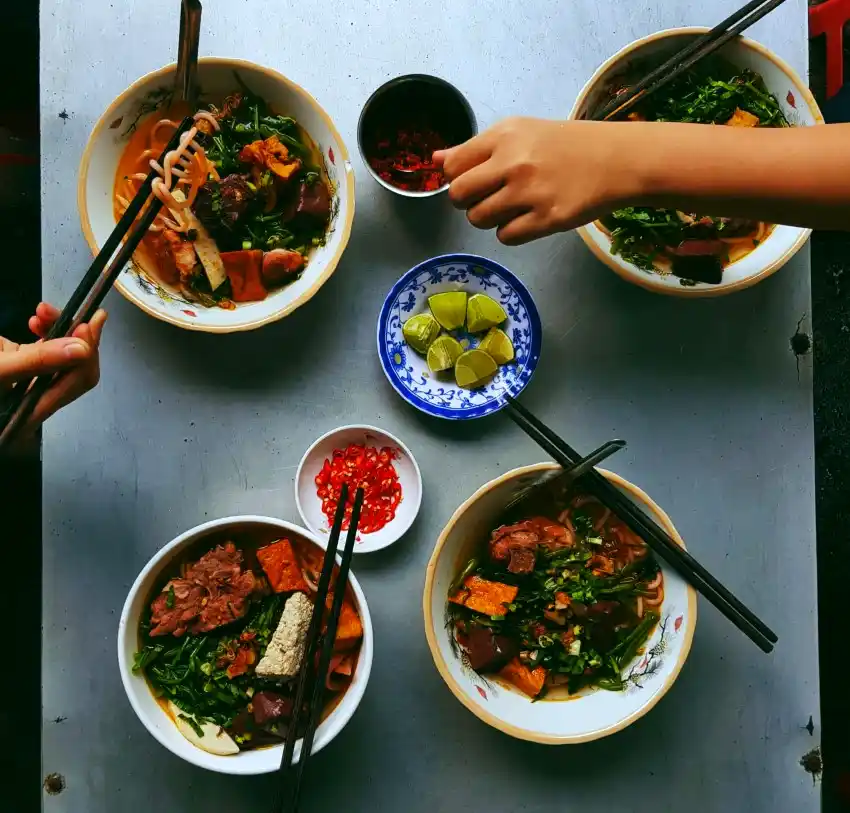
True Bun Bo Hue is a masterclass in flavor balance. The broth requires hours of simmering beef bones and pork knuckles with lemongrass, chili oil, and fermented shrimp paste. For an authentic bowl, track down the stalls near Dong Ba Market that serve it with thick, cylindrical rice noodles, tender beef shank, cubes of congealed pig blood, and a handful of shredded banana blossoms.
Central Rice Cakes in Hoi An
Hoi An has a fantastic sub-set of street food centered around savory, steamed rice cakes. You have to try Banh Beo—small terracotta dishes filled with steamed rice batter, topped with minced shrimp, scallion oil, and crispy pork rinds. Look for vendors selling these out of mobile wicker baskets near the Thu Bon River rather than sit-down riverside restaurants; you’ll get much crispier toppings and fresher fish sauce.

Compare hotel prices across Vietnam’s best
neighbourhoods and book with confidence.
Filter by budget, location, or guest score
to find the right stay for your trip.
How to Act at a Vietnamese Street Food Stall:
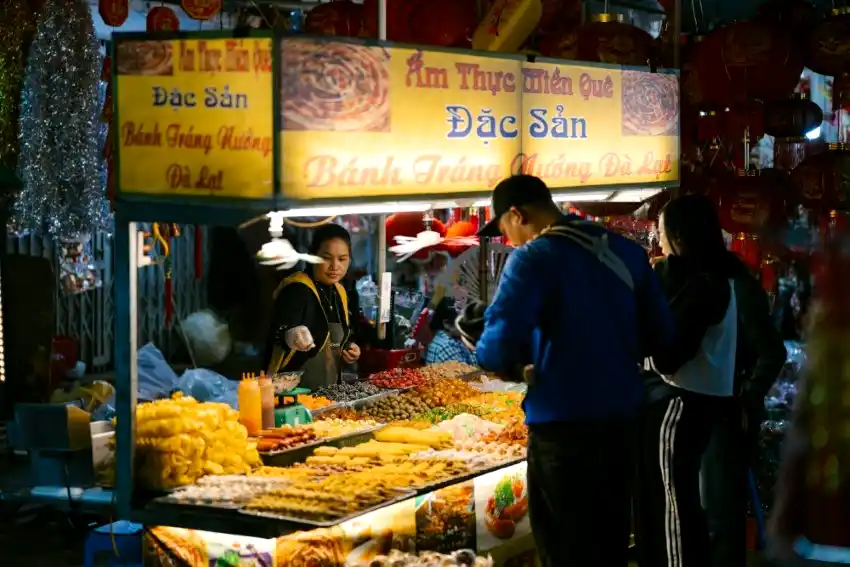
Navigating local street food etiquette is pretty straightforward once you know the unwritten rules. When you arrive at a busy stall, just spot an open stool and sit right down, there’s no formal host waiting to seat you.
Tipping is absolutely not a thing at street food stalls and will usually just cause confusion. Instead, a simple, polite “Cam on” (thank you) goes a long way.
When it comes to trash, take a quick peek under your table. You’ll usually find small waste baskets placed directly on the floor for used tissues, lime wedges, and wooden skewers. Throwing things directly onto the floor is common practice at hyper-busy spots (the staff sweeps it all up between rushes), but using the basket is always the classier move.
One final note: bargaining is totally fine at tourist souvenir markets, but never bargain for cooked food at a street stall. The prices are fixed, and trying to haggle down the price of a meal is considered incredibly disrespectful to the cook.
Staying Longer in Vietnam?
Because Vietnam is so incredibly affordable and has such a deep food culture, it’s become a prime destination for slow travel. Many travelers take advantage of the 90-day e-visa options to set up a home base in coastal food hubs. Da Nang, in particular, has exploded as a digital nomad favorite thanks to its clean beaches, solid infrastructure, and perfect proximity to the food scenes in both Hue and Hoi An.
If you’re thinking about a long-term move, bringing a pet along has become way easier recently thanks to streamlined import processes. Neighborhoods like An Thuong in Da Nang or Thao Dien in Ho Chi Minh City offer plenty of pet-friendly apartments and walkable streets, making it easy to settle into a laid-back lifestyle fueled by incredible daily street food.
A Quick Note for Nervous Travelers:

It’s completely normal to feel a little anxious about food safety and the chaotic traffic when you first step onto the pavement. Honestly, though, a few basic tricks will keep you totally safe and healthy.
To avoid any stomach issues, always look for stalls with a high turnover of local customers. If the stainless-steel tables are packed with Vietnamese families, you can bet the ingredients are fresh and constantly moving. It’s also smart to choose stalls that specialize in just one or two specific dishes rather than places trying to offer a massive, sprawling menu.
When it comes to crossing the street to get to that food vendor, the trick is to maintain a slow, predictable walking pace. Do not stop, don’t run, and avoid sudden movements. The sea of oncoming motorbike riders will easily calculate your path and smoothly steer right around you.
Frequently Asked Questions:
Is it safe to have ice in drinks at street food stalls?
Yes, ice is generally perfectly safe in major cities and established stalls. Modern vendors buy manufactured ice cylinders made from purified water, which you can easily spot by their hollow, machine-cut shape. You only really want to avoid crushed ice from large blocks if you’re traveling in deeply remote, rural areas.
How much does a typical street food meal cost?
A standard main like a bowl of pho or a plate of broken rice (com tam) runs between 35,000 VND and 60,000 VND ($1.40 to $2.40 USD). Tacking on a refreshing glass of iced green tea (Tra Da) or sugarcane juice usually adds just another 5,000 VND to 15,000 VND ($0.20 to $0.60 USD) to your bill.
What are the best vegetarian street food options?
Keep your eyes peeled for signs that say “Chay,” which means Buddhist vegetarian food. Some amazing options to try are Banh Mi Chay (baguettes stuffed with mock meats, tofu, and mushrooms) and Bun Tron Chay (rice vermicelli noodles tossed with fresh herbs, fried tofu, and peanuts).