Ho Chi Minh City Neighborhoods For Digital Nomads
Ho Chi Minh City is one of Southeast Asia’s best bases for remote work. If you are researching Ho Chi Minh City neighborhoods for nomads, you know that picking the right district makes all the difference…
Picking the wrong neighborhood can make or break your stay. Too central and the traffic noise follows you into every video call. Too far out and you lose the electric energy that made you want to come here in the first place. This is an honest breakdown of where to actually base yourself, whether you are here for two weeks or two years.
The Quick Summary:
- Budget Sweet Spot: A comfortable studio with fast internet realistically costs 12,000,000 to 18,000,000 VND ($480 to $740 USD) per month, depending on the district and whether utilities are included.
- Visa: The standard 90-day tourist e-visa allows multiple entries, making regional border runs to Cambodia or Thailand straightforward. See our full Vietnam e-visa guide for the step-by-step application.
- Top Bases: District 1 for short-stay central convenience, District 3 for authentic local immersion, Thao Dien for expat comforts and families, and Binh Thanh for the best value high-rise living.
- Connectivity: Fiber-optic speeds of 80 to 150 Mbps are standard across dedicated work cafes and modern apartments. Grab a Yesim eSIM before you land and you will have data the moment you step off the plane.
- Cost of Living: HCMC is genuinely affordable. Our full cost of living breakdown covers everything from street food budgets to gym memberships and utility bills.
Which Neighborhood Is Right For You?
The neighborhood you choose shapes everything: your morning commute to a cafe, your monthly rent, how often you hear English on the street, and how quickly you feel like you actually live here rather than just passing through. Check out the full guide to living in Ho Chi Minh City for the bigger picture, but the table below is a solid starting point before we break each neighborhood down properly.
| Neighborhood | Monthly Rent (VND / USD) | Atmosphere | Best For |
|---|---|---|---|
| District 1 | 18,000,000+ VND ($740+ USD) | Fast-paced, tourist-heavy, central | Short stays, first-timers |
| District 3 | 12,000,000 to 18,000,000 VND ($490 to $740 USD) | Leafy, colonial, authentic cafe culture | Long stays, culture seekers |
| Thao Dien (Thu Duc City) | 15,000,000 to 25,000,000 VND ($620 to $1,030 USD) | Walkable, Western-friendly, premium | Families, luxury seekers, expats |
| Binh Thanh | 10,000,000 to 16,000,000 VND ($410 to $660 USD) | High-rise modern meets local street life | Value hunters, long-term nomads |
A Closer Look at Each Neighborhood:
Each district has its own rhythm, its own price point, and its own distinct energy. None of them is objectively the best, but one of them is probably right for you. If you are still weighing up HCMC against the rest of Vietnam, our Hanoi vs Ho Chi Minh City comparison is a good place to start.
District 1: The Central Hub
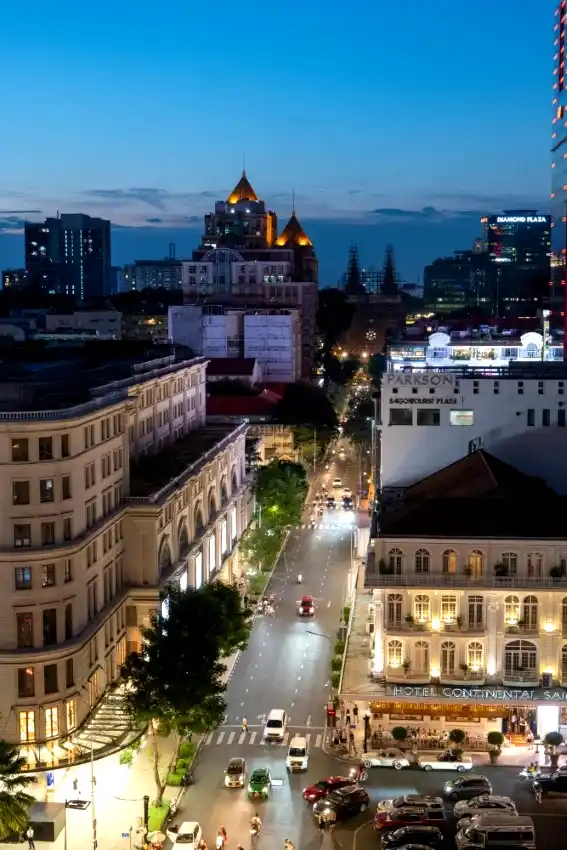
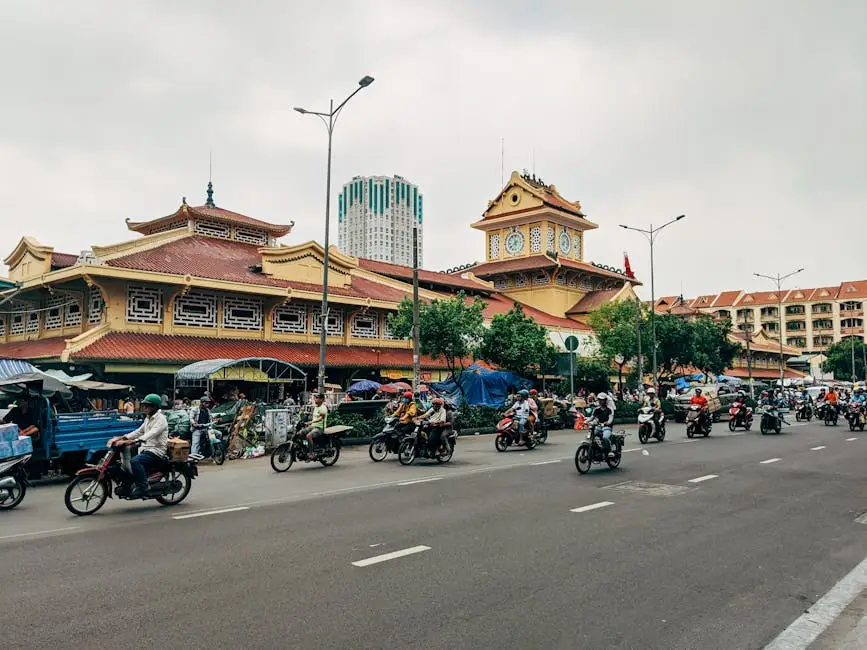
District 1 is where most visitors land first and it makes a powerful first impression. The Saigon Central Post Office, Nguyen Hue Walking Street, and the chaotic beauty of Ben Thanh Market are all within walking distance of each other. For short stays of a month or less, the convenience is hard to beat. Co-working spaces are plentiful, 24-hour cafes are everywhere, and internet speeds routinely push past 100 Mbps.
The honest downside is noise and cost. Motorbike traffic is relentless throughout the day and much of the night. Serviced studios near Ben Thanh rarely drop below 18,000,000 VND ($740 USD) per month, and Western restaurant meals can easily hit 350,000 VND ($14 USD) a plate.
For a quieter and more interesting work spot, skip the generic hotel lobbies and hunt down the third-wave coffee shops tucked inside old apartment buildings along Ton That Dam Street. They are worth finding. Book your initial landing-pad on Agoda to lock in the best rates on short-term serviced apartments here.
District 3: The Cultural Core
Ask any long-term nomad where they actually live and District 3 comes up time and again. It sits just south of District 1 but feels like a completely different city. Tree-lined avenues, crumbling French colonial villas, alleyway cafes that have been there for decades, and a local community that has not been entirely reshaped by tourism. It is the kind of neighborhood where you learn the coffee shop owner’s name within a week.
The cafe infrastructure is exceptional. Quiet alleys off Nguyen Dinh Chieu and Vo Van Tan hide multi-level work spaces with ergonomic seating, reliable power sockets, and genuinely fast internet. Rent is noticeably kinder too: serviced apartments with Wi-Fi, weekly cleaning, and utilities included regularly come in at 12,000,000 to 15,000,000 VND ($490 to $620 USD) per month. Affordable street food is steps from your door in every direction. Check the Ho Chi Minh City street food guide once you have landed to figure out exactly where to eat. For most nomads planning a stay of two months or longer, District 3 is the answer.
Browse accommodation options here via Booking.com, which is particularly strong for monthly-rate serviced apartments with free cancellation in case your plans shift.

Find your perfect base in Vietnam’s most energetic
metropolis. Compare top-rated properties across
central District 1, historic District 3, and the riverside
expat hub of Thao Dien to lock in the best rates
before you travel.
Thao Dien: The Expat Enclave
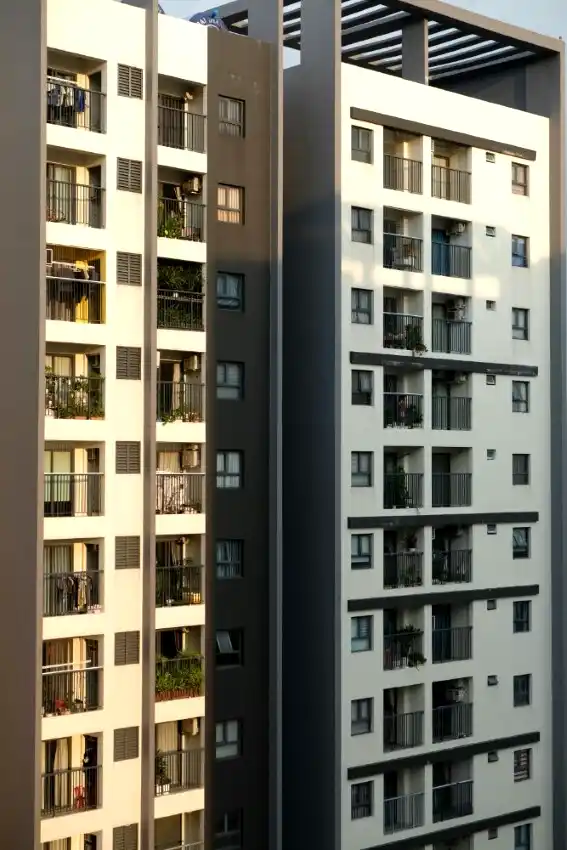
Thao Dien sits across the Saigon River in what is now officially Thu Duc City (formerly District 2), and it operates almost as a city within a city. International schools, organic grocery stores, artisanal bakeries, riverfront brunch spots, and a cafe scene that would feel at home in Bali or Chiang Mai. English is spoken everywhere. The streets are pedestrian-friendly by Vietnamese standards. For families relocating long-term, or for anyone who wants a soft landing without sacrificing quality of life, Thao Dien delivers.
The trade-off is price and distance from authentic local life. Modern apartments in Masteri Thao Dien or Gateway start around 15,000,000 VND ($620 USD) for a one-bedroom and climb quickly for larger or newer units. Imported goods at local supermarkets can double your grocery spend compared to shopping in District 3. Thao Dien is a comfortable, premium base, and for the right person it is absolutely worth every dong. Search Agoda for the best apartment hotel rates here, particularly if you want something with a pool and gym included.
If you are considering a longer commitment, the renting apartments in Vietnam guide covers exactly what to watch out for in lease agreements, what deposits are standard, and how to negotiate.
Binh Thanh: The Best of Both Worlds
Binh Thanh sits geographically between District 1 and Thao Dien, and it mirrors that position perfectly in character. The district centres around Landmark 81 and the enormous Vinhomes Central Park complex, where residents enjoy manicured parks, swimming pools, and high-security high-rises. Walk five minutes outside those complex gates and you are in the historic Pham Viet Chanh area: narrow streets packed with Japanese yakitori bars, craft beer spots, and proper southern wet markets that open before dawn.
For nomads who want luxury amenities without losing the texture of Vietnamese daily life, Binh Thanh is a compelling choice. Modern apartments run 10,000,000 to 16,000,000 VND ($410 to $660 USD) per month, making it the most affordable of the high-rise options. Nguyen Huu Canh street gives you fast access to District 1 when you need it. Getting around the wider city from here is easy too: the Ho Chi Minh City transport guide covers exactly which apps to use and which routes make sense. Binh Thanh rewards a bit of exploration and quickly feels like home.
Finding Your Apartment:
The best approach for any stay longer than two weeks is to book a short-term serviced apartment or guesthouse for your first week and use that time to actually walk the neighborhoods. Check the Wi-Fi speed in person (ask them to run a speed test), listen for traffic noise at the times you will actually be working, and get a feel for the local food scene before committing to a monthly lease.
Use Booking.com or Agoda for that initial landing pad, both have strong HCMC inventory and you can cancel most serviced apartments up to 24 hours before arrival. For monthly rentals, local Facebook housing groups are remarkably active and often list apartments weeks before they appear on any official platform. Local real estate agents are also worth contacting directly as they frequently have unlisted units. Always verify that the quoted rent includes utilities, Wi-Fi, and any building management fees before signing anything. Our dedicated renting apartments in Vietnam guide has a full checklist for what to ask.
Cash Note: Double-check your banknotes when handling VND. The 20,000 VND and 500,000 VND notes share a similar blue tone and are a common source of expensive confusion for newcomers. Keep denominations sorted in separate pockets until you have the colours memorised. More on managing money in Vietnam in the Vietnam currency guide.
Find your perfect base in Vietnam’s most energetic
metropolis. Compare top-rated properties across
central District 1, historic District 3, and the riverside
expat hub of Thao Dien to lock in the best rates
before you travel.
The Best Work Cafes and Co-Working Spaces:
One of the great joys of basing in HCMC is the sheer density of places to work that are not your apartment. The city has developed a genuinely impressive cafe culture built around long hours, reliable Wi-Fi, and no pressure to move on, and the specialty coffee movement has layered on top of that to create spaces that are beautiful to sit in for a full working day. Read the full Vietnam coffee culture guide to understand what you are walking into.
In District 3, multi-level cafe houses off Vo Van Tan and around the park on Tran Quoc Toan consistently deliver fast connection, power at every table, and the kind of ambient hum that makes concentration easy. In Thao Dien, newer specialty roasters near the river cater specifically to the expat work crowd with standing desks, meeting pods, and proper espresso. In Binh Thanh, the stretch of cafes along Nguyen Huu Canh toward Landmark 81 has become a reliable corridor for nomads who want a view to go with their deadlines.
For dedicated co-working, Toong and Dreamplex both operate several locations across the city with reliable gigabit connections, private call booths, and day-pass options from around 150,000 VND ($6 USD). If you are going to be working primarily from co-working spaces, factor that into your monthly budget alongside rent. The Vietnam digital nomad guide covers the full co-working landscape across cities if you are still deciding where to base.
The Practical Toolkit:

- Transport Apps: Download Grab, Be, and Xanh SM before you arrive. Xanh SM runs a fleet of quiet electric motorbikes and cars with fixed pricing, which is useful on longer cross-city commutes where metered taxis get expensive. Full breakdown in the Grab vs Xanh SM guide.
- Connectivity: Activate a Yesim eSIM before you land and you will have a working data connection before you clear immigration. Most modern cafes and apartments offer speeds between 80 and 150 Mbps. Add a NordVPN subscription for secure browsing on public cafe networks. More detail in the Vietnam SIM cards and internet guide.
- Payments: Cash remains essential for street food, wet markets, and smaller landlords. Most modern cafes now accept QR code payments via local bank transfer apps, which is convenient once you have a local account. Our guide to opening a Vietnamese bank account walks through the process step by step. International cards work reliably at ATMs and larger establishments.
- Travel Insurance: Do not skip this one. SafetyWing is the go-to for long-term nomads: monthly rolling cover, good for remote workers, and covers Vietnam without the gaps that cheaper policies leave. It is the kind of thing you absolutely do not want to be without when a motorbike clip sends you to a private hospital in District 3.
- Visa Planning: The 90-day e-visa with multiple entries is the standard tool for remote workers. Border runs to Cambodia or Thailand are simple and well-practiced. Many long-term nomads split their year between Ho Chi Minh City and the slower coastal pace of Da Nang to manage visa cycles comfortably. Book transport for those runs through 12GO for the widest range of options. See our long-term visas guide for everything beyond the standard tourist e-visa.

Forget the daily data limits of standard tourist SIMs.
Get a Yesim eSIM for unlimited 5G data from ~$10.
Work, stream, and be connected the second you land.
Day Tripping From Your Base:
One of the real advantages of basing in HCMC over a coastal city is the day trip options on your doorstep. On a day off, you could be drifting through narrow channels in the Mekong Delta, crawling through the Cu Chi Tunnels, or sitting on a beach in Vung Tau with a bia hoi in hand. None of these require more than two to three hours of transit each way, and all of them make for a proper reset between work sprints.
The full Ho Chi Minh City day trips guide covers all your options in detail. For the Mekong Delta especially, joining a small-group tour through Get Your Guide or Klook takes all the logistics off your plate and usually gets you access to spots that are nearly impossible to reach independently without a local guide. That is a genuinely worthwhile use of a Wednesday when your brain needs a different kind of input.
If you are thinking further afield for a longer weekend break, the how to get around Vietnam guide has the full picture on flights, trains, and overnight buses from HCMC.
A Note for Nervous Arrivals:
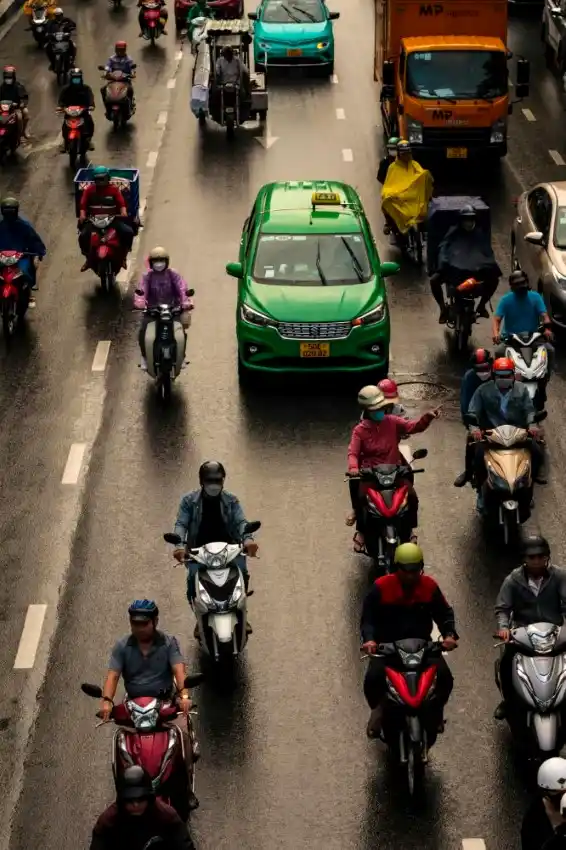
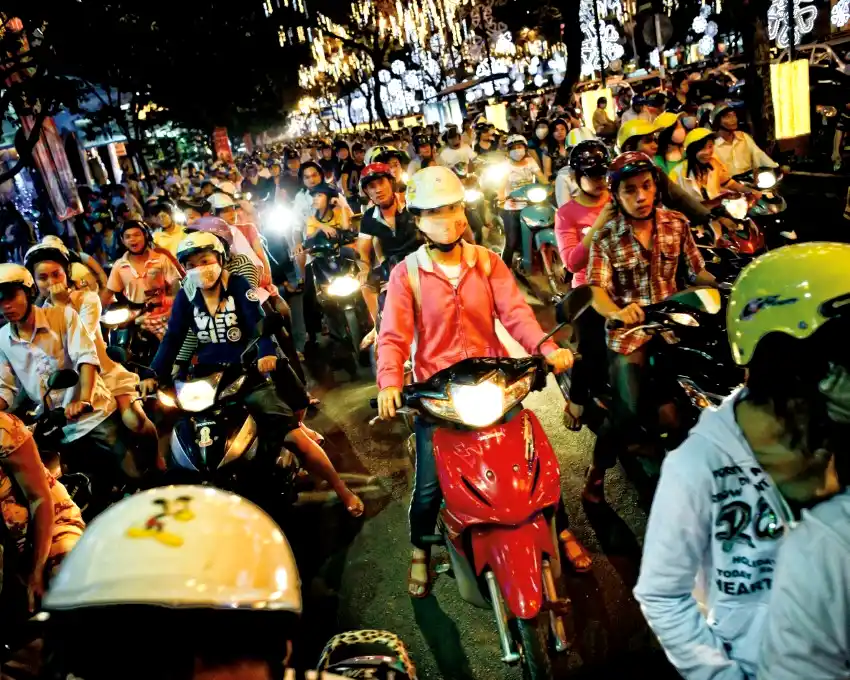
The motorbike traffic is the first thing that overwhelms almost every new arrival. Crossing the street feels impossible for about the first 48 hours. The trick is to step off the curb calmly, maintain a slow and completely predictable walking pace, and trust that the riders will calculate their path around you. They have been doing it their whole lives. Do not freeze, do not sprint, and never step backwards suddenly. Within a few days it becomes second nature.
Street crime is low by the standards of any major city. Basic vigilance around your phone in busy tourist corridors like Bui Vien or the Ben Thanh area is sensible, but genuine hostility toward visitors is extremely rare. Food safety is excellent if you follow the crowds: eat where local families eat at peak mealtimes, stick to cooked dishes, and drink from sealed bottles. The Is Vietnam Safe guide covers common scams, traffic, and solo travel in much more detail if you want the full picture before you arrive. The city rewards people who lean in rather than hold back.
Pro Tips For Stress-Free Living:
- eSIM first: Activate Yesim before you board your flight. You will arrive with working data, which means Grab works from the moment you step out of arrivals, no fumbling for a local SIM at the airport. It is a small thing that makes a big difference on day one.
- VPN always on: Vietnamese cafe Wi-Fi is generally fast but public. Keep NordVPN running on your device as a baseline habit, especially if you are handling client data or accessing financial accounts from coffee shops.
- Airport transfers: Skip the taxi hustle at Tan Son Nhat and pre-book with Welcome Pickups. Fixed price, English-speaking driver, meets you in arrivals. Worth every dong on a red-eye when your brain is still on home time.
- Cover yourself: SafetyWing is the nomad insurance of choice for Vietnam. Monthly rolling cover means you are never paying for months you are not there, and the policy covers motorbike accidents (with a helmet on, naturally). Do not put this one off.
- Gear sorted before you go: The digital nomad gear guide covers the specific kit worth bringing to Vietnam, from travel routers to the right power bank for a country where cafe sockets are sometimes at floor level behind a pot plant.
Frequently Asked Questions:
What is the internet speed like in Ho Chi Minh City?
Fiber-optic broadband is standard across all major neighborhoods. Most rental apartments and dedicated work cafes provide stable speeds between 80 and 150 Mbps, making video calls and large file transfers completely reliable. Ask your landlord or the cafe staff to run a speed test before you commit to anything.
How do I find an apartment for a three-month stay?
Book a short-term serviced apartment for your first week and use that time to explore neighborhoods in person. Check Wi-Fi speeds, test noise levels at working hours, and scout the local food scene before signing a monthly lease. Local Facebook housing groups and direct contact with real estate agents both surface better deals than standard booking platforms for stays longer than a month. Our renting apartments in Vietnam guide covers what to look for in a lease.
Is tipping expected in local cafes and restaurants?
Tipping is not a traditional expectation in Vietnamese cafes or street food stalls. High-end Western restaurants and cocktail bars frequently add a 5% to 10% service charge directly to the bill. At local spots, rounding up or leaving small change is a kind gesture but never expected.
Which neighborhood offers the best value without sacrificing quality?
Binh Thanh consistently offers the best combination of modern amenities, safety, and affordability. High-rise apartments with pools and gyms start around 10,000,000 VND ($410 USD) per month, and the surrounding streets provide excellent local food, easy city access, and a lively atmosphere without the tourist premium of District 1.
Can I bring my pet when relocating to Ho Chi Minh City?
Yes, but the import process requires careful advance planning. Your pet will need a microchip, up-to-date vaccinations, a government-issued health certificate, and in some cases a rabies titer test. Requirements vary depending on your country of origin, so contact a specialist pet relocation service several months before your planned arrival date to make sure everything is in order.
What is the best eSIM for Vietnam?
Yesim is the top pick for digital nomads in Vietnam. You activate it before you board your flight and arrive with working data immediately, which means your Grab app is live the moment you clear arrivals. No hunting for a SIM counter, no sim-tray fiddling in the terminal. Coverage and speeds across Ho Chi Minh City are consistently strong.
How does the 90-day e-visa work for long-term stays?
Vietnam’s 90-day e-visa allows multiple entries and is the standard choice for remote workers. Once it expires, most nomads do a border run to Cambodia or Thailand and re-enter fresh. Many split their year between Ho Chi Minh City and somewhere like Da Nang to keep things varied. If you need something more structured than back-to-back tourist visas, the long-term visas guide covers business visas and other options.
Is it easy to open a bank account in Ho Chi Minh City?
It is possible as a foreigner, and having a local account makes life significantly easier: QR payments, local transfers, and cheaper ATM access all open up. Vietcombank and Techcombank are the most foreigner-friendly options. The full process, including the documents you will need, is covered in the opening a Vietnamese bank account guide.
How do I get from Tan Son Nhat Airport to my apartment?
Pre-booking an airport transfer with Welcome Pickups is the most stress-free option: fixed price, English-speaking driver, meets you in arrivals. Grab also works reliably from the airport and is significantly cheaper than the metered taxis that queue at the terminal doors. Avoid any driver who approaches you inside the terminal.
What day trips can I do from Ho Chi Minh City?
The options are genuinely excellent. The Mekong Delta is the most popular and can be done in a full day, either independently or with a small-group tour through Get Your Guide or Klook. The Cu Chi Tunnels are a half-day from District 1. Vung Tau beach is around two hours by ferry or road. For anything further afield, the Ho Chi Minh City day trips guide covers all the main options with transport details.