
Best Airports in Vietnam
Airports In Vietnam are a growing aviation network with 11 international airports that connect the country to the world and provide easy access to coastal escapes and mountain retreats. Understanding your port of entry and how to navigate these hubs is the first step toward a seamless trip.
The Quick Summary:
- Primary Gateways: Noi Bai International (HAN) in Hanoi and Tan Son Nhat International (SGN) in Ho Chi Minh City handle the vast majority of long-haul international flights.
- Coastal Favorite: Da Nang International (DAD) is widely considered the most pleasant and efficient airport for tourists, serving as the perfect gateway for Central Vietnam including Hoi An and Hue.
- New Developments: As of 2026, Tan Son Nhat has opened its new Terminal 3 for domestic operations to alleviate congestion. Da Nang is currently expanding its international terminal (T2).
- Entry Requirements: Most travelers can secure a 90-day e-visa online. Passengers entering via Tan Son Nhat (SGN) are encouraged to complete a digital arrival card online before departure.
- Transit Costs: Official metered taxis and ride-hailing services generally cost between 150,000 VND ($6 USD) and 400,000 VND ($16 USD) for transfers to city centers.

Book buses, trains, and ferries to and
from Vietnam on a single platform.
12Go shows operator reviews, exact
departure times, and seat availability.
Major International Gateways:
Vietnam’s three primary international hubs each serve a distinct region of the country. Here’s what to expect when arriving at each one.
| Airport Name & Code | Primary Region Served | Key Characteristic |
|---|---|---|
| Noi Bai International (HAN) | North (Hanoi / Ha Long Bay) | Major hub, efficient T2 international terminal. |
| Tan Son Nhat International (SGN) | South (HCMC / Mekong Delta) | Busiest hub, now utilizing new T3 domestic terminal. |
| Da Nang International (DAD) | Central (Da Nang / Hoi An / Hue) | Top-rated for traveler satisfaction and proximity to the city. |

Noi Bai International Airport (HAN)
Located 30km north of Hanoi, Noi Bai is highly efficient and divided into Terminal 1 (Domestic) and Terminal 2 (International), with a complimentary shuttle bus running between the two buildings every 15–20 minutes.
It is the best starting point for Northern adventures, including Sapa and Ha Long Bay.
Tan Son Nhat International Airport (SGN)
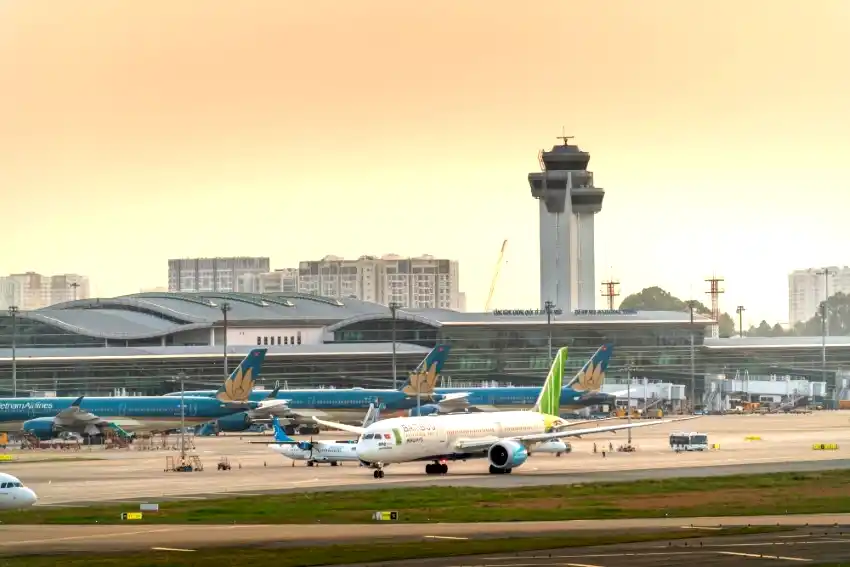
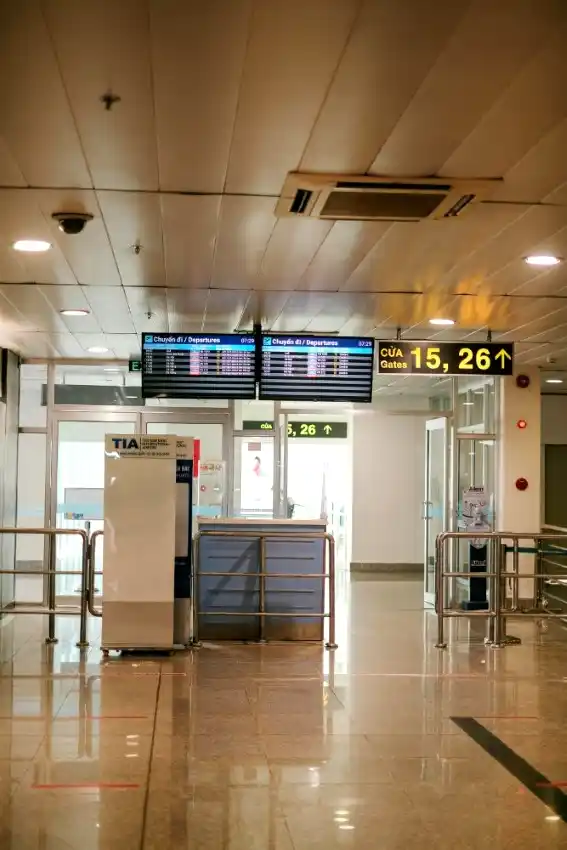
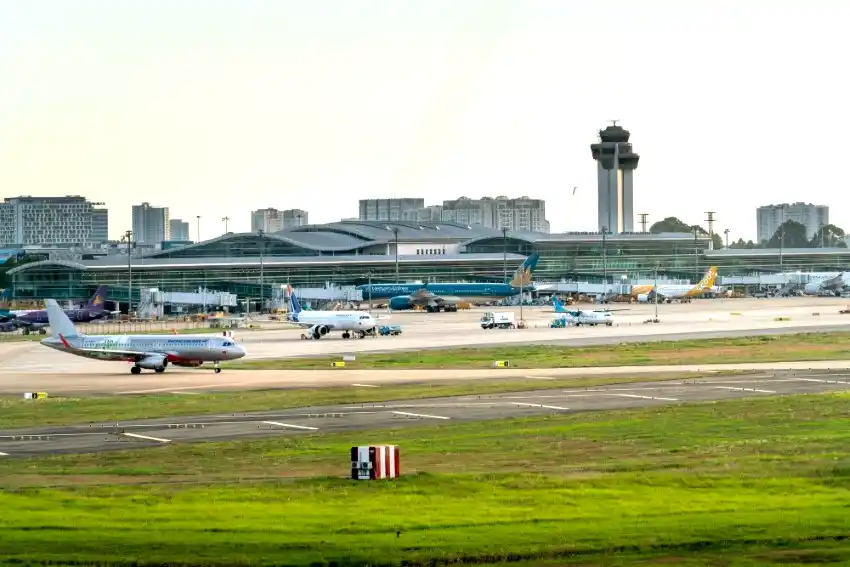
The country’s busiest hub, now operating three terminals, T1 (Domestic), T2 (International), and the newly opened T3 exclusively for domestic flights.
Located just 7km from the city center, it’s very accessible, though local traffic can be heavy. Use the designated ride-hailing lanes or official taxi stands (Mai Linh or Vinasun) when departing to avoid the touts.
Da Nang International Airport (DAD)
Ranked among the world’s top 100 airports by Skytrax in 2026, Da Nang is a firm traveler favorite. Located just 3km from the city center, it offers the shortest transit time to the beach of any major Vietnamese airport.
It is also the most convenient entry point for visiting the historic town of Hoi An, roughly 30km to the south.

A friendly driver, a clean car, and a
flat fare to your Vietnam hotel.
Welcome Pickups handle the logistics
so your trip starts the right way.
Regional Gateways for Beach Escapes:
- Phu Quoc International Airport (PQC): Located right on the island, this compact and easy-to-navigate terminal is a delight to arrive into. Phu Quoc remains a special economic zone, offering visa-exempt entry for international tourists.
- Cam Ranh International Airport (CXR): The go-to gateway if your goal is the beach resorts of Nha Trang. It features modern architecture and is about 30km from the city center.
- Van Don International Airport (VDO): A modern, efficient alternative for travelers heading to Ha Long Bay, located in Quang Ninh province. Often far less crowded than flying into Hanoi and driving over.


Stay closer to the action in Vietnam.
Agoda lists everything from local
guesthouses to riverside resorts, with
verified reviews and instant booking.
A Note for Nervous Travelers:

The energy at Vietnamese transport hubs is intense. You will likely be greeted by taxi touts offering rides the moment you walk out of the terminal. Do not follow them. Politely ignore them and walk directly to the designated taxi queues or your app’s pickup point, the official stands are always clearly signposted.
Pro Tip: When crossing the street or walking to your car, maintain a slow, predictable pace. Do not stop, run, or hesitate. The sea of motorbikes will simply flow around you like water around a rock. This applies equally to navigating the busy drop-off zones outside every major terminal.
Pro Tips For Stress Free Travel:
- Transport Apps: Download Grab, Xanh SM, or Be before you arrive. These give you fixed-price rides directly from the airport, completely removing the need to haggle with taxi drivers at the kerb.
- Mobile Data: Purchasing a local physical SIM (Viettel or Vinaphone) at airport kiosks is the gold standard for coverage, though eSIMs via Yesim are increasingly popular for instant activation the moment you land.
- Cash is King: ATMs are available in all international arrival halls. Keep smaller denominations, 20,000 to 100,000 VND, handy, as breaking a 500,000 VND note can be a struggle for street vendors and smaller shops.
- Visa / Entry: Always double-check your e-visa printout and keep it with your passport. If arriving at SGN, check the official immigration portal to confirm whether the digital arrival card is required for your specific travel dates.


Maps, Grab, translation apps, all need
data in Vietnam. Yesim’s eSIM installs
in a minute and gives you reliable 5G
from the moment you arrive.
Frequently Asked Questions:
Can I buy a SIM card at the airport?
Yes. Official telecom kiosks are located in the arrivals hall of every international airport in Vietnam. You will need your passport to register, and both Viettel and Vinaphone offer excellent nationwide coverage.
Which airport is closest to Hoi An?
Da Nang International Airport (DAD) is the closest, located about 30km north of Hoi An. A taxi or Grab ride between the airport and town takes roughly 45 minutes depending on traffic.
How early should I arrive for my flight?
Aim for at least 2 hours before a domestic flight and 3 hours before international departures, especially during peak travel holidays like Tet when terminals can be extremely busy.
Are there different terminals for different airlines?
Yes, especially in Ho Chi Minh City (SGN). Check your boarding pass carefully to confirm whether you are departing from T1, T2, or the new T3 domestic terminal, as they are not within walking distance of each other.