Ho Chi Minh City Street Food Guide
Ho Chi Minh City is one giant open-air dining room. The clang of metal spatulas, the char from roadside grills, the clouds of lemongrass steam drifting across busy pavements, it hits you the moment you step outside.
Whether you’re grabbing a 40,000 VND ($1.60 USD) bowl of noodles on a plastic stool at sunrise or working your way down a seafood alley at midnight, Saigon’s food culture is one of the great culinary experiences on the planet. Vietnamese street food as a whole is extraordinary, but this city plays by its own rules. This guide tells you exactly what to eat, where to find it, and how to do it properly.
The Quick Summary:
- Average Costs: Budget 40,000 to 100,000 VND ($1.60 to $4.10 USD) per street-side meal. Premium sit-down versions of classic dishes occasionally push higher but rarely need to.
- Key Districts: District 1 for convenience, District 3 for neighbourhood authenticity, District 4 for seafood, District 10 for hidden-gem street food and Cambodian-influenced snacks.
- Cash Is Essential: Small stalls work entirely on cash. Carry 10,000, 20,000, and 50,000 VND notes. A 500,000 VND note at a street stall will cause genuine difficulty.
- Peak Dining Hours: Locals eat lunch between 11:30 AM and 1:00 PM and dinner between 6:00 PM and 8:00 PM. Join them at these hours for the freshest ingredients and the most electric atmosphere.
- Best Tip: Follow the locals. A stall packed with families at noon is your single most reliable quality indicator in this city.
What Makes Saigon Street Food Different?
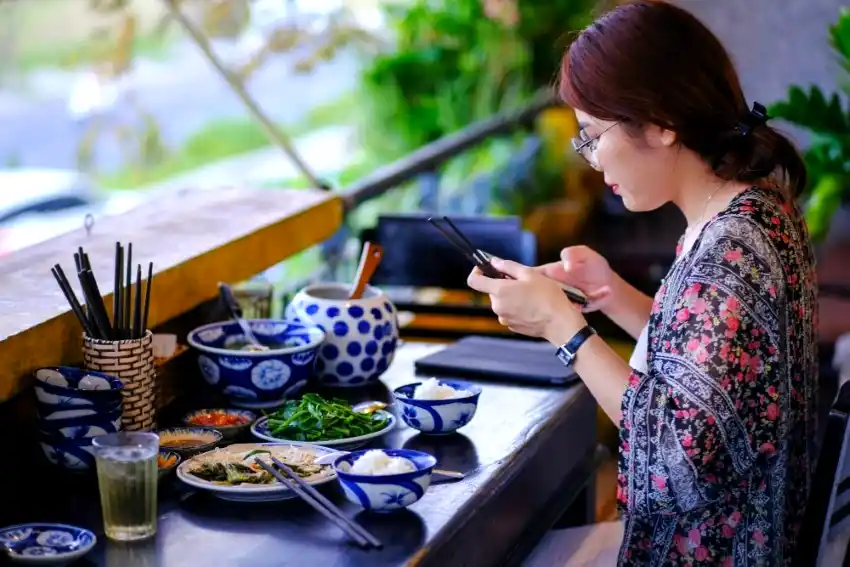
Southern Vietnamese food has its own distinct personality. It is bolder, sweeter, and more herb-forward than the cooking you’ll find in Hanoi or Hue. The Mekong Delta brings coconut milk and tropical fruit into the mix. Central provinces contribute fiery chilis. Generations of Chinese migration left their mark on noodle textures and braising techniques. The result is a cuisine that belongs entirely to this city, even within a country where Ho Chi Minh City already stands apart.
If you haven’t eaten your way around Vietnam’s other cities yet, the contrast is part of the fun. Saigon’s food is noticeably sweeter and more abundant in fresh herbs than what you’ll find in the Hanoi street food scene, and the portions tend to be more generous. Even the Hue street food traditions that inspired some of Saigon’s best noodle dishes get softened and sweetened once they cross the culinary border south. The city does things its own way and makes absolutely no apology for it.
One thing worth knowing before you dive in: Saigon has a serious coffee culture running parallel to all of this. A Ca Phe Sua Da (iced milk coffee, strong enough to rewire your nervous system) belongs alongside every morning street food meal.

Find your perfect base in Vietnam’s most energetic
metropolis. Compare top-rated properties across
central District 1, historic District 3, and the riverside
expat hub of Thao Dien to lock in the best rates
before you travel.
The Dishes You Cannot Leave Without Trying:
Com Tam: The Southern Breakfast
Broken rice is the soul of Saigon mornings. Historically made from grain fractured during milling and sold cheaply to workers who couldn’t afford whole rice, Com Tam has since become the city’s proudest culinary export. Your plate arrives loaded with a lemongrass-and-honey marinated grilled pork chop, shredded pork skin tossed in toasted rice powder, a steamed pork and egg meatloaf, a fried egg, and a generous pour of scallion oil over the top. It is deeply satisfying and costs almost nothing.
If you want to understand how to cook it yourself after you’ve fallen in love with it, a Vietnamese cooking class in the city is one of the best ways to spend a morning.
Where to find it: Com Tam Nguyen Van Cu, 167 Nguyen Van Cu Street, District 5.
Expected price: 80,000 to 140,000 VND ($3.30 to $5.80 USD) for premium cuts.
Banh Mi: The Sandwich That Changed Everything
Versions of Banh Mi have spread across the world, but the southern original remains in a different league. A properly made Saigon Banh Mi starts with a baguette that shatters when you bite into it: crisp shell, airy crumb. Inside goes pork liver pate, mayonnaise, cold cuts, headcheese, pickled daikon, fresh cucumber, a fistful of cilantro, and enough bird’s eye chilis to remind you where you are. Seek out vendors using wood-fired clay ovens to crisp their bread and you will understand why this city is so proud of it.
Understanding the cultural context behind food like this makes it taste even better. The Banh Mi’s French colonial origins, its local reinvention, the way it became a working-class staple rather than a restaurant dish — it’s a whole history in your hand for under 65,000 VND.
Where to find it: Banh Mi Huynh Hoa, 26 Le Thi Rieng Street, District 1.
Expected price: 45,000 to 65,000 VND ($1.85 to $2.70 USD).
Bun Thit Nuong: The Midday Heat Cure
When the temperature climbs and a hot soup feels like too much, Bun Thit Nuong is what you want. Cold rice vermicelli noodles sit beneath charcoal-grilled pork shoulder, crispy fried spring rolls, crushed peanuts, pickled papaya, and a generous heap of shredded lettuce, fresh mint, and perilla leaves. You pour sweet garlic-infused fish sauce over the entire bowl yourself and mix it all together. It is light, texturally brilliant, and completely addictive.
Where to find it: Bun Thit Nuong Kieu Bao, 139 Nguyen Tri Phuong Street, District 5.
Expected price: 40,000 to 55,000 VND ($1.65 to $2.25 USD).
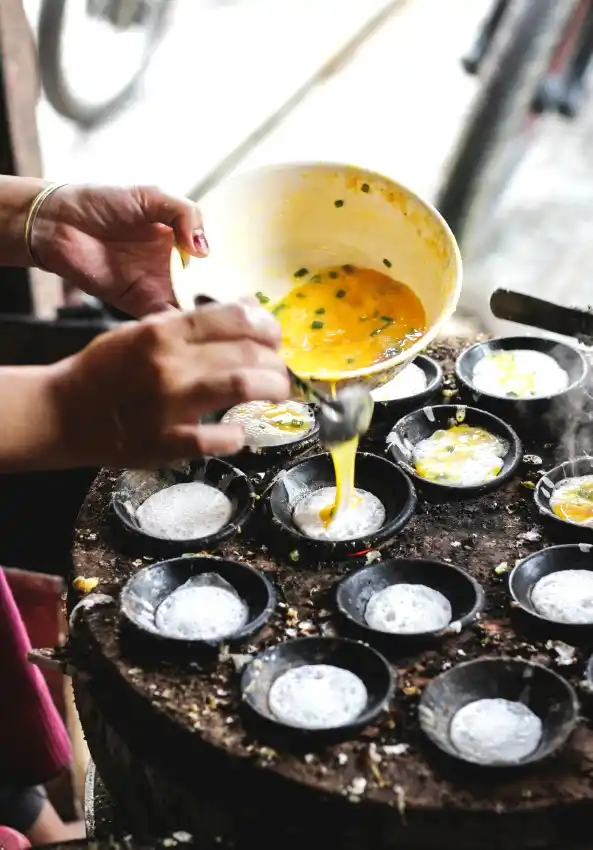
Banh Xeo: The Sizzling Crepe You Wrap Yourself
The name translates roughly as “sizzling cake” and the sound it makes hitting a screaming-hot pan is exactly that. A southern Banh Xeo is a large turmeric-yellow crepe fried in lard until the edges go paper-thin and shatteringly crisp. Pork belly, whole shrimp, and mung beans are folded inside. To eat it properly, tear off a piece, wrap it in a big mustard green leaf with whatever fresh herbs are on the table, roll it tight, and dunk it into sweet chili fish sauce. It is hands-on, messy, and one of the most enjoyable eating experiences in the city.
Where to find it: Banh Xeo 46A, 46A Dinh Cong Trang Street, District 1.
Expected price: 90,000 to 130,000 VND ($3.70 to $5.35 USD).
Hu Tieu: The Noodle Soup Saigon Calls Its Own
Pho gets all the international press, but ask any local what they actually eat for breakfast and a surprising number will say Hu Tieu. This clear pork-bone broth noodle soup came north from Cambodia and the Mekong Delta and landed in Saigon as something entirely its own. The noodles are translucent and chewy. The broth is cleaner and lighter than pho, with a faint sweetness. Toppings vary wildly by vendor: minced pork, shrimp, pork offal, quail eggs, crispy shallots. Some versions are served dry with broth on the side. Both are worth trying.
Where to find it: Any neighbourhood market before 9:00 AM. District 5 and District 6 have some of the city’s most celebrated versions.
Expected price: 45,000 to 80,000 VND ($1.85 to $3.30 USD).
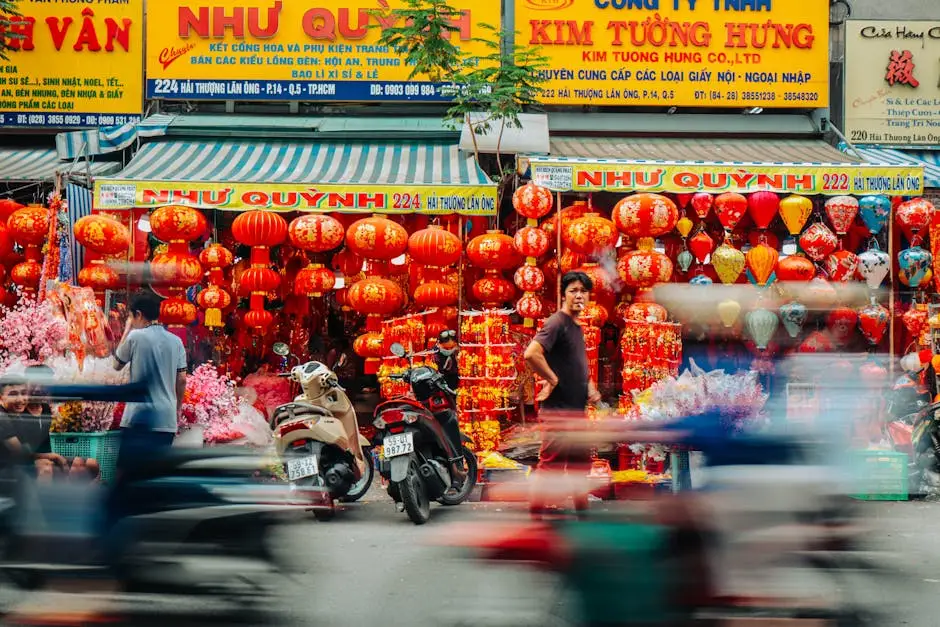
Your Practical Travel Toolkit:

- Getting Between Districts: Download Grab, Xanh SM, or Be before you arrive. All three give you a fixed price before you confirm, which removes all the guesswork and language barriers in one go. Use the motorbike option for short hops between food streets. It’s faster and cheaper than a car during busy evenings. Our Grab vs Xanh SM comparison helps you pick the right one. For a broader look at getting around the city, the full Ho Chi Minh City transport guide covers everything.
- Cash Is Non-Negotiable: Street stalls work on cash only. Keep a supply of 10,000, 20,000, and 50,000 VND notes at all times. Our Vietnam currency guide explains where to get the best exchange rates and which ATMs to use.
- Stay Connected: Pick up an eSIM through Yesim before departure or grab a local SIM at the airport. Having data for Google Translate and Maps is incredibly useful when you’re navigating alleys and trying to read handwritten menus. Our Vietnam SIM and internet guide breaks down all your options.

Forget the daily data limits of standard tourist SIMs.
Get a Yesim eSIM for unlimited 5G data from ~$10.
Work, stream, and be connected the second you land.
- Book a Food Tour: If you want a confident introduction to the street food scene, guided evening tours via Klook or Get Your Guide are excellent value. A good local guide will take you straight to the stalls that visitors would otherwise walk past entirely. Some of the best tours pair a scooter ride with a progressive tasting across three or four districts in a single evening.
- Travel Insurance: A stomach upset is unlikely but possible when you’re eating adventurously every day. Don’t skip this. SafetyWing is our go-to for flexible, affordable cover that doesn’t require you to commit to fixed travel dates.
- Ordering Without English: Point at what the table next to you is eating. Learn three words: Thit Bo (beef), Thit Heo (pork), Ga (chicken). Smile and hold up fingers for quantity. It works remarkably well.

The Best Street Food Areas By District:
The real culinary action in Ho Chi Minh City happens well away from the main tourist strips. The districts below have lower rents, higher local footfall, and vendors who have been perfecting the same dishes for decades. Once you’ve sorted where to stay in Ho Chi Minh City, position yourself close to these areas and your eating will be extraordinary from day one.
| Location | Primary Specialty | Average Price Range |
|---|---|---|
| Vinh Khanh Street, District 4 | Sea snails, shellfish, grilled seafood | 60,000 to 150,000 VND ($2.50 to $6.15 USD) |
| Nguyen Thien Thuat, District 3 | Sweet dessert soups, southern noodles | 30,000 to 70,000 VND ($1.25 to $2.90 USD) |
| Ho Thi Ky Alley, District 10 | Cambodian snacks, grilled skewers | 20,000 to 55,000 VND ($0.80 to $2.25 USD) |
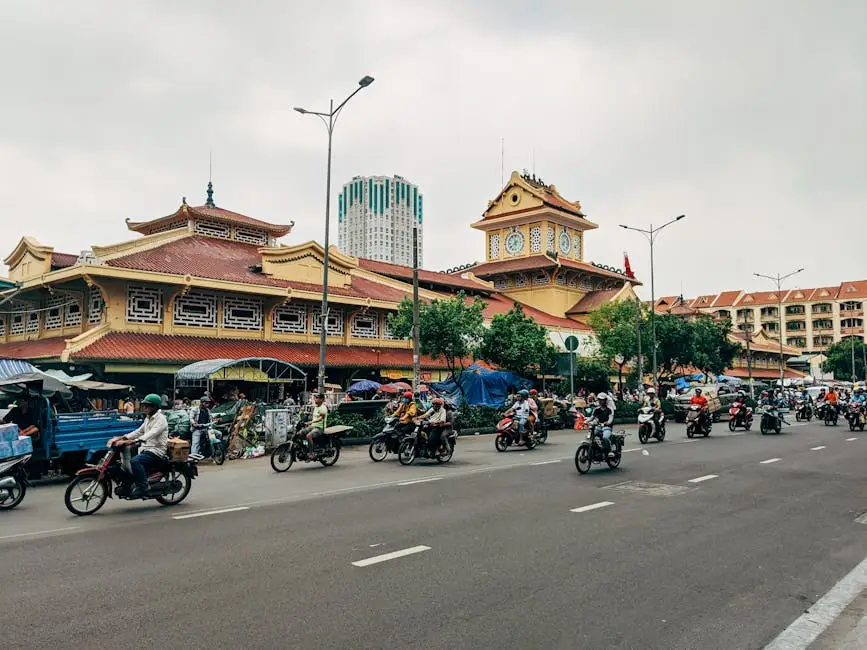
District 4: Vinh Khanh Street
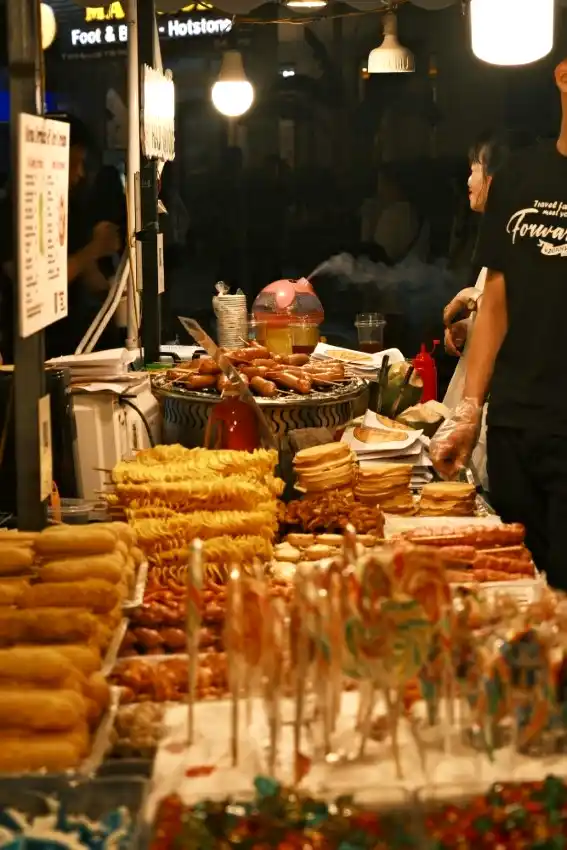
Once a neighbourhood with a rough reputation, Vinh Khanh has completely reinvented itself as the seafood capital of the city. At dusk, low tables appear on the pavement, charcoal grills start smoking, and the street fills with groups cracking open snails and sharing plates of shellfish. The star of the show is Oc: sea snails and shellfish cooked every way imaginable. Order lemongrass clams, salted egg yolk snails, and grilled scallops with scallion oil and crushed peanuts. Come hungry and come with at least two other people.
After dinner here, District 4 is also one of the better neighbourhoods to wind down over drinks. Check out Ho Chi Minh City’s rooftop bars for the best sunset views if you want to start the evening somewhere higher before heading down to street level.
District 3: Nguyen Thien Thuat Apartment Block
Built in the late 1960s, this old residential complex has ground-floor alleys that have been feeding the neighbourhood for generations. It is one of the best spots in the city for sampling the transition zone between central and southern Vietnamese cooking: Bun Bo Hue made slightly sweeter for Saigonese palates, proper southern Hu Tieu noodle soup, and some of the city’s finest Che dessert stalls. Low prices, a genuinely local crowd, and no tourist markup whatsoever.
District 3 is also one of the most pleasant areas to base yourself if you want to be close to good neighbourhood food without paying District 1 prices. Ho Chi Minh City’s neighbourhoods each have their own personality and eating culture, and District 3 rewards explorers who get off the tourist trail.
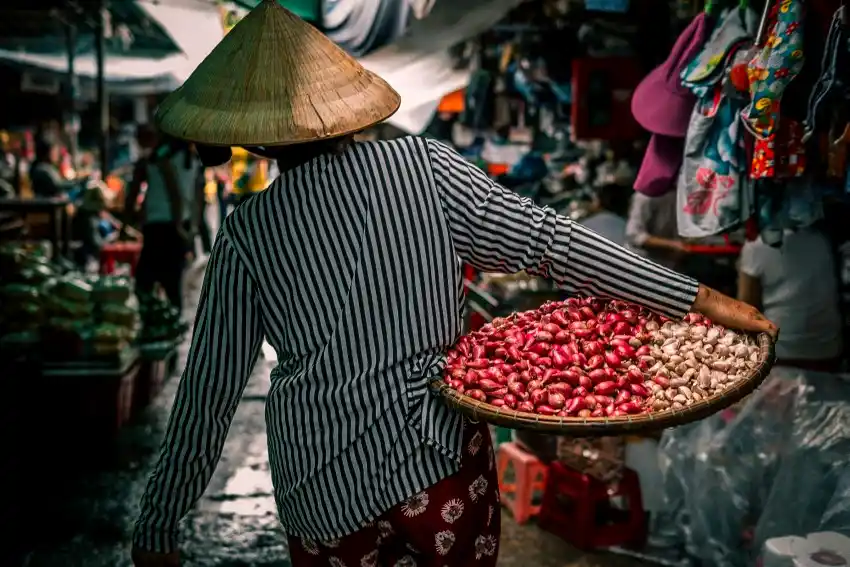
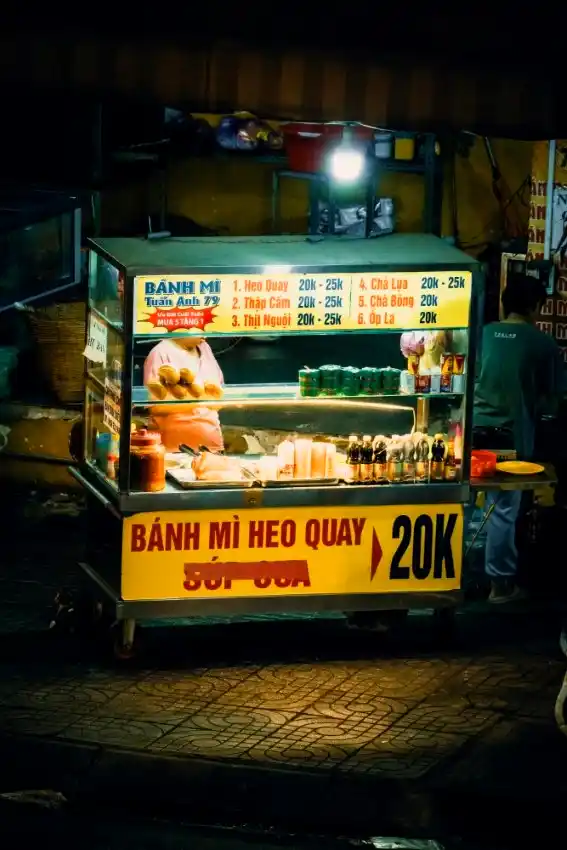
District 10: Ho Thi Ky Food Street
Tucked inside the city’s largest wholesale flower market, this narrow alleyway is one of Saigon’s best-kept secrets. It comes alive after 4:00 PM and the food reflects the neighbourhood’s diverse resident community, with strong Cambodian influences sitting alongside Vietnamese classics. Try Num Bo Choc, a Cambodian-style fish noodle soup, or lemongrass beef skewers served with pickled papaya. The surroundings are atmospheric in a way that no purpose-built food court can replicate.
If you find yourself wanting to explore further afield from the city, the day trips from Ho Chi Minh City include the Mekong Delta, where many of these Cambodian-influenced dishes have their roots. It’s a genuinely fascinating half-day to put together alongside a food-focused few days in the city.
Find your perfect base in Vietnam’s most energetic
metropolis. Compare top-rated properties across
central District 1, historic District 3, and the riverside
expat hub of Thao Dien to lock in the best rates
before you travel.
Staying Safe and Eating Confidently:
Street food anxiety is understandable and almost always unnecessary in this city. The golden rule is simple: eat where the locals eat, at the times locals eat. A stall surrounded by Vietnamese families at midday or early evening is running through ingredients so quickly that nothing has time to sit in the heat. High turnover is your best food safety indicator, far more reliable than any hygiene certificate on a wall. For a broader picture of how safe Vietnam is for visitors, the reality is much more reassuring than the reputation.
For ice in drinks, look for cylindrical pieces with a hole through the middle. That shape indicates factory-produced ice made from purified water, which is what commercial vendors across the city use. Tube-shaped ice is safe. Irregular chunks are best avoided.
Crossing the Road: Walk at a slow, steady, predictable pace toward the stalls on the other side. Do not stop, do not run, and do not wait for a gap that isn’t coming. The motorbikes will read your movement and flow around you. This works every time once you trust it.
Keep bags held close to your body and your phone in a pocket rather than your hand when standing near busy kerbs. Opportunistic bag snatching does occur, though it isn’t common. Our full Vietnam safety guide covers everything worth knowing before you arrive, and the Vietnam travel tips page has a good section specifically on street-food etiquette and avoiding the handful of tourist-facing scams that do exist.
Frequently Asked Questions:
Is the street food in Ho Chi Minh City safe to eat?
Yes, and with confidence. Stalls packed with local families during peak meal hours are your most reliable quality indicator. High turnover means fresh ingredients and everything is cooked over high heat directly in front of you. Avoid stalls with no customers and food sitting out uncovered in the heat.
Is it safe to drink the ice?
In most commercial venues and street food stalls, yes. Look for cylindrical ice with a hole through the middle: that shape indicates factory-manufactured ice made from purified water. Irregular chunks from unknown sources are worth avoiding.
How do I order food without an English menu?
Point at what other diners are eating and gesture toward their bowl or plate. Learning three basic words goes a long way: Thit Bo (beef), Thit Heo (pork), and Ga (chicken). Hold up fingers for quantity. Most vendors are patient and happy to help.
Should I tip at street food stalls?
Tipping is not customary at traditional street stalls or local restaurants in Vietnam. The best way to show appreciation is to pay the correct amount, thank the cook with a smile, and leave the table tidy for the next customer. Returning to eat there again is the highest compliment.
What is the cheapest way to eat well in Saigon?
Eat where the locals eat, at local hours. A Com Tam breakfast runs around 80,000 to 140,000 VND ($3.30 to $5.80 USD) for premium cuts, though simpler versions start at 50,000 VND ($2.00 USD). A bowl of Bun Thit Nuong at lunch costs 40,000 to 55,000 VND ($1.65 to $2.25 USD). You can eat three outstanding meals a day for well under 250,000 VND ($10.30 USD) total if you stay off the tourist-facing restaurant strips.
When is the best time of day to eat street food in Ho Chi Minh City?
The two golden windows are 11:30 AM to 1:00 PM for lunch and 6:00 PM to 8:00 PM for dinner. These are peak meal times for locals, which means maximum freshness, maximum turnover, and the most electric atmosphere. Early morning between 6:30 AM and 9:00 AM is also excellent for breakfast dishes like Com Tam and Hu Tieu before the heat of the day sets in.
Which district has the best street food in Ho Chi Minh City?
It depends what you are after. District 4 (Vinh Khanh Street) wins for seafood and shellfish eaten on the pavement at night. District 3 wins for neighbourhood authenticity and dessert soups. District 5 and District 6 are best for Chinese-influenced noodle dishes and morning markets. District 1 is the most convenient for first-timers, though it skews slightly more tourist-facing than the others.
Do I need to book a food tour or can I explore alone?
You can absolutely explore alone and eat brilliantly. The advantage of a guided tour through Klook or Get Your Guide is that a local guide takes you directly to the stalls that visitors would otherwise walk straight past, explains the ordering process, and often covers the cost of the food in the tour price. It is an especially good option for your first evening in the city before you find your feet.
Is Saigon street food different from Hanoi street food?
Very much so. Southern Vietnamese food is sweeter, more herb-heavy, and more generous in portion size than northern cooking. Saigon’s street food incorporates stronger Mekong Delta and Chinese influences, while Hanoi’s is leaner and more restrained. Even dishes that appear on both cities’ menus, like Bun Bo, taste noticeably different once they cross the culinary border south.
What should I do if I feel unwell after eating street food?
Stay hydrated and rest. Most upset stomachs in Vietnam are minor and clear within 24 hours. Vietnamese pharmacies are well stocked and pharmacists are generally helpful even without a shared language. For anything more serious, Ho Chi Minh City has a number of good international-standard hospitals and clinics. This is also exactly why having travel insurance through SafetyWing before you arrive is worth the small extra cost.