Vietnam Motorbike Adventures
Two wheels give you an unfiltered, raw connection to Vietnam that you simply cannot get from a bus window or a train seat. The scent of roasting coffee drifting across the central highlands. Morning mist clinging to limestone peaks in the far north.
The quiet thrum of your engine on an empty mountain road at dawn. Traveling by motorcycle completely transforms transit from a boring chore into the main event, and once you’ve done it, you’ll understand why so many people extend their trips by weeks just to keep riding.
The Quick Summary:
- Daily Budgets: Plan for 350,000 VND to 750,000 VND ($14 to $30 USD) per day for fuel, bike rental, basic food, and local guesthouses (nha nghi). Full cost breakdowns here.
- Legal Requirements: You’ll need a tourist e-visa for stays up to 90 days. You must carry an International Driving Permit (IDP) that explicitly shows a valid motorcycle Category A endorsement. Sort your e-visa here before you fly.
- Regional Roads: The North serves up steep, dramatic limestone valleys. Central Vietnam gives you gorgeous coastal highways and jungle passes. The South keeps it flat and easy with wide open river roads.
- App Checklist: Secure local data with an eSIM from Yesim, then keep Grab and Xanh SM downloaded as backup for city riding. Here’s the full breakdown on which app to use and when.

Compare tours and tickets across Vietnam
and book instantly on your phone.
Klook’s mobile vouchers mean no
printing, no fuss, just turn up and go.
What Does a Motorbike Trip Cost?
A Vietnam motorcycle trip can cost anywhere from 500,000 VND ($20 USD) per day for budget riders on rented semi-automatics, up to 2,500,000 VND ($100 USD) or more per day if you join a premium guided tour on a proper dual-sport machine. The biggest cost variable is almost always accommodation. Stick to local nha nghi guesthouses and you’ll often pay under 200,000 VND ($8 USD) a night. Start wanting hot showers and reliable Wi-Fi and that number climbs fast. Either way, it’s still remarkably affordable for the level of adventure you get.
For a deeper look at how the numbers stack up across all your spending categories, our Vietnam Budget Travel Guide has you covered. And if you want a clear picture of how Vietnam compares to other destinations on a day-to-day basis, the Vietnam Travel Costs page breaks it all down.
| Route Experience | Rental Bike Selection | Estimated Daily Cost (VND / USD) |
|---|---|---|
| Budget Explorer | Honda Wave 110cc Semi-Automatic | 450,000 – 650,000 VND ($18 – $26 USD) |
| Mid-Range Adventurer | Honda XR 150cc Dual-Sport | 1,000,000 – 1,500,000 VND ($40 – $60 USD) |
| Premium Guided Tour | Honda CRF 250cc / 300cc | 2,500,000 – 4,000,000 VND ($100 – $160 USD) |
The Three Legendary Routes:
Vietnam is home to some of the finest motorcycle riding on the planet, and your biggest decision is simply choosing which kind of adventure you want. The dramatic cliff-hugging loops of the far northern mountains. The coastal jungle passes connecting Hue, Da Nang, and Hoi An. The winding rural asphalt cutting across the central highlands along the old wartime supply trails. Here are the three routes every serious rider has on the bucket list.
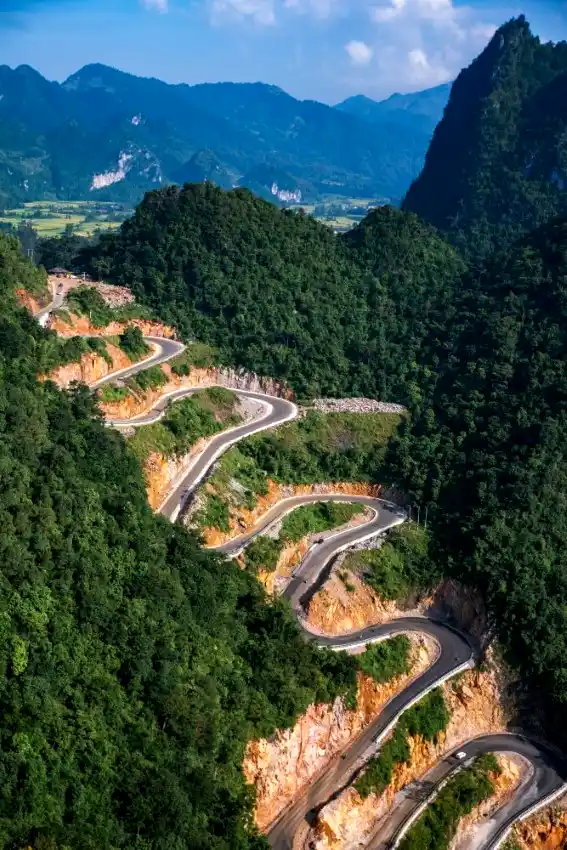
The Ha Giang Loop
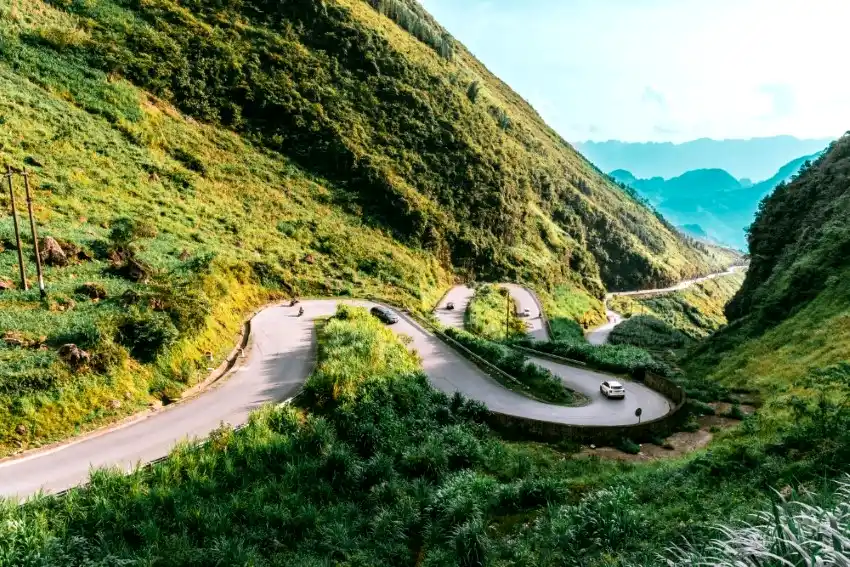
A jaw-dropping 350-kilometer circuit starting from Ha Giang City that winds through the Dong Van Karst Plateau Geopark right up to the Chinese border. This northern route demands serious concentration on the tight hairpin turns along the Ma Pi Leng Pass, where sheer cliffs drop hundreds of meters into the Nho Que River far below.
You’ll ride past stunning terraced rice fields and pass through villages where Hmong and Tay communities go about their daily lives with barely a glance at the occasional passing traveler. Most riders base themselves in Hanoi before heading north, and it’s well worth spending a couple of days in the city first to get comfortable with Vietnamese traffic before you hit the mountain roads. Just keep an eye on the sky. Mountain weather changes fast up here, and thick fog can roll over the peaks in minutes.
The Hai Van Pass
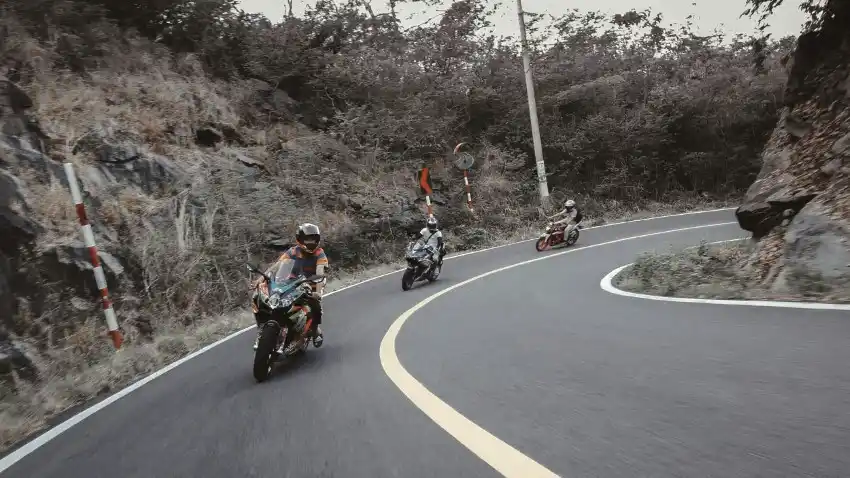
A classic coastal mountain road tracing the Truong Son range between Hue and Da Nang. Spanning roughly 21 kilometers, this ribbon of asphalt delivers sweeping panoramic views of Lang Co Bay and the South China Sea that will stop you in your tracks at every pull-off.
Made famous by international automotive shows, it’s an absolute dream of a single-day ride for intermediate motorcyclists who want mountain curves without disappearing into extreme wilderness. Many riders pair this with a night in Hoi An afterwards. There’s nowhere quite like it to decompress after a day in the saddle. Check where to stay in Da Nang if you want to use the city as your base for the pass.
The Ho Chi Minh Highway
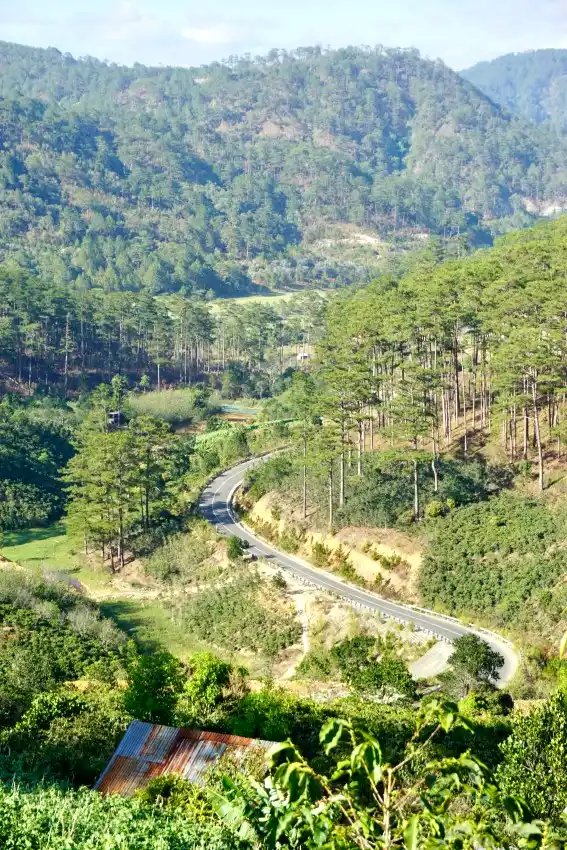
Running right down the spine of the country, tracking the historic wartime supply trails through the western highlands. The section between Phong Nha-Ke Bang National Park and Khe Sanh is particularly spectacular, offering hundreds of kilometers of pristine asphalt surrounded by dense jungle and dramatic limestone peaks.
Traffic out here is remarkably light, giving you an isolated, deeply immersive look at rural Vietnam that you simply won’t find on the coastal highway. Most riders doing the full length either start or end their run in Ho Chi Minh City, making it a natural fit for a north-to-south journey across the whole country. If you’re planning a longer trip, our Vietnam Motorbike Route guide maps out the whole thing day by day.
Should You Rent or Buy?
Renting from an established agency is the safest and most practical choice for most trips. Reputable shops in Hanoi or Ho Chi Minh City supply well-maintained bikes like the Honda Winner or Yamaha Exciter, quality helmets, protective gear, and most offer one-way rentals so you can pick up in Hanoi and drop off in Da Nang or Ho Chi Minh City without doubling back.
Buying a used motorcycle is a classic backpacker tradition, but those cheap bikes sold on tourist street corners are almost always heavily worn machines held together with substandard parts. The result is breakdowns on remote mountain passes and repair bills that quickly swallow any savings. Our dedicated guide to renting motorbikes in Vietnam covers exactly what to look for, which shops to trust, and how to avoid the common traps. For everything you’ll want to pack into your panniers, the Motorbike Trip Essentials list has you sorted.

From classic Vietnam highlights to
hidden-gem private tours, GetYourGuide
makes booking painless. Cancel free
up to a day before your start time.
Where to Stay Along the Route:
One of the best things about a motorbike trip is that your accommodation is flexible. You stop when you’re tired, not when the bus schedule tells you to. That said, a little loose planning goes a long way, especially in peak season when even basic guesthouses in popular spots can fill up.
If you’re riding the northern loop, Hanoi is the natural start point. For the central coastal route, Hue and Da Nang are both solid bases with good bike rental options. Riders heading south through the highlands often end up threading through Hoi An as a welcome break, where the food, the atmosphere, and the guesthouses are all excellent. Search and book on Agoda for the best coverage of smaller towns and rural guesthouses that other platforms often miss. For properties with free cancellation, Booking.com gives you the flexibility to change plans when the weather does.
Driving Rules and Unwritten Etiquette:
The first thing to understand about Vietnamese traffic is that the horn is not an expression of road rage. It’s a polite audio nudge that means: “Hey, I’m right next to your blind spot.” Use yours. People expect it, and it keeps everyone moving safely around each other.
When parking in small villages or near tourist landmarks, always look for a designated parking attendant (Bao Ve). They’ll issue a small paper ticket and watch your bike for a fee of 5,000 VND to 10,000 VND ($0.20 to $0.40 USD). If your route takes you to sacred locations like the Tran Quoc Pagoda in Hanoi, make sure your shoulders and knees are fully covered before heading inside. A quick read of the Vietnamese culture and etiquette guide will save you from a few awkward moments on the road.
Traffic police checkpoints do exist, particularly on the approach to major cities. They’re generally looking for missing helmets, phones in hand, and, yes, missing IDPs. Getting pulled over without your International Driving Permit can result in a fine and, more importantly, a voided insurance policy. Before any of this, make sure you’ve got proper travel insurance in place. SafetyWing covers motorcycle riding in many of their plans but check the policy terms carefully, as you’ll usually need a valid IDP for the claim to hold. For a broader look at staying safe on Vietnamese roads and in general, the Vietnam Safety Guide is worth a read before you set off.
Pro Tip: To avoid common rental scams, always clarify your rental terms in writing and take a detailed video of the motorcycle’s full condition before you leave the shop floor. If city traffic makes you nervous, take a train or bus out first and rent your bike directly in a quieter regional hub like Da Nang or Ha Giang City.

From boutique guesthouses to five-star
resorts, Agoda has Vietnam’s best stays
covered. Strong Asia inventory means
deeper discounts than you’d expect.
Day Trips and Activities Along the Way:
The motorbike isn’t just a way to get between places. It opens up day trips and detours that simply aren’t possible by public transport. From Hanoi, Ninh Binh is a classic ride south through karst scenery before the real northern mountains begin. From Da Nang, you can loop down to Hoi An along the coastal road in under an hour. From Hue, the DMZ and surrounding areas make for a heavy but worthwhile detour.
If you’d rather let someone else lead for a section, both Get Your Guide and Klook list guided motorbike tours on key routes including the Hai Van Pass, the Ha Giang Loop, and day rides out of Hanoi and Ho Chi Minh City. A guided day here and there is a smart way to get local knowledge on roads and conditions before you go it alone on the harder sections.
Pro Tips For Stress-Free Travel:
- eSIM and Connectivity: Get a Yesim eSIM before you leave home so you have data the moment you land. It works across Vietnam’s whole network including the mountain regions, and you can top up without hunting for a phone shop in a remote valley. Airalo is a solid backup option if Yesim isn’t available for your device. Full comparison at our Vietnam SIM cards and internet guide.
- VPN: Use NordVPN whenever you’re booking accommodation or accessing financial accounts on guesthouse or cafe Wi-Fi. Public networks in smaller towns are especially unreliable for security, and this is one of those things you’ll be glad you set up before you needed it.
- Travel Insurance: Don’t skip it. SafetyWing is a popular choice among long-term travelers and covers motorcycle riding in many plans, but read the policy carefully to confirm your IDP category is covered. Without valid insurance and paperwork, a hospital bill in Vietnam can be significant. More on this at our travel insurance guide.
- Navigation and Maps: Use Google Maps for general route plotting but always cross-reference mountain paths with an offline tool like Maps.me. Data drops in deep valleys with zero warning, and being lost on a remote pass at dusk is not the adventure you signed up for.
- Ride-Hailing Backups: Keep Grab and Xanh SM downloaded. If you hit a serious mechanical breakdown or a tropical downpour you can’t wait out, these apps let you hail a vehicle and sort the bike situation from somewhere dry.
- Cash is Non-Negotiable: Remote service stations and mountain guesthouses run on cash only. Keep a good supply of low-denomination VND notes in a waterproof pouch at all times. Our Vietnam currency guide covers ATMs, cards, and where to exchange.


Saily’s Vietnam eSIM keeps you online
for less than most tourist SIMs charge.
Easy install, transparent pricing, and
trusted infrastructure behind it.
Frequently Asked Questions:
Can I legally drive a motorcycle in Vietnam?
Yes, but only if you carry a valid motorcycle license from your home country alongside an International Driving Permit (IDP) that explicitly shows the Category A endorsement. Without this exact paperwork, your travel insurance policy will likely be voided if you get into an accident, and police checkpoints do check.
What happens if my bike breaks down in a remote area?
Don’t panic. Every small village and crossroads in Vietnam has a local mechanic shop. Just look for a sign reading Sua Xe May or an old tire hanging from a post out front. Local mechanics are exceptionally skilled, fast, and incredibly affordable at fixing small-capacity engines, and they’ve seen every problem yours could possibly throw at them.
Is it safe to ride during the monsoon rainy season?
Riding during heavy downpours severely reduces visibility and increases landslide risk on steep mountain passes. If you get caught in a tropical storm, do what the locals do: pull over at a roadside cafe, order a strong Vietnamese coffee, and wait for the weather to pass before continuing. Trying to push through is never worth it.
Which route is best for first-time riders in Vietnam?
The Hai Van Pass between Hue and Da Nang is the ideal starting point for first-timers. It’s a manageable single-day ride, the road surface is excellent, the scenery is spectacular, and it sits close enough to major cities that support is easy to access if anything goes wrong. Save the Ha Giang Loop for when you have more off-road and mountain riding experience under your belt.
Do I need a Vietnamese driving license?
Technically, foreign visitors are required to hold a valid IDP with a motorcycle endorsement rather than a local Vietnamese license. In practice, getting a Vietnamese motorcycle license as a short-stay tourist is not straightforward. Focus on getting your IDP sorted before you travel, and make sure it covers the engine category of the bike you plan to ride.
Can I do a one-way rental and drop the bike off in a different city?
Yes, many reputable rental agencies in Hanoi and Ho Chi Minh City offer one-way rentals with drop-off at a partner location in another city. This is a very popular option for riders doing the classic north-to-south run. Always confirm the one-way fee in writing before you commit, as it varies significantly between operators.
What size engine should I choose for my first Vietnam road trip?
For beginners, a 110cc to 125cc semi-automatic like the Honda Wave is the smartest choice. It’s light, easy to handle on mountain roads, cheap to fuel, and every roadside mechanic in the country knows exactly how to fix it. Step up to a 150cc or 250cc dual-sport only once you’re comfortable with the style of riding the terrain demands.
Is the Ha Giang Loop safe for solo riders?
It’s challenging rather than dangerous if you ride sensibly, respect the road conditions, and don’t push after dark. Many solo travelers do it every week. That said, riding with at least one other person is always a smarter call in remote mountain areas, so you have someone to help if a breakdown or slide happens. Joining a small group tour for this route is a genuinely good option for first-timers.
Should I get travel insurance that covers motorcycle riding?
Absolutely, and read the policy before you buy rather than after an accident. SafetyWing covers motorcycle use in many of their plans, but you’ll typically need to hold a valid IDP for the claim to be valid. Some policies exclude engine sizes above a certain cc, so check that your intended bike is covered before you sign anything.
What’s the best way to plan the full north-to-south motorbike route?
Start with a rough framework of how many days you have and which regions you want to prioritise, then build in flexibility because weather, road conditions, and the fact that you found an incredible village will all change your plans. Our Vietnam Motorbike Route guide maps out the full journey with daily stages, estimated riding times, and recommended overnight stops.