Vietnam Night Markets
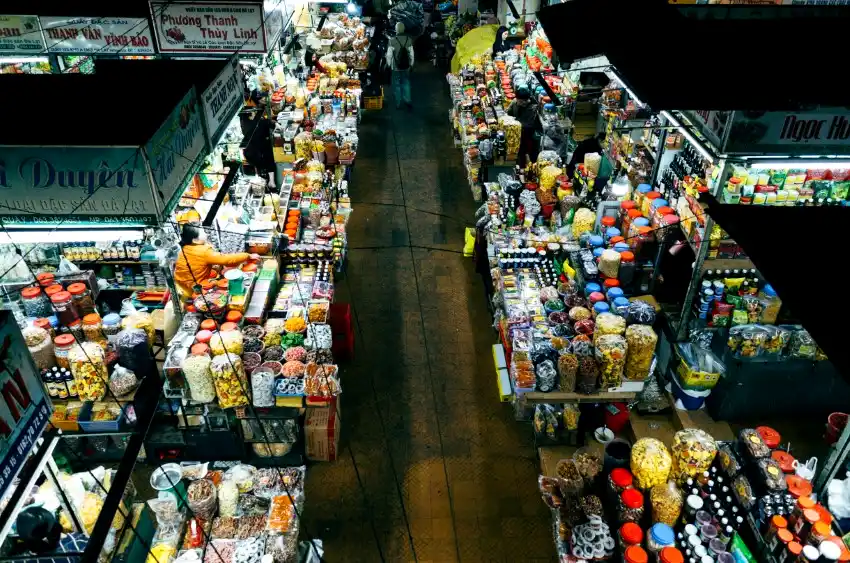
Night markets are the real pulse of local evening life and socializing. From Hanoi down to Phu Quoc, these nocturnal hubs offer a wild sensory look into regional street food, handmade crafts, and everyday community life.
The Quick Summary:
- Budgets: Street food dishes generally run between 25,000 VND and 80,000 VND ($1.00 to $3.15 USD). Souvenirs can vary anywhere from 50,000 VND to 300,000 VND ($2.00 to $12.00 USD).
- Entry Fees: Every single night market in Vietnam is completely free to enter.
- Regional Vibe: Northern markets lean toward classic textiles and comforting hot soups. Central markets are famous for glowing lanterns and fresh seafood. Southern markets hit you with tropical fruits, endless grilled skewers, and trendy street snacks.
- Peak Hours: Things get busiest between 7:00 PM and 10:00 PM. Most markets open their stalls around 6:00 PM and start winding down by midnight.

Book Vietnam day trips, attractions,
and activities in one place. Read real
reviews, check availability, and lock in
your spot before the popular slots go.
Which Night Markets Are the Best to Visit?
Every region in Vietnam boasts its own distinct night markets. Hanoi’s Old Quarter Night Market leads the pack in the North, the magical Hoi An Night Market dominates the Central coast, while Ben Thanh and Phu Quoc anchor the South. Each spot highlights its own local dishes and specialty goods, giving you an authentic taste of the local community.
| Market Name | Primary Location | Signature Highlight | Average Cost Per Meal |
|---|---|---|---|
| Hanoi Old Quarter Night Market | Hang Dao Street, Hoan Kiem District | Bun Cha, dried beef salad, and cold bia hoi (draft beer) | 40,000 VND ($1.60 USD) |
| Hoi An Night Market | Nguyen Hoang Street, An Hoi Islet | Cao Lau noodles, glowing silk lanterns, local pottery | 50,000 VND ($2.00 USD) |
| Son Tra Night Market | Mai Hac De Street, Da Nang | Grilled lobster, Banh Mi, and custom souvenirs | 75,000 VND ($2.95 USD) |
| Phu Quoc Night Market | Bach Dang Street, Duong Dong | Fresh sea urchin, coconut ice cream, local black pepper | 90,000 VND ($3.55 USD) |
What Makes Each Market Unique?
Northern night markets tend to have a more structured layout and stick to classic comfort foods like pho and simple skewers. Southern markets, on the other hand, are high-energy, packed with tropical seafood options, and heavily influenced by trendy culinary fads. Central Vietnamese markets perfectly bridge the two, focusing on historic atmosphere, glowing paper lanterns, and coastal delicacies.
Hanoi Old Quarter Night Market
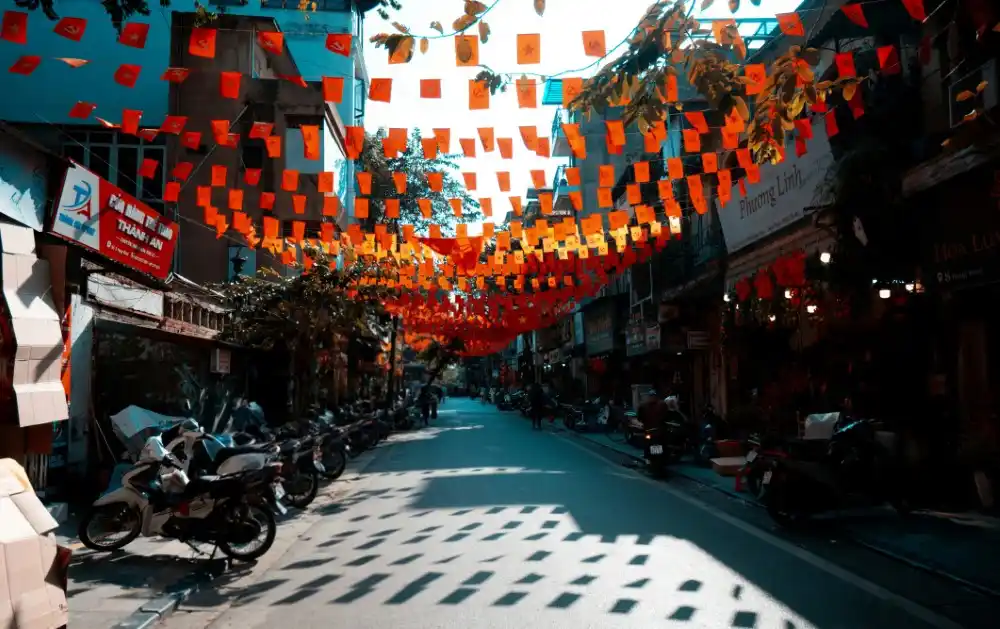
Spanning from Hang Dao Street all the way to the edge of Dong Xuan Market, this massive weekend market runs from Friday through Sunday evenings.
The pedestrian-only streets fill up with stalls selling canvas bags, winter clothing, and cheap souvenirs. Food vendors usually cluster at the intersections, serving up northern classics like sweet soup desserts (che) and grilled skewers. The vibe here feels deeply historic yet full of energy.
Hoi An Night Market
Located just across the Thu Bon River on An Hoi Islet, Nguyen Hoang Street transforms into a stunning display of hundreds of glowing silk lanterns every single night. Stalls sell local ceramics, tailored clothing, and traditional trinkets.
Food vendors line the riverbank, serving up local absolute must-tries like Cao Lau noodles and white rose dumplings. It’s the perfect spot to combine a street-food stroll with a ride on a traditional wooden boat.
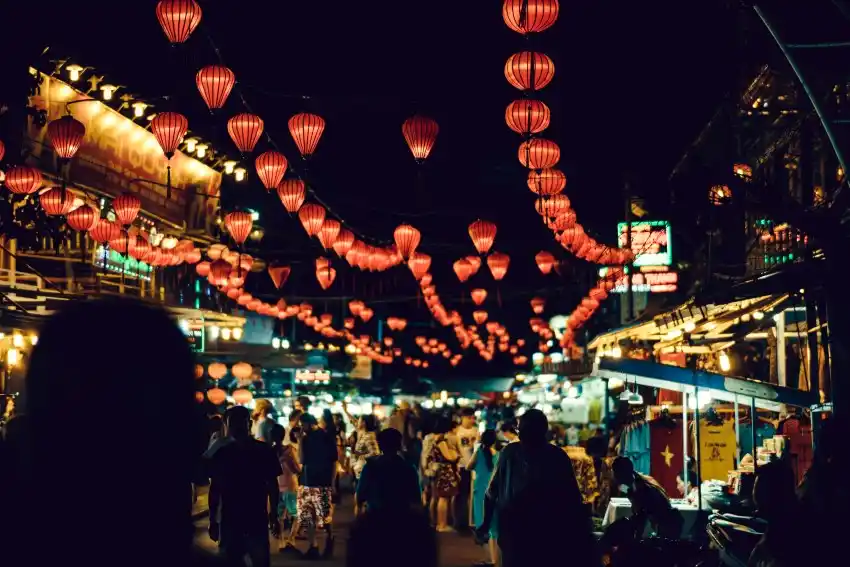

Son Tra Night Market
Situated right near the eastern end of Da Nang’s famous Dragon Bridge, Son Tra Night Market is a dream come true for seafood lovers. Stalls display massive piles of fresh fish, clams, and lobsters on ice, all ready to be grilled to order.
Even better, it serves as the perfect front-row seat for watching the Dragon Bridge breathe fire and water on weekend nights.
Phu Quoc Night Market
Located in Duong Dong town, this coastal hub is tailor-made for travelers looking for fresh maritime flavors.
Stalls offer up grilled sea urchins, garlic butter scallops, and Phu Quoc herring salad. Once you’ve had your fill of seafood, grab some of the market’s famous rolled ice cream or roasted peanuts flavored with local spices.
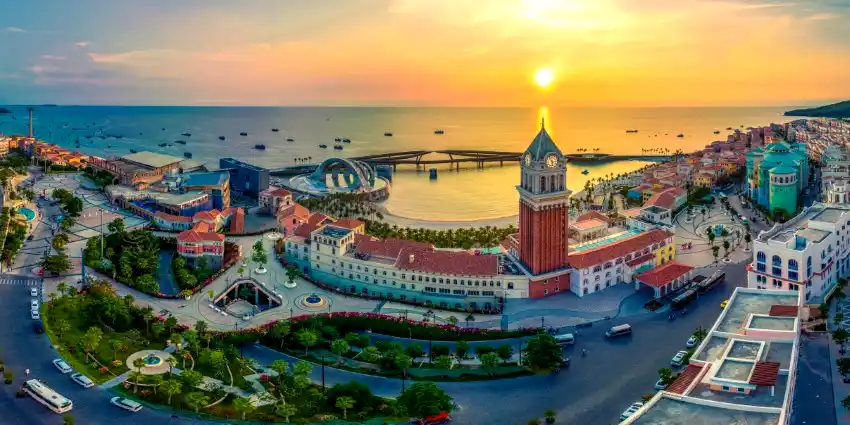

From classic Vietnam highlights to
hidden-gem private tours, GetYourGuide
makes booking painless. Cancel free
up to a day before your start time.
Pro Tips For Stress Free Travel:

- Ride-Hailing Apps: Make sure to download Grab, Xanh SM, or Be before you arrive. These platforms give you clear, transparent pricing for both motorbikes and cars, saving you from having to argue over taxi meters.
- Cash is King: Street vendors almost never accept credit cards. Always keep physical Vietnamese Dong (VND) on you in smaller bills like 20,000, 50,000, and 100,000 VND. Large 500,000 VND notes can be really tough for a small food stall to break.
- Connectivity: Grab a local eSIM via Yesim or buy a physical SIM card right at the airport so you have instant data for maps and translation. Use a reliable VPN like Nord VPN to keep your personal data secure when logging onto public market Wi-Fi networks.
- Booking Activities: Turn to platforms like Klook or Get Your Guide to book a guided evening street food tour if you’d prefer an expert introduction to the market’s food scene.

Stay online in Vietnam without breaking
the budget. Saily offers flexible eSIM
data plans with no contract and no
roaming charges when you go home.
What You Should Eat:
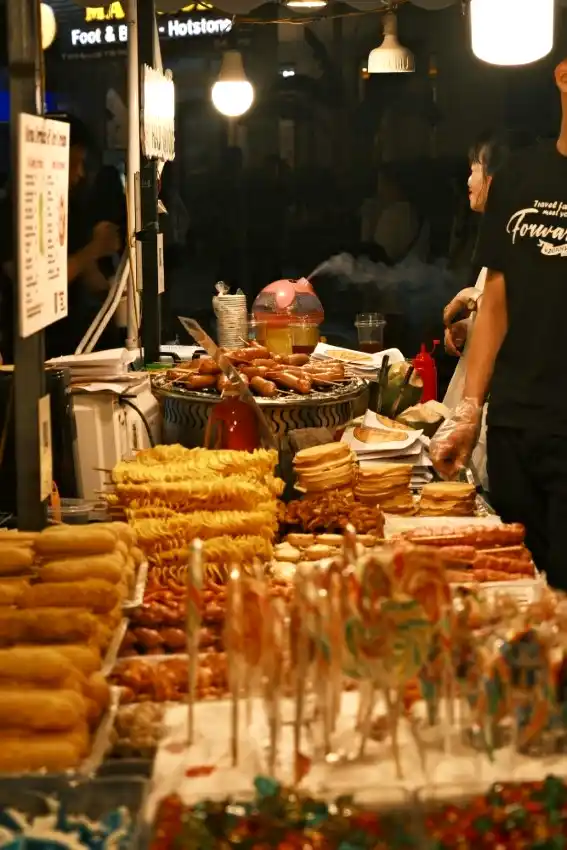
Night market menus are packed with accessible, incredibly authentic street food choices. Food safety stays high at stalls with a fast turnover, since everything is cooked right in front of you over open charcoal grills or blistering hot griddles.
Savory Staples and Skewers
Grilled pork skewers seasoned with lemongrass and honey will only cost you around 15,000 VND to 25,000 VND ($0.60 to $1.00 USD) a pop. You also have to try Banh Xeo—a crispy rice flour pancake stuffed with pork, shrimp, and bean sprouts, served with fresh herbs and rice paper wrappers.
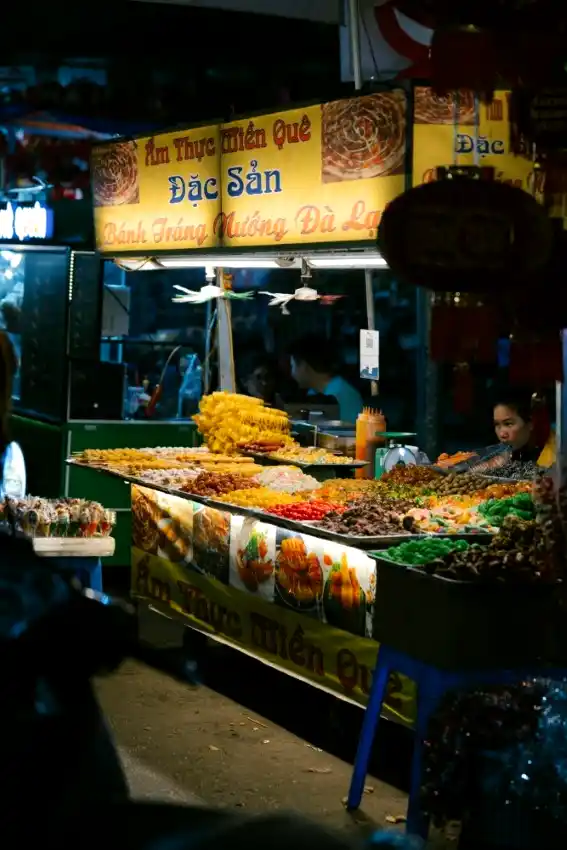
If you’re in Central Vietnam, keep an eye out for Banh Trang Nuong (often called “Vietnamese pizza”), which is a grilled rice paper sheet loaded with egg, minced pork, and green onions.
Regional Noodle Bowls
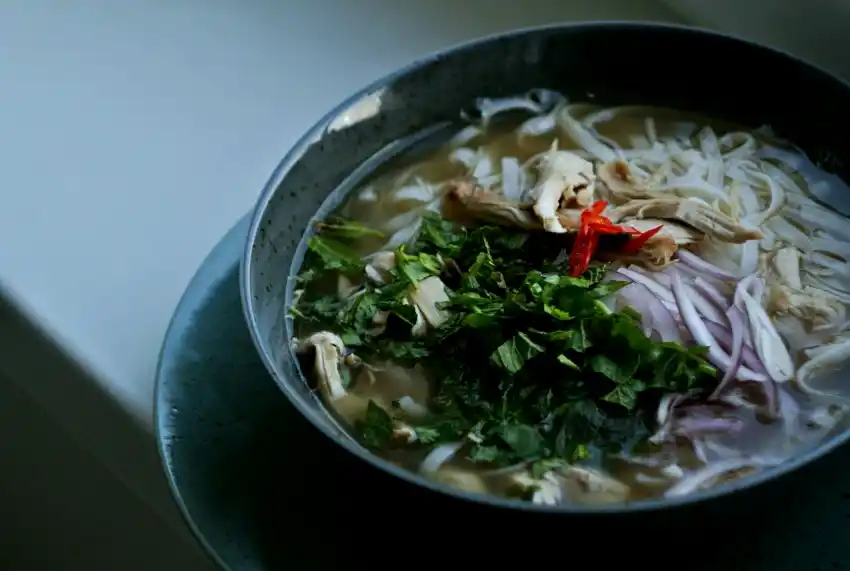
While sit-down restaurants get all the love for soups, night markets offer amazing specialized noodle dishes. Central markets feature Mi Quang, yellow rice noodles tossed with pork, shrimp, quail eggs, and a intensely savory broth, all topped with crunchy rice crackers. Southern markets lean toward Hu Tieu, a clear noodle soup with a rich pork bone broth base, fresh herbs, and seafood.
Tropical Desserts and Sweet Treats
Che is a traditional sweet soup dessert featuring layers of colorful beans, jelly, coconut milk, and shaved ice—usually costing a mere 20,000 VND ($0.80 USD) a cup. Rolled ice cream, chopped up and frozen on a freezing metal plate with fresh mango, passionfruit, or coconut, makes for the ultimate palate cleanser on a humid tropical evening.

From boutique guesthouses to five-star
resorts, Agoda has Vietnam’s best stays
covered. Strong Asia inventory means
deeper discounts than you’d expect.
Nailing Night Market Etiquette:
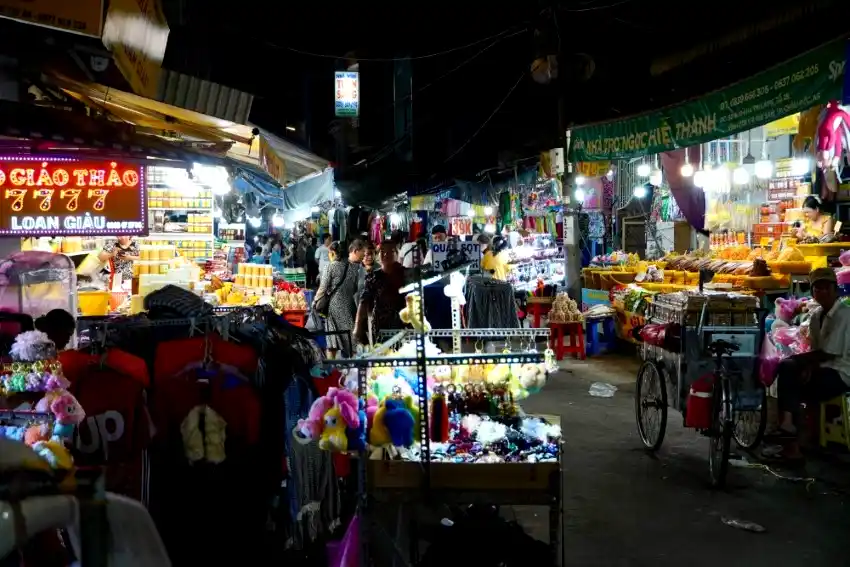
Haggling is completely expected for non-perishable goods like clothing, bags, and souvenirs. However, food and drink items always have fixed prices that require zero negotiation. Vendors respond incredibly well to a polite smile and calm, lighthearted bargaining.
Pro Tip: When shopping for souvenirs, clothes, or handicrafts, start your negotiations at roughly 30% lower than the initial asking price. Keep the exchange playful and fun. If the vendor won’t budge, walking away politely will very often result in them shouting a lower counteroffer after you. Just remember: never try to bargain for street food or drinks; those rates are fixed and uniform for everyone.
Tipping isn’t a traditional custom in Vietnam, and no one expects it at street stalls or night markets. If the service was incredible, simply leaving the small change is a nice gesture. Also, while casual wear is totally fine for standard street shopping, dress a bit more respectfully (covering shoulders and knees) if the market happens to sit right next to a historic temple or religious site.

From short trips to long stays in Vietnam,
Airalo has flexible eSIM data plans
you can install in minutes. Top up
remotely if you need more data later.
A Note for Nervous Travelers:
Vietnamese night markets are generally incredibly safe, and violent crime is rare. Your only real concern should be petty theft, like pickpocketing in crowded zones like the Hanoi Old Quarter or Ben Thanh. Keep your bags zipped up, carry minimal cash, and hold onto your phone securely.
Food safety is easy to navigate: just pick the stalls that are absolutely packed with locals. High turnover means the ingredients are guaranteed to be fresh. Look for vendors blasting meats at high temperatures directly over charcoal fires.
Finally, watch out for the motorbike traffic around the market perimeters; cross the streets at a steady, predictable pace so the riders can easily steer right around you.
Frequently Asked Questions:
Are Vietnam’s night markets open every single night?
Most dedicated night markets, like the ones in Hoi An and Phu Quoc, run seven days a week. However, the famous Hanoi Old Quarter Night Market is a weekend-only affair, operating exclusively on Friday, Saturday, and Sunday evenings from 6:00 PM until midnight.
Can I use my credit card at night market stalls?
No, physical cash in Vietnamese Dong (VND) is mandatory for practically all street stall transactions. A few larger souvenir shops might accept a mobile banking transfer, but international credit cards are rarely accepted on the sidewalk.
Is the street food at night markets safe for toddlers?
Yes, as long as you stick to fully cooked dishes served piping hot. Choose items that are boiled, fried, or grilled right in front of you, and skip raw vegetables or unpeeled fruits to keep young stomachs happy.
What are the best authentic souvenirs to buy?
Skip the mass-produced plastic trinkets and look for real regional products. Phu Quoc black pepper, premium Vietnamese coffee beans, hand-woven textiles from northern hill tribes, or beautiful handmade silk lanterns from Hoi An make for amazing gifts.